


For Northeastern University students, the apartment vs house decision is rarely as simple as comparing monthly rent. A two-bedroom apartment near campus might look convenient. A shared house in Mission Hill or Roxbury might look cheaper. On-campus housing might seem expensive until you factor in utilities, lease length, furniture, upfront costs, summer sublets, and the risk of paying for months you do not actually live in Boston.
So, which is the better deal for NEU off-campus students in 2026?
For most students, a larger shared house or a three- to four-bedroom apartment is usually the better off-campus value than a two-bedroom apartment. However, on-campus housing can still be the better financial choice for second-year students, students with uncertain co-op or summer plans, and students who want convenience without lease risk.
The best answer depends on four things: total annual cost, number of roommates, location, and whether the student will actually use the housing for all 12 months.
Quick Verdict: Apartment, House, or On-Campus Housing?
A two-bedroom apartment near Northeastern is usually best for students who want privacy, fewer roommates, and walking-distance convenience. It is often not the cheapest option.
A three- or four-bedroom apartment is usually better for students who want to lower their rent per person while still staying relatively close to campus.
A shared house is often the best off-campus deal for students who can handle more roommates, a longer commute, and more responsibility.
On-campus housing is often better for students who are required to live on campus, unsure about summer plans, or not ready to manage leases, landlords, bills, and furniture.
The Real Cost Formula NEU Students Should Use

The biggest mistake students and parents make is comparing monthly rent to semester housing cost.
That comparison is incomplete.
Most off-campus leases in Boston run for 12 months. Northeastern housing, by contrast, is usually structured around academic terms. That means a student comparing off-campus housing to on-campus housing needs to compare the full cost of each option, not just the visible monthly or semester price.
Use this formula for off-campus housing:
Monthly rent × 12 + utilities + internet + renters insurance + furniture + upfront costs + transportation − summer sublet income = real annual cost
Use this formula for on-campus housing:
Semester housing rate × 2 + meal plan if required + campus-related fees = academic-year housing cost
A $1,600/month room might sound cheaper than campus housing. But over 12 months, that room costs $19,200 before utilities. If the student only needs housing from September through April, the monthly rent is not the real issue. The unused summer months are.
This is why a cheaper monthly apartment can become more expensive than expected.
Is a $4,100/Month Two-Bedroom Apartment Near Northeastern a Good Deal?
A $4,100/month two-bedroom apartment split by two students costs:
$4,100 ÷ 2 = $2,050 per person per month
Over a full 12-month lease, that becomes:
$2,050 × 12 = $24,600 per person before utilities
That does not include Wi-Fi, electricity, heat if not included, renters insurance, furniture, laundry, moving costs, or any upfront payments.
For some students, this may still make sense. A $4,100 two-bedroom can be reasonable if it is very close to campus, the student will stay in Boston during the summer, utilities are included, there is no broker fee, and privacy is more important than savings.
But for many NEU students, especially sophomores and juniors, this is not the best deal. A two-bedroom apartment usually has fewer people to split costs with. That means each student carries a larger share of the rent, utilities, furniture, and lease risk.
A larger apartment or house may cost more overall but less per person. For example, a $6,000/month four-bedroom house costs $1,500 per person before utilities. That is $550 less per month than the $2,050/person two-bedroom example.
Over 12 months, that difference is:
$550 × 12 = $6,600 per student
That is why the real question is not “Can we afford this apartment?” It is “Is this apartment the best value compared with a larger shared place?”
Apartment vs House Near NEU: What Is Usually Cheaper?
Two-bedroom apartments
Two-bedroom apartments near Northeastern are popular because they feel simple. There are fewer roommate conflicts, fewer people on the lease, and more privacy. They are also easier for parents to understand than a five-person house.
The problem is cost per person. Near-campus two-bedroom apartments in Boston can be expensive, and each student only has one roommate to split the total rent.
A two-bedroom apartment is usually best for students who:
- want privacy;
- can afford a premium location;
- will stay in Boston year-round;
- do not want to coordinate with a larger roommate group;
- value convenience more than maximum savings.
It is usually not best for students whose main goal is affordability.
Three- and four-bedroom apartments
Three- and four-bedroom apartments are often the middle ground. They can lower the monthly rent per person while keeping the group size manageable.
For NEU students, this can be the sweet spot: enough roommates to reduce cost, but not so many that the housing situation becomes chaotic.
These units work well for students who have reliable friends, want to stay near campus, and are comfortable managing utilities and lease responsibilities.
Shared houses
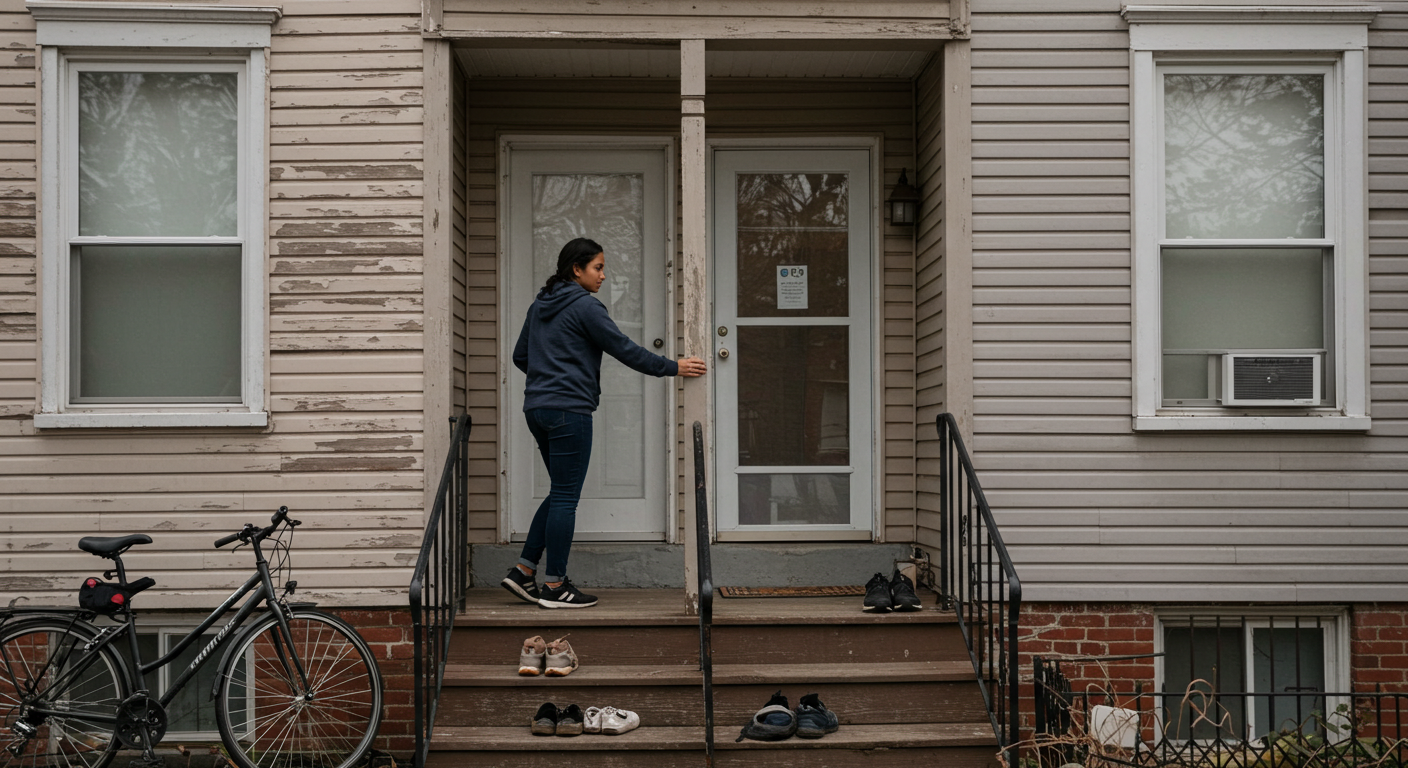
A shared house is often the best value, especially in neighborhoods like Mission Hill, Roxbury, Fort Hill, or Forest Hills. Houses may offer more space, larger bedrooms, shared living areas, storage, and a lower rent-per-person structure.
But houses also come with more responsibility. Students may need to deal with older buildings, repairs, snow, trash rules, landlords, roommate turnover, and longer walks or commutes.
A house is usually the better deal when:
- there are three to six reliable roommates;
- the rent per person is clearly lower;
- the lease allows subletting;
- the commute is realistic;
- the student is comfortable managing bills and maintenance issues.
A house is usually not the better deal when the student wants privacy, quiet, luxury amenities, or a short walk to every class.
NEU Neighborhood Guide: Where Students Usually Find Value
Northeastern students often look in neighborhoods near the Boston campus, including Fenway, Mission Hill, Symphony, Roxbury, Fort Hill, South End, Back Bay, Forest Hills, and Jamaica Plain.
Each neighborhood has a different balance of rent, commute, convenience, and student lifestyle.
| Neighborhood | Best for | Cost expectation | Tradeoff |
|---|---|---|---|
| Fenway/Kenmore | Convenience and nightlife | Higher | Expensive rent, competitive listings |
| Symphony | Walking distance | Higher | Limited inventory, premium location |
| Mission Hill | Student houses and shared units | Medium | Hills, older housing, party reputation |
| Roxbury | Better value near campus | Medium/lower | Varies by block and commute |
| Fort Hill | Shared houses and savings | Medium/lower | Farther from campus |
| Forest Hills | Lower rent and transit access | Lower | Longer commute |
| South End | Nice area, close to campus | Higher | Expensive |
| Back Bay | Premium location | Very high | Usually poor student value |
| Jamaica Plain | Space and neighborhood feel | Medium | Commute required |
Fenway, Symphony, and Back Bay are usually more convenient but more expensive. Mission Hill and Roxbury often offer better value for students who are comfortable with a slightly longer walk or commute. Fort Hill, Forest Hills, and Jamaica Plain may offer more space and lower rent, but students need to think carefully about transportation.
The best neighborhood is not always the closest one. It is the one where the total cost, commute, safety, and roommate setup make sense.
Hidden Off-Campus Costs Students Forget

Off-campus housing can be cheaper than on-campus housing, but only if students count all the costs.
Utilities
Some apartments include heat or water. Others do not. Students may need to pay separately for electricity, gas, Wi-Fi, water, trash, and laundry.
A cheap apartment with expensive heat can become less cheap in winter.
Internet
Wi-Fi is easy to forget because it may be included on campus. Off campus, roommates usually need to set up and split an internet bill.
Renters insurance
Renters insurance is usually inexpensive, but it is still part of the real monthly cost. Some landlords may require it.
Furniture
On-campus housing is typically furnished. Off-campus apartments may not be. Students may need beds, desks, chairs, couches, kitchen supplies, lamps, storage, and cleaning supplies.
Even used furniture can add hundreds of dollars per student.
Upfront move-in costs
This is one of the biggest shocks for families.
Boston renters often need to budget for upfront costs such as first month’s rent, last month’s rent, a security deposit, application-related costs, and possible broker or realtor-related costs.
For a $4,100/month apartment, upfront cash can be substantial.
Example:
- first month: $4,100;
- last month: $4,100;
- security deposit: up to $4,100;
- possible broker or realtor-related fee: varies;
- moving and furniture: varies.
Even before the first semester starts, students may need thousands of dollars in cash.
The 12-Month Lease Problem
The 12-month lease is one of the most important parts of the apartment vs house decision.
Many students compare off-campus rent to on-campus housing and assume off campus is cheaper. But if the student only needs the apartment for eight or nine months, the math changes.
For example:
| Monthly rent per student | 12-month cost | If used only 8 months, effective monthly cost |
|---|---|---|
| $1,400 | $16,800 | $2,100 |
| $1,600 | $19,200 | $2,400 |
| $2,050 | $24,600 | $3,075 |
That last column matters. If a student pays for 12 months but only uses eight, the effective academic-year cost is much higher.
Can NEU students sublet for the summer?
Sometimes, yes. But students should not assume summer subletting is guaranteed.
A summer sublet depends on location, price, condition, timing, and demand. Expensive apartments can be harder to sublet because summer renters may have many options. Students may need to discount the rent to find someone.
Before signing a lease, ask:
- Does the lease allow subletting?
- Does the landlord need to approve the subletter?
- Will all roommates be gone in the summer?
- Could the student afford the apartment without a subletter?
- Would the unit still be a good deal if summer rent is only partially recovered?
If the answer is no, the apartment may be riskier than it looks.
When On-Campus Housing Is Still the Better Deal
On-campus housing can look expensive at first. But it includes advantages that off-campus housing does not always include.
On-campus housing may be better for students who:
- are required to live on campus;
- want a semester-based arrangement;
- are unsure about summer plans;
- may study abroad;
- may have co-op outside Boston;
- do not want to deal with landlords;
- want furnished housing;
- want easier access to classes, dining, the library, and student activities;
- value campus security and maintenance support.
For a student whose plans may change, flexibility has real financial value.
This is especially important for Northeastern students because co-op, summer classes, study abroad, and changing academic schedules can affect where a student needs to live. A 12-month lease may be perfect for one student and a costly mistake for another.
When Off-Campus Housing Wins
Off-campus housing usually wins when the student can control the biggest risks.
It is often the better deal when:
- the student has reliable roommates;
- the group finds a three- or four-bedroom apartment or house;
- the rent per person is clearly lower than campus housing;
- the student will stay in Boston for most or all of the year;
- utilities are predictable;
- the lease allows subletting;
- the location is safe and commutable;
- the student is ready to manage bills, cleaning, furniture, and landlord communication.
The best off-campus deals are usually not luxury two-bedroom apartments. They are often practical shared units with enough roommates to spread the cost.
Apartment vs House Decision Matrix
| Factor | 2BR apartment | 3BR/4BR apartment | Shared house | On-campus housing |
|---|---|---|---|---|
| Lowest cost | Low | Medium/high | High | Medium |
| Privacy | High | Medium | Low/medium | Medium |
| Walking-distance convenience | High if near campus | Medium/high | Varies | High |
| Roommate complexity | Low | Medium | High | Low/medium |
| Lease risk | High | High | High | Low |
| Summer flexibility | Low | Low | Low | Higher |
| Furniture included | Usually no | Usually no | Usually no | Usually yes |
| Utility simplicity | Medium | Medium | Low/medium | High |
| Best for savings | Rarely | Often | Often | Sometimes |
| Best for convenience | Often | Sometimes | Rarely | Often |
This table shows why there is no universal winner. A two-bedroom apartment wins on privacy. A house often wins on cost. On-campus housing wins on simplicity. A three- or four-bedroom apartment often gives students the most balanced option.
Sample 2026 Cost Scenarios
Scenario 1: Two students in a $4,100/month two-bedroom apartment
Monthly rent per student: $2,050
Annual rent per student: $24,600 before utilities
This is convenient but expensive. It only makes sense if the student values privacy, will stay in Boston year-round, and can afford the premium.
Scenario 2: Three students in a $4,500/month three-bedroom apartment
Monthly rent per student: $1,500
Annual rent per student: $18,000 before utilities
This is usually a better deal than the two-bedroom because the rent is split three ways.
Scenario 3: Four students in a $6,000/month shared house
Monthly rent per student: $1,500
Annual rent per student: $18,000 before utilities
This can be a strong value if the house is in a good location and the roommates are reliable.
Scenario 4: On-campus housing
On-campus housing varies by building, room type, semester, and student status.
The key is to compare the full academic-year cost against the full 12-month off-campus cost, not just monthly rent.
Questions to Ask Before Signing an Off-Campus Lease
Before choosing an apartment or house, NEU students and parents should ask:
- Is the lease 12 months?
- Are utilities included?
- Is heat included?
- Is Wi-Fi included?
- Is the apartment furnished?
- How much cash is due before move-in?
- Is there a broker fee or application fee?
- Is subletting allowed?
- What happens if one roommate leaves?
- Are all roommates equally responsible for the lease?
- Is the location walkable to Northeastern?
- Is it near the MBTA?
- Is the walk safe at night?
- Is the student required to live on campus?
- Could co-op, summer classes, or study abroad change the plan?
If the group cannot answer these questions clearly, they are not ready to sign.
Parent Checklist: What Families Should Review Before Signing
Parents often focus on rent, but rent is only one part of the decision. Before signing a lease for an NEU off-campus apartment or house, families should review the full financial and practical risk.
Start with the lease. Confirm the lease length, the move-in date, the move-out date, and whether the student is responsible for the full 12 months. Check whether all roommates are jointly responsible for the total rent or only responsible for their own share.
Then review the upfront cash required. A student may need first month’s rent, last month’s rent, a security deposit, moving costs, furniture, and utility setup fees before classes even begin.
Next, look at summer plans. If the student will be away from Boston, the family should not assume a sublet will cover the rent. Subletting can work, but it is not guaranteed.
Finally, check the location. A cheaper apartment is not automatically a better apartment if the student feels unsafe, has an unreliable commute, or will spend too much time and money getting to campus.
FAQ: Apartment vs House for NEU Off-Campus Students
Is it cheaper to live off campus or on campus at Northeastern?
Off-campus housing can be cheaper, especially in a shared house or larger apartment. But it is not automatically cheaper. Students must include 12 months of rent, utilities, furniture, insurance, upfront costs, and possible summer vacancy.
Are houses cheaper than apartments for NEU students?
Often, yes. A shared house can be cheaper per person because more roommates split the total rent. But houses may come with more responsibility, older buildings, and longer commutes.
Is a two-bedroom apartment near NEU worth it?
A two-bedroom apartment is worth it for privacy and convenience, but it is usually not the cheapest option. A $4,100/month two-bedroom costs $2,050 per person before utilities.
What neighborhoods are best for Northeastern off-campus housing?
Popular options include Mission Hill, Fenway, Symphony, Roxbury, Fort Hill, Forest Hills, South End, Back Bay, and Jamaica Plain. The best neighborhood depends on budget, commute, safety, and housing type.
Should a rising sophomore live off campus?
Maybe, but second-year students need to check Northeastern’s residency requirement first. Some students may need approval before moving off campus.
Can NEU students sublet their apartment for the summer?
Sometimes. But subletting is not guaranteed, especially for expensive apartments. Students should check the lease and make sure they can afford the rent even if a subletter is not found.
What hidden costs come with off-campus housing?
Common hidden costs include utilities, Wi-Fi, renters insurance, furniture, laundry, transportation, security deposit, first month’s rent, last month’s rent, moving costs, and possible broker or application fees.
Is Mission Hill cheaper than Fenway for NEU students?
Mission Hill is often a better value than Fenway for students seeking shared apartments or houses. Fenway is usually closer to campus and more convenient, but that convenience often comes with higher rent.
Is a 12-month lease worth it for a Northeastern student?
A 12-month lease is worth it if the student plans to live in Boston most of the year. It can be expensive if the student leaves for summer, co-op, study abroad, or another city and cannot find a subletter.
What is better: a two-bedroom apartment or a four-bedroom house near NEU?
A two-bedroom apartment is better for privacy and simplicity. A four-bedroom house is usually better for lowering rent per person. The better deal depends on the student’s budget, roommate group, commute, and willingness to manage more responsibility.
Final Recommendation: Which Is the Better Deal?
For most NEU students in 2026, the best off-campus deal is usually not a premium two-bedroom apartment near campus.
The better value is usually a larger shared apartment or house where three, four, or more reliable roommates can split rent, utilities, and furniture. This is especially true in neighborhoods like Mission Hill, Roxbury, Fort Hill, or Forest Hills, where students may find more space and lower per-person costs than in Fenway or Symphony.
However, off-campus housing only wins when the student will use the lease for most of the year, can handle the upfront costs, and has a realistic plan for summer.
A two-bedroom apartment is best for students who want privacy and convenience and are willing to pay for it.
On-campus housing is still the better deal for students who are required to live on campus, unsure about co-op or summer plans, or not ready to manage leases, landlords, utilities, furniture, and sublets.
The smartest choice is not simply “apartment vs house.” It is this:
Choose the housing option with the lowest real annual cost, the least lease risk, and the best fit for the student’s actual Northeastern schedule.