

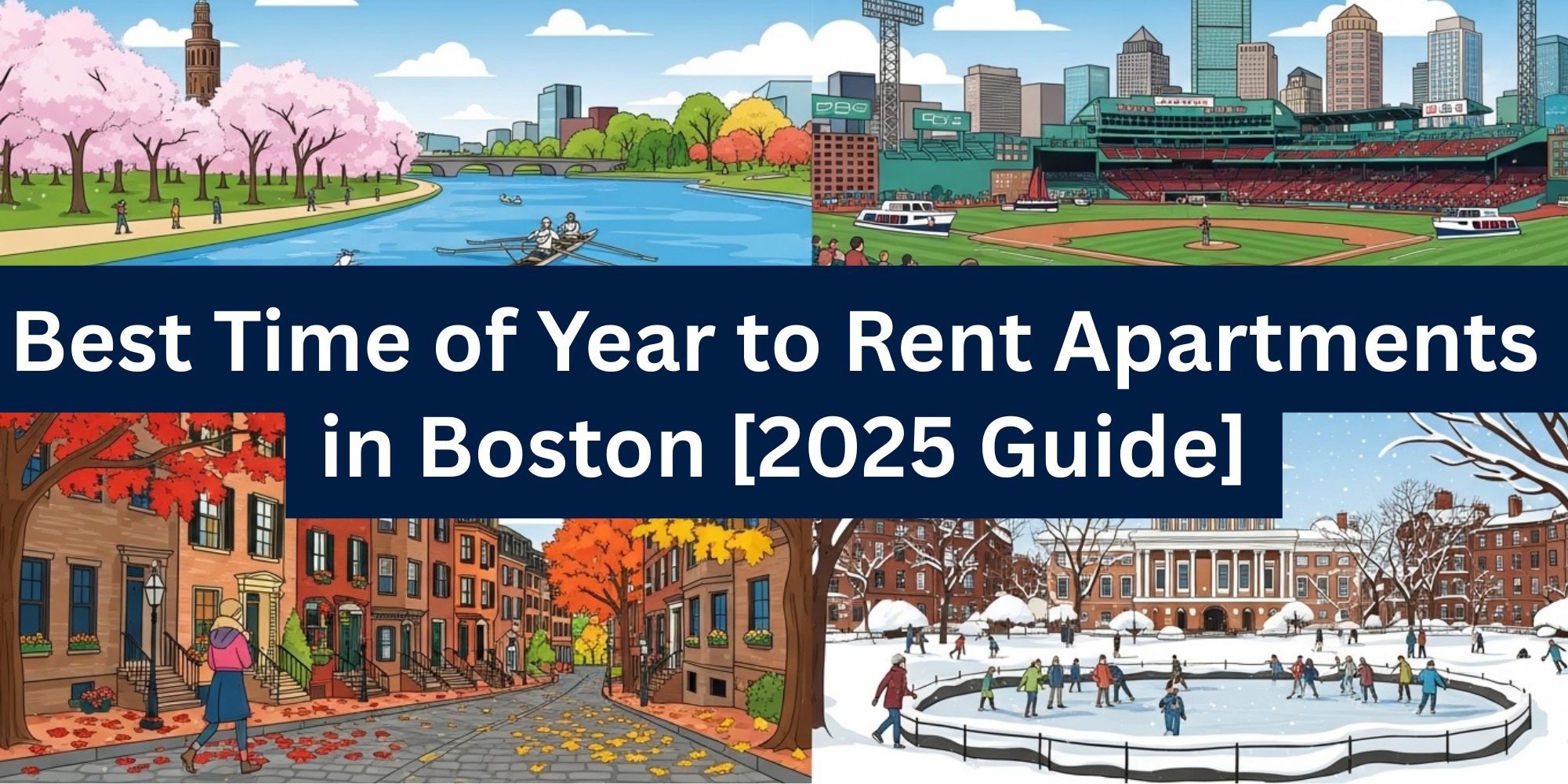
Renting an apartment in Boston can feel overwhelming.
The city has one of the most competitive rental markets in the country, and timing can make a huge difference in how much you pay, how many listings you see, and whether you land your ideal place.
The truth is: the best time of year to rent apartments in Boston depends on your priorities—whether you want the cheapest rent, the most options, or the easiest move.
In this guide, we’ll break down Boston’s rental market by season, explore how pricing and availability fluctuate, and share expert tips to help you plan your search.
Why Timing Matters in Boston’s Rental Market

Unlike many cities, Boston’s rental market is strongly shaped by the academic calendar. With more than 150,000 students across universities like Harvard, MIT, BU, and Northeastern, apartment demand follows the school year.
Here are the key seasonal patterns to know:
- Rent prices fluctuate seasonally – rising in spring and summer, dropping in winter.
- Demand increases in summer as students, graduates, and professionals move.
- Availability decreases in off-peak months—but landlords often offer better deals.
- Lease turnover is highest around September 1 (nicknamed “Allston Christmas” due to the massive move-out/move-in day).
- Competition is most intense between March and August, with apartments renting within days.
By aligning your search with these cycles, you can maximize your budget and improve your chances of finding the right place.
Renting in Winter (November–February): Best for Lower Rent and Negotiation

If you’re looking for the cheapest time to rent in Boston, winter is your sweet spot.
- Lower pricing: Demand drops as few people want to move in the cold months, so landlords reduce rent or offer incentives like free parking, rebates, or lower upfront costs.
- Less competition: With fewer renters searching, you’ll face less pressure and more negotiation power.
- Reduced inventory: The trade-off is fewer options—especially in popular neighborhoods like Back Bay, Beacon Hill, and Cambridge.
- January rentals: January is often overlooked but can be a hidden gem for snagging deals.
👉 Best for: Renters who want affordable housing and flexible lease terms.
Renting in Spring (March–April): Best for Early Planners

Spring marks the beginning of Boston’s rental surge.
- Inventory expands: Landlords start listing units that will open for summer move-ins.
- Demand rises: More students and professionals begin searching, especially in March and April.
- Competitive edge: If you start your search 60–90 days in advance, you’ll have first pick before the busiest months.
- Prices increase: While not as high as summer, rent begins trending upward.
👉 Best for: Renters who want more options without peak-season pricing and are willing to start their search early.
Renting in Summer (May–August): Best for Maximum Choice

Summer is the busiest and most expensive time to rent an apartment in Boston.
- Maximum inventory: Thousands of apartments turn over, especially in June, July, and August.
- Peak competition: Listings move fast—sometimes within 24–48 hours.
- Higher costs: Expect premium pricing and little room for negotiation.
- Allston Christmas (September 1): The biggest move-in day of the year, especially in student-heavy neighborhoods like Allston, Mission Hill, and Brighton.
👉 Best for: Renters who value selection and availability more than affordability.
Renting in Fall (September–October): Best for Flexibility

After the September 1 turnover rush, the market cools quickly.
- Lower competition: Fewer people are searching, which may give you room to negotiate.
- Reduced inventory: Most leases are already filled, so options are limited.
- October–December deals: Landlords may offer rent reductions or incentives for units that didn’t rent in summer.
👉 Best for: Flexible renters who want less competition and potential bargains, but don’t mind fewer options.
Seasonal Comparison of Boston’s Rental Market
Expert Tips for Renting in Boston
- Start early – Begin searching 60–90 days in advance for the best options.
- Use real-time availability tools (RTAR) – Track listings daily since good ones go fast.
- Negotiate in off-peak months – Winter and fall are your best chance for reduced rent.
- Know the broker fee rule – You pay a broker fee (often one month’s rent) only if you hired the broker yourself. A fee for a broker the landlord hired is the landlord’s to pay.
- Plan around your move-in date – If possible, avoid the September 1 rush unless you want to live in a student-heavy neighborhood.
FAQs: Best Time of Year to Rent in Boston
1. Is it cheaper to rent in winter in Boston?
Yes. Winter (November–February) is the cheapest time to rent in Boston because demand is low, inventory moves slowly, and landlords are more open to negotiation or offering incentives.
2. What month has the most apartment listings in Boston?
Summer months—particularly June, July, and August—have the most apartment listings due to student turnover and lease expirations leading up to September 1.
3. When should I start looking for an apartment in Boston?
Ideally, start your search 60–90 days before your planned move-in date. Since September 1st is highly competitive, many people who want to get ahead begin their search between December and March.
4. Is September a good time to rent in Boston?
September 1 is the biggest lease turnover day of the year, but competition is intense. While inventory peaks just before September, by mid-September most units are already taken.
5. What is “Allston Christmas”?
“Allston Christmas” is a local term for September 1, when thousands of students move in or out of apartments, especially in neighborhoods like Allston and Brighton. It’s known for curbs piled with free furniture left behind by outgoing tenants.
6. Can I negotiate rent in Boston?
Yes—especially during slower seasons like winter and late fall. Landlords may lower rent or offer incentives (such as free parking) when demand is low.
7. Should students rent in summer or earlier?
Students should begin searching December to March to secure housing for September. Waiting until summer may leave you with fewer affordable options.
Final Thoughts: Choosing the Right Time for You
The best time of year to rent apartments in Boston depends on what matters most to you:
- Winter (Nov–Feb) → Best for affordable rent, fewer competitors, and negotiation.
- Spring (Mar–Apr) → Best for balance between selection and price.
- Summer (May–Aug) → Best for maximum inventory but higher costs.
- Fall (Sep–Oct) → Best for potential deals and quieter conditions.
If saving money is your top priority, rent in winter. If you want the widest selection, target summer. For many renters, though, spring strikes the ideal balance—with more listings than winter but less competition than peak summer.