

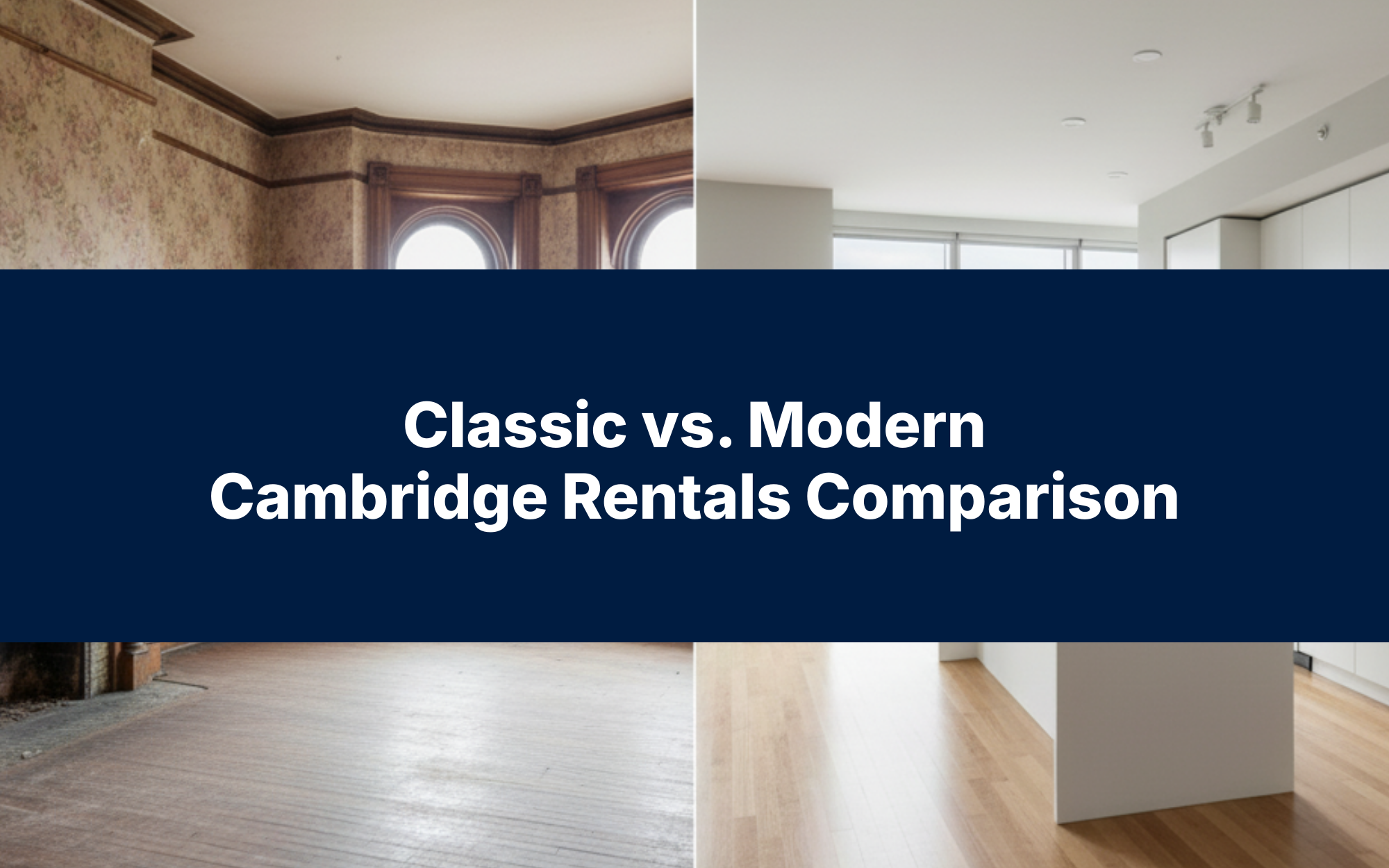
Our quick take: High-rise apartments in Cambridge usually win on energy efficiency, accessibility, and modern amenities, which can lower utility bills and cut maintenance headaches.
Classic Cambridge triple-deckers, on the other hand, offer neighborhood charm, natural light, and a stronger community feel—but may come with hidden costs like drafty windows or dated heating systems.
The real benefit depends on your personal mix of priorities: comfort, cost, and convenience.
Snapshot: Cambridge Rentals
What “Classic” vs. “Modern” Means in Cambridge
When we talk about Cambridge rentals, we’re often comparing two very different property types:
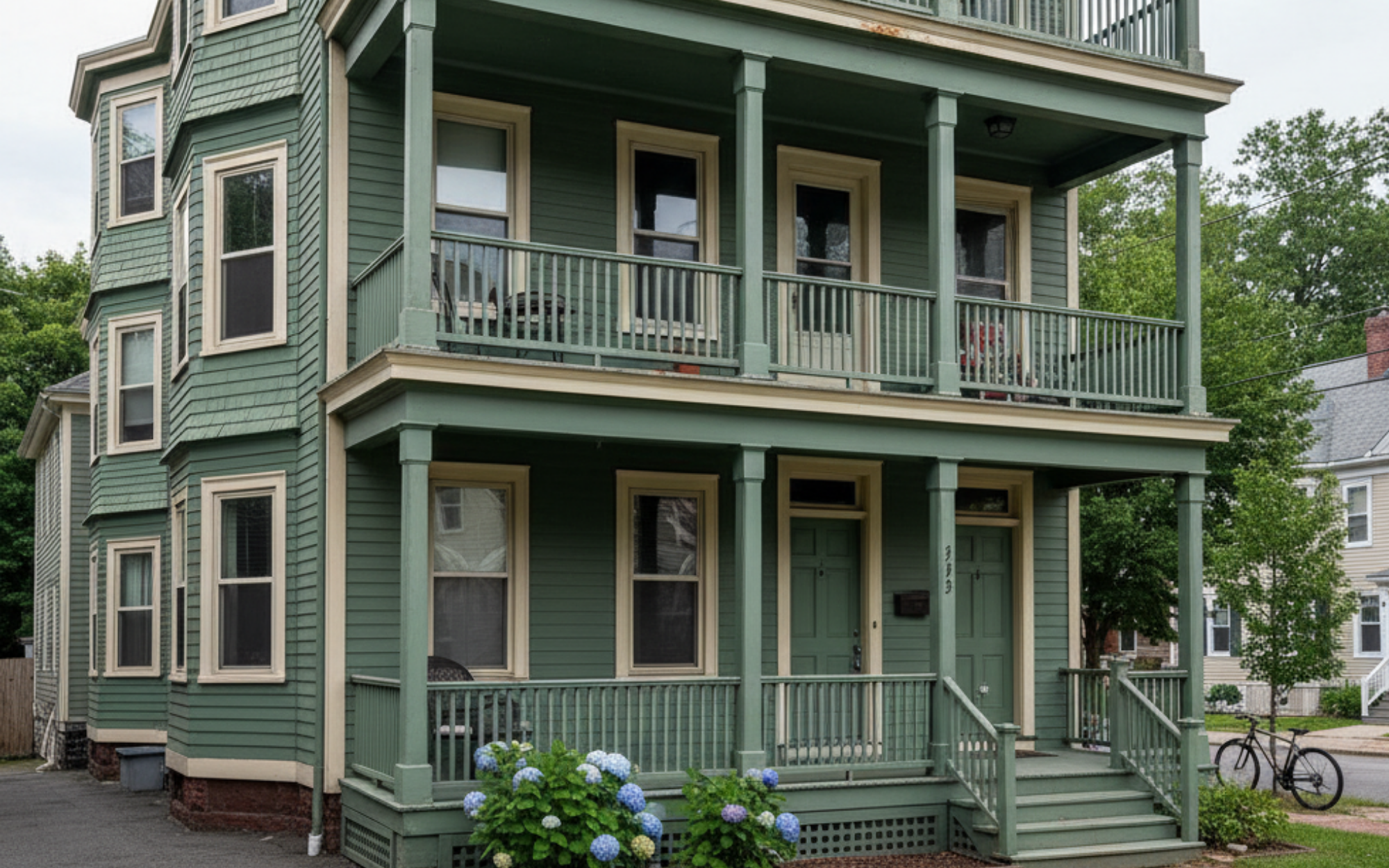
- Triple-deckers: The iconic three-family houses built in the late 1800s and early 1900s, usually wood-framed with bay windows, front porches, and quirky floorplans. Many are owner-occupied or managed by small landlords.
- High-rise apartments: Larger modern buildings—often 8–20+ stories—constructed in the last few decades. These usually come with elevators, gyms, and management companies overseeing hundreds of units.
Both coexist in the Cambridge real estate market, and both are in high demand thanks to the city’s mix of universities, biotech jobs, and excellent transit access.
Who Typically Chooses Each—and Why
- Students and young professionals often lean toward high-rises for convenience, on-site amenities, and predictable lease terms.
- Families and long-term Cambridge residents may prefer triple-deckers for extra square footage, backyards, and neighborhood community.
- Remote workers are split: some want the natural light of a bay-windowed classic, while others appreciate high-rise coworking lounges.
True Cost Comparison (Beyond Monthly Rent)
Rental Cost vs. Total Cost
At first glance, a triple-decker may appear cheaper.
Listings often advertise lower monthly rents than luxury high-rises. But “face rent” doesn’t tell the whole story.
- Triple-deckers: Rent may not include utilities. Tenants often pay separately for heat, hot water, and electricity, which can spike in New England winters.
- High-rises: While the sticker price is higher, many include heating or offer predictable utility billing. Amenity fees (e.g., gym, package lockers, parking) can add $100–$300/month.
Bottom line: Total monthly cost can end up surprisingly close.
Energy Efficiency & Utility Bills
- Older triple-deckers may have drafty windows, outdated boilers, and less insulation. Heating bills in January can be double what you’d expect in a newer high-rise.
- Modern construction follows stricter building codes—think double-pane windows, central HVAC, and sealed insulation. Energy-efficient buildings reduce both carbon footprint and monthly bills.
Building Maintenance & Surprise Expenses
- Classic buildings: Tenants sometimes deal with creaky floors, slower plumbing, or quirky electrical systems. Landlords vary—some responsive, others slow.
- High-rises: Larger management teams handle routine building maintenance quickly. But tenants may face surprise fees—like elevator reservation charges for move-ins.
Lease Terms & Property Management
- Triple-deckers: Leases are often informal, sometimes even one-page agreements with small landlords. Negotiation is possible, but so are sudden surprises (like a landlord moving back in).
- High-rises: Professional property management companies enforce stricter lease terms—pet deposits, amenity fees, renewal increases. Predictable, but less flexible.
Note: Also read about Apartment vs. Condos in Boston
Comfort & Daily Living
Noise Insulation
- Triple-decker tenants often hear neighbors above or below. Floors creak, walls may not be insulated for sound. Street noise can be higher in older, densely packed neighborhoods.
- High-rises are built with modern noise insulation, but they aren’t silent. Elevator shafts, HVAC systems, and city traffic from higher elevations can carry unexpected sounds.
Natural Light & Floorplan Layout
- Triple-deckers are known for bay windows and corner sunlight. Quirky floor plans may mean big living rooms but oddly shaped bedrooms.
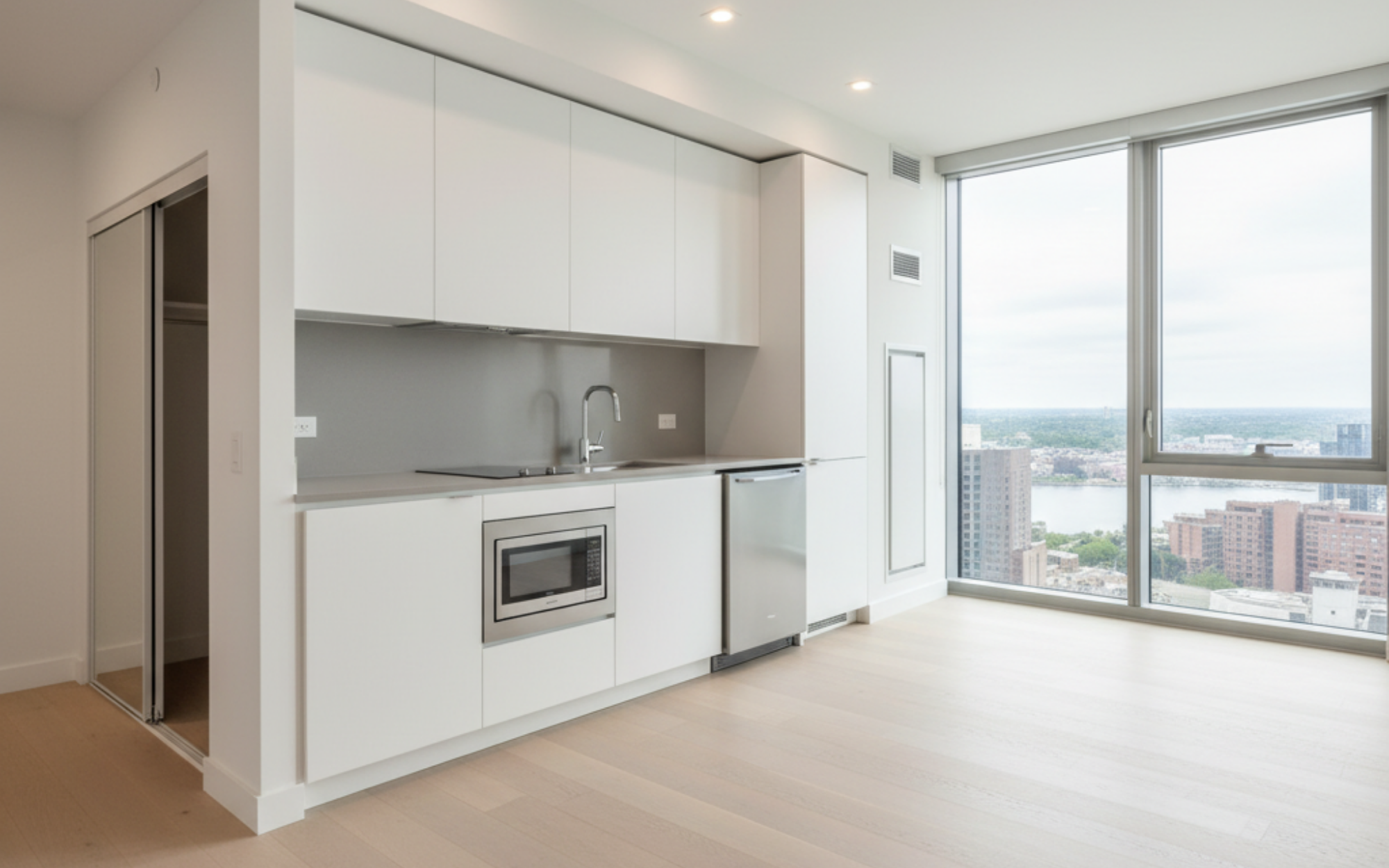
- High-rises: Compact, efficient layouts. Studio and one-bedrooms maximize every square foot. Higher floors can mean sweeping views, but some north-facing units feel dark.
Space & Square Footage
- Triple-deckers often offer larger kitchens, dining rooms, and storage areas (pantries, basements).
- High-rises emphasize functionality—smaller kitchens, fewer closets, but modern open-concept layouts.
Accessibility: Elevator vs. Staircase
- Triple-decker tenants quickly learn the reality of three flights of stairs. Carrying groceries or moving furniture can be tough.
- High-rises provide elevators and ramps, making them better for families with strollers or tenants with accessibility needs.
Security & Package Handling
- Triple-deckers may have basic lock-and-key entry and no dedicated package area. Porch theft is a real concern.
- High-rises often feature fob access, doormen, and secure package lockers—a big plus in the online shopping era.
Location, Lifestyle & Commute
Walkability & Public Transit Access
Cambridge is one of the most walkable cities in the Boston area. Both triple-deckers and high-rises benefit from access to the Red Line, buses, and bike lanes.
- Triple-deckers: Often located on residential side streets, close to corner stores and local cafes.
- High-rises: Typically built closer to main transit hubs, offering faster commutes but busier traffic.
Neighborhood Charm & Community Feel
- Triple-decker living often comes with front porch conversations, backyard barbecues, and block parties.
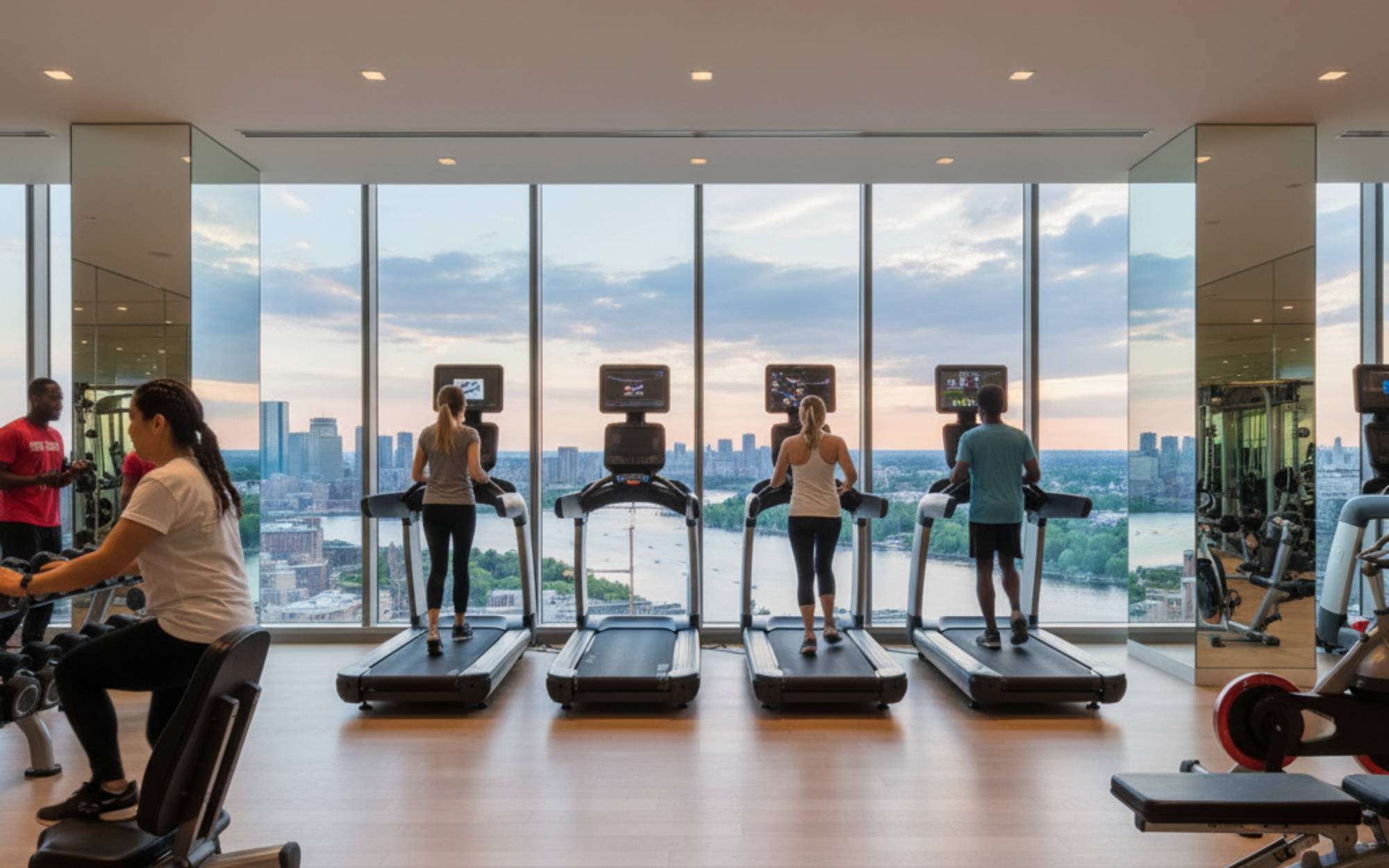
- High-rises replace that with building-based community: gyms, lounges, and rooftop decks.
Parking Availability
- Triple-deckers: Street parking or small driveways, often limited. Cambridge requires resident permits.
- High-rises: On-site garages, but monthly fees can add $150–$300.
Views, Sunlight Orientation, and Floor Elevation
- Triple-deckers: Neighborhood tree lines and classic street views.
- High-rises: Skyline and river vistas—but wind exposure and elevator waits increase with height.
Building Age, Codes & Preservation
Property Age & Modern Construction Standards
- Triple-deckers can be 100+ years old. While charming, they weren’t built with today’s energy or safety standards.
- High-rises: Comply with updated building codes, including fire safety, insulation, and accessibility.
Historic Preservation & Residential Zoning
Many Cambridge triple-deckers fall under historic preservation rules.
This limits how landlords can renovate (e.g., replacing windows, altering facades).
While charming, it can also lock in inefficiencies.
Renovated Triple-Deckers: What “Updated” Actually Means
Some owners invest heavily in renovations—new kitchens, bathrooms, insulation.
Others only update the paint. Renters should always inspect carefully.
Rental Trends to Watch
Amenities Arms Race in New Buildings
High-rises are competing with co-working lounges, rooftop terraces, and package lockers.
These features attract younger professionals but drive up amenity fees.
Utility-Efficient Upgrades in Older Stock
Triple-decker landlords are gradually installing heat pumps, smart thermostats, and insulation.
This narrows the efficiency gap—but not evenly across the market.
Shifting Renter Preferences
Post-2020, privacy and noise levels have become top concerns.
Remote workers value layouts that support home offices.
Students and young renters lean toward central high-rises for community and transit.
Head-to-Head: Which Fits You?
Checklist & Calculator
Tour Checklist (Inspect Before You Sign)
- Test windows for drafts.
- Run faucets—check water pressure.
- Flush toilets and note refill speed.
- Walk floors—listen for creaks.
- Inspect stairwell width (moving day).
- Measure closet and storage space.
- Ask about the heating system age.
- Check package delivery setup.
- Confirm parking rules and fees.
- Ask neighbors about noise.
Total Cost Calculator Variables
- Base rent
- Average utilities (heat, electric, internet)
- Amenity fees (gym, pets, lockers)
- Parking (garage vs. street)
- Commute costs (MBTA, gas, bike)
- Lease fees (application, move-in elevator fee)
- Seasonal variation (winter heating premium)
FAQs
Is it cheaper to rent a triple-decker or a high-rise in Cambridge?
Triple-deckers often have lower face rent, but high-rises may include utilities, making total cost comparable.
Are high-rises more energy-efficient than old buildings?
Yes. Modern codes require insulation and efficient HVAC. Triple-deckers may lag unless renovated.
What hidden costs come with a historic apartment?
High heating bills, drafty windows, and more frequent small repairs.
Do triple-deckers get better natural light?
Often yes, thanks to bay windows and corner layouts.
How do noise levels compare?
Triple-deckers: neighbor and street noise. High-rises: mechanical hum, elevator activity.
Are renovated triple-deckers worth the premium?
If insulation and systems are upgraded, yes—lower bills and better comfort.
Which offers more privacy and community feel?
Triple-deckers: stronger block-level community. High-rises: anonymity plus organized building amenities.
Is maintenance easier in new constructions?
Generally yes, since professional teams handle it quickly.
How do lease terms and fees differ?
Triple-deckers: flexible but variable. High-rises: predictable but strict.
What should I inspect before I sign a lease?
Check noise, utilities, storage, heating system, and parking.
Bottom Line: How to Choose Confidently
There is no universal “winner” in the triple-decker vs. high-rise debate. The real benefit lies in matching the rental type to your lifestyle:
- If you value historic charm, natural light, and neighborhood culture, a triple-decker may be right—even with higher utility bills.
- If you want efficiency, security, and professional management, a high-rise offers peace of mind—though at a higher sticker price.
Cambridge renters have more choice than ever.
By calculating total costs, inspecting for hidden maintenance, and weighing comfort factors like noise and light, you’ll be ready to sign a lease with confidence.