

Making the move from dorm life to off-campus housing can be exciting for Harvard students. It offers more space, independence, and often a better sense of the "real world." However, this shift comes with a range of financial responsibilities that are important to plan for. If you're considering renting an apartment near Harvard, it's crucial to understand all potential moving expenses.
This guide outlines the typical costs Harvard students should expect when moving into off-campus housing in the Boston area.
1. Rent and Lease-Related Costs
Monthly Rent: Rent varies significantly depending on the neighborhood. In areas close to Harvard like Cambridge, Allston, and Somerville, expect to pay:
- Cambridge: $2,000–$3,000/month for a 1-bedroom
- Allston: $1,800–$2,500/month
- Somerville: $1,700–$2,400/month
First and Last Month's Rent: Most landlords require the first and last month's rent upfront. For a $2,200/month apartment, that’s $4,400 due before you move in.
Security Deposit: Typically equal to one month’s rent, this is refundable if the apartment is left in good condition. So, factor in another $2,200.
Advance Payment or Holding Fee: Most landlords will require a deposit in order to apply, which will take the apartment off the market while your application is being reviewed. This generally will be used as the first month’s rent upon approval.
2. Application and Signing Fees
Application Fee: Ranges from $25–$100 per applicant. This often covers the cost of a background and credit check.
Credit Check Fee: Sometimes rolled into the application fee but occasionally charged separately. International students may be asked for additional documentation or co-signers.
Signing Fee: In rare cases, landlords or brokers charge a separate fee to finalize the lease agreement.
Rental Platforms:
- Craigslist: Widely used, but caution is needed to avoid scams.
- Apartments.com: Verified listings, filterable by budget and amenities.
- Facebook Housing Groups: Harvard-specific housing groups can be a goldmine for sublets or student-friendly rentals.
3. Setup & Utility Expenses
Utilities: Not always included in rent. Typical monthly utility bills in Boston:
- Electricity: $50–$80
- Gas: $30–$60
- Water/Sewer: Sometimes included, otherwise $20–$40
Internet Fee: Internet in Boston usually runs $50–$70/month. Installation may cost extra unless there's a special offer.
Insurance: Renters insurance is often required and ranges from $10–$20/month. It covers your belongings in case of theft, fire, or other issues.
Laundry: If not in-unit, expect to spend $2–$4 per load. Over a month, this can add $20–$40 to your budget.
Setup Costs: Some service providers charge installation or activation fees. Expect to pay $50–$100 to set up electricity, internet, and gas.
4. Furnishing & Essentials

Furniture: Unfurnished apartments are the norm. You’ll need to budget for:
- Bed & mattress: $300–$800
- Desk & chair: $100–$300
- Couch: $200–$700
- Dining table & chairs: $150–$500
Consider second-hand options via Craigslist or Facebook Marketplace. IKEA in Stoughton or Somerville is also popular with students. Depending on when you move, you can score second-hand furniture during Allston Christmas, where hundreds of students leave their furniture on the street in Allston when they move out before September 1st.
Kitchen Essentials:
- Pots, pans, utensils, plates: $100–$250
- Small appliances (microwave, toaster): $100–$200
Packing Supplies:
- Boxes, bubble wrap, tape: $30–$60
Storage Fee: If there's a gap between leases or early arrival, you might need temporary storage. Costs range from $50–$200/month.
Shared Apartment Consideration: Splitting costs with roommates can significantly lower your financial burden. Clarify who’s bringing or buying what.
Sublet Opportunities: Furnished sublets can eliminate many of the setup costs entirely.
5. Transportation & Moving Services
Moving Truck: Renting a U-Haul for a day costs $100–$150, depending on mileage and size. Remember to factor in gas and potential tolls.
Moving Company: Full-service movers start at $500 and can exceed $1,500 depending on distance and number of belongings. Ideal if you’re moving from out of state or abroad.
Transportation: Monthly MBTA pass (CharlieCard) costs $90 for unlimited rides. Many students bike, walk, or use ride-shares.
Parking Permits: Some Boston neighborhoods require residential parking stickers, which cost around $25/year, but availability is limited.
International Students: Shipping belongings internationally can cost hundreds or even thousands. Many opt to travel light and buy essentials upon arrival.
6. Hidden and Ongoing Costs
Cleaning Fee: If your apartment isn’t spotless when you leave, your landlord may deduct a cleaning fee from your security deposit. Professional cleaning can cost $100–$200.
Pest Control: Some buildings include pest management; others don’t. Treatments can cost $50–$150 per visit if required.
Bills: Besides utilities, don’t forget about recurring expenses like:
- Streaming services
- Cell phone bill
- Groceries
Roommate Costs: Conflicts over shared bills or cleaning can strain relationships. Consider using apps like Splitwise to keep things transparent.
Deposit Refund: It may take up to 30 days to get your security deposit back, so don’t count on it immediately for your next move.
7. Budgeting Tools & Annual Planning
Annual Budgeting: Off-campus living requires strategic planning. A sample annual budget might look like this:
- Rent: $24,000
- Utilities & Internet: $1,500
- Setup & Furniture: $2,000
- Transportation: $1,200
- Food & Groceries: $3,000
- Insurance: $150
- Miscellaneous (cleaning, pest control, etc.): $1,000 Total: ~$32,850/year
Budgeting Tools:
- Mint or YNAB (You Need A Budget)
- Harvard’s financial aid office has worksheets
- Google Sheets templates tailored for students
Personal Spending: Add a buffer for social activities, travel, and unforeseen expenses. Budget $100–$200/month.
Textbooks: These can cost $300–$600/semester. Consider renting or using library copies.
8. Apartment Hunting Tips
Start Early: Begin your housing search 3-4 months before your intended move-in date.
Evaluate the Housing Market: Boston’s rental market is competitive, especially in late summer. Be ready to act fast.
Compare Housing Options:
- Studios vs. 1-bedrooms
- Shared vs. private apartments
- Sublets vs. full-year leases
Neighborhood Selection:
- Cambridge: Closest to Harvard but priciest
- Allston: Affordable, student-heavy vibe
- Somerville: Trendy, quieter, decent commute
Tours & Walkthroughs: Never rent without seeing the apartment or having a trusted friend check it out.
9. Final Thoughts: Smart Planning = Less Stress
Moving off-campus is a big financial commitment, but with proper planning, it can also be a rewarding and more independent college experience. Be sure to:
- Budget in advance
- Compare neighborhood prices
- Plan for both one-time and recurring costs
- Understand your lease terms
Always read the fine print, communicate with your roommates, and don’t hesitate to reach out to Harvard’s Off-Campus Housing Office for guidance.
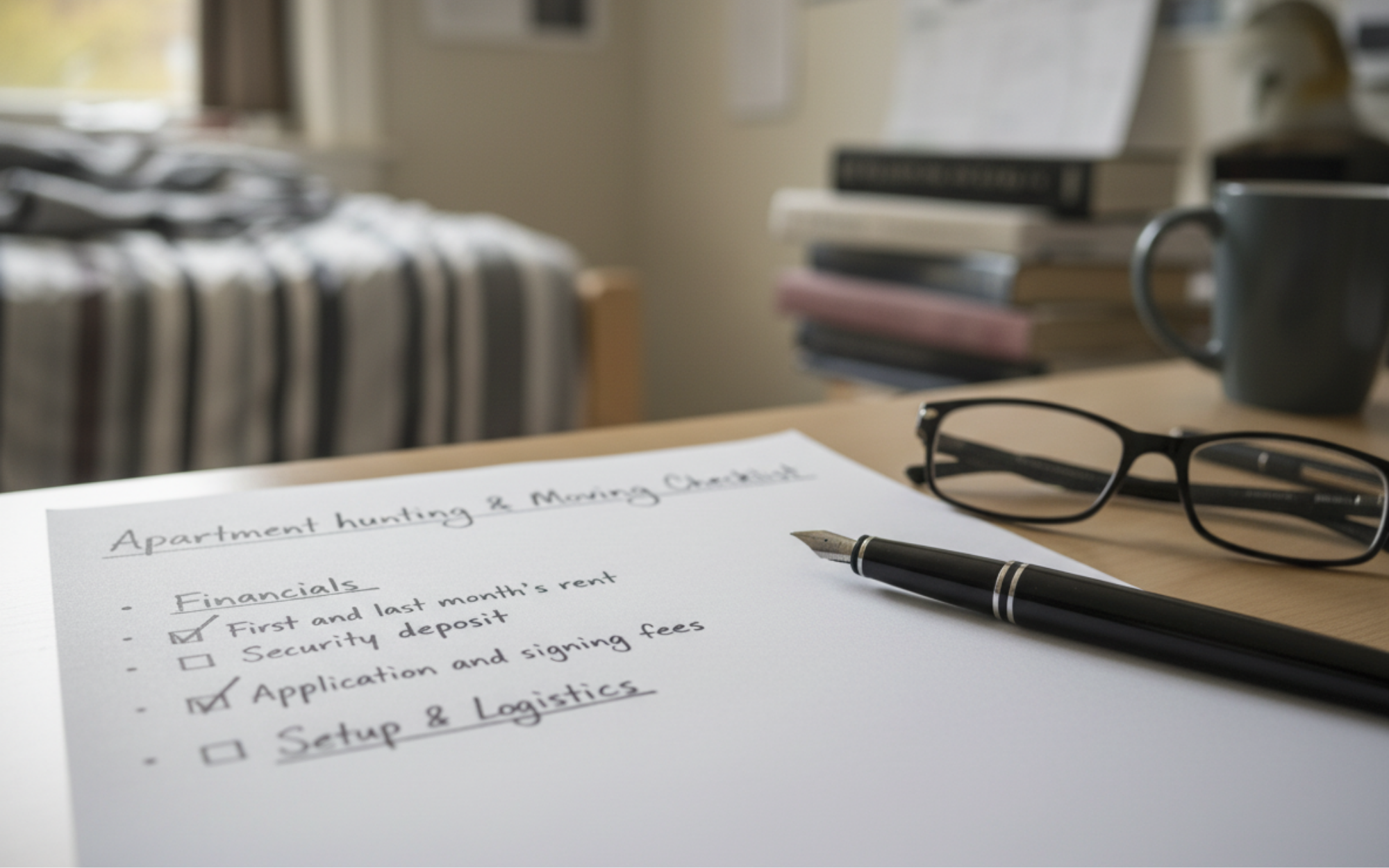
Moving Expenses Checklist for Harvard Students
- First and last month’s rent
- Security deposit
- Application and signing fees
- Furniture and setup costs
- Utilities and internet setup
- Renters insurance
- Moving truck or company fees
- Storage (if applicable)
- Transportation (bike, MBTA, parking)
- Cleaning and pest control fees
- Annual budgeting tools
- Textbooks and personal spending
Plan well, and you’ll not only save money—you’ll enjoy a smooth transition into off-campus life at Harvard.