
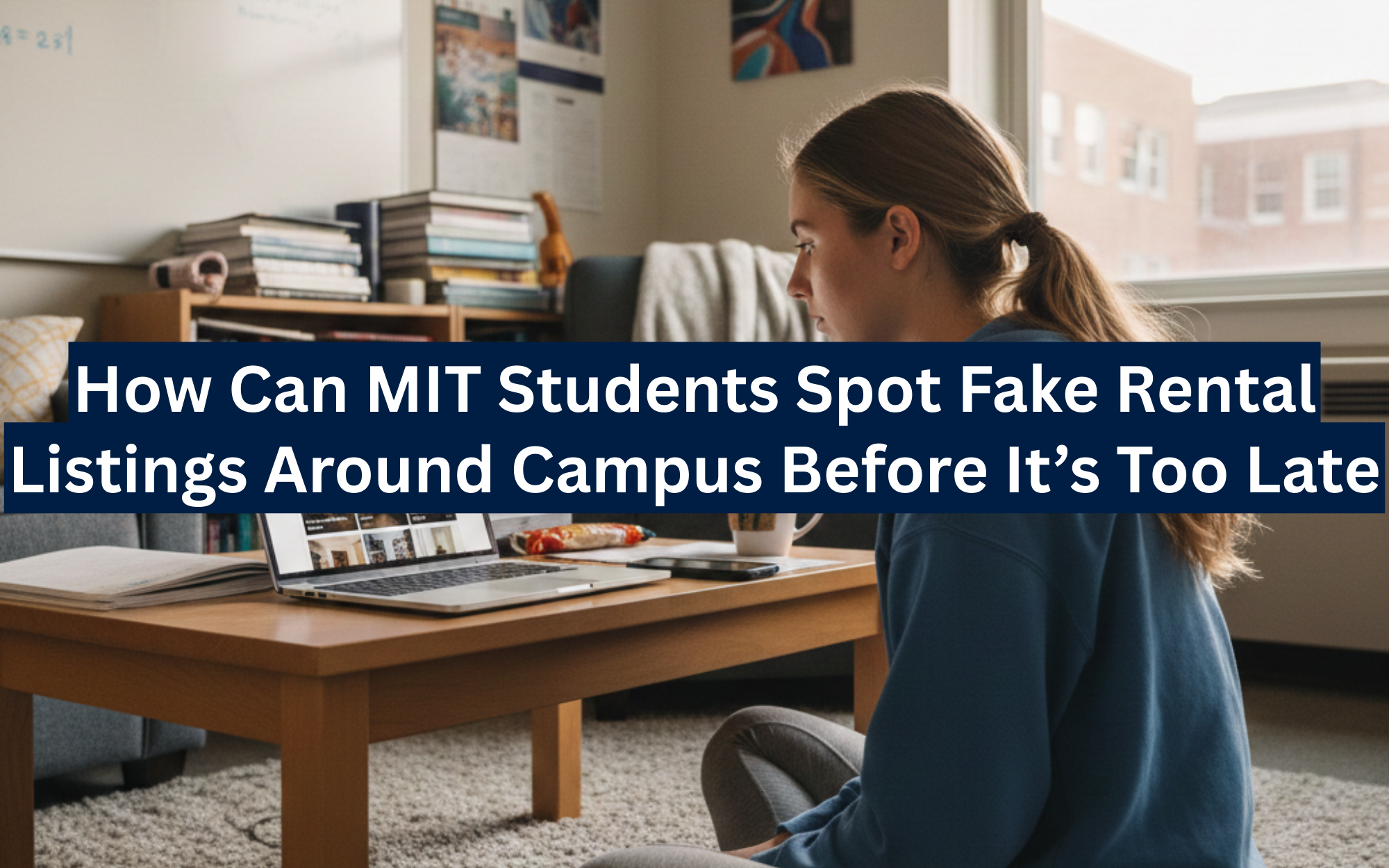
Apartment hunting around MIT can feel like a sprint: listings go up, group chats explode, and within hours the “good deals” are gone. Scammers know this. They target college students because students often have tight timelines, are new to the local market, and may be desperate to lock something down before a move-in date.
The good news: most rental scams follow predictable patterns. If you know what fake listings look like—and you adopt a simple verification routine—you can avoid getting trapped by a fraudulent listing that costs you money, time, and sometimes even your identity.
This guide gives MIT students a practical playbook to spot scam listings fast, verify a legitimate landlord, protect your personal information, and report suspected scams when something doesn’t add up.
Why rental scams spike around campus
The area around MIT attracts a constant flow of renters: undergrads, grad students, visiting researchers, interns, and people relocating for work. That steady demand creates two conditions scammers love:
- Competition + urgency. Students feel pressure to act quickly on an “urgent deal.”
- Information gaps. Newcomers don’t always know typical pricing, lease norms, or which platforms are safest.
Scammers take advantage by creating a fake rental listing that looks convincing enough to trigger a deposit payment before you’ve verified anything.
If you remember only one rule from this article, make it this:
No verification = no money. No exceptions.
What fake listings and fraudulent listings usually look like
A scammer doesn’t need a perfect story. They need a story that works long enough for you to send money—usually a deposit or “application fee”—through an untraceable method.
Common scam setup:
- A beautiful apartment “near campus”
- Great photos
- Below market rent
- A landlord who’s “out of town”
- A reason you can’t see it
- A demand for fast payment to “hold it”
It’s not always obvious at first glance. That’s why you need a set of warning signs—and a quick, repeatable verification process.
The “Too Good to Be True” test: below market rent is bait
Below market rent is the #1 hook
If a listing is significantly cheaper than similar apartments in Cambridge/Somerville/Boston for the same number of bedrooms, amenities, and distance to campus, treat it as suspicious until proven otherwise.
Scammers rely on your brain doing this:
“Wow, I can’t lose this.”
They’ll often frame the deal as a personal favor:
- “I’m renting it cheap because I don’t want hassle.”
- “I’m a professor on sabbatical.”
- “I’m relocating and want a quick tenant.”
A legitimate listing can be priced slightly under market, but a dramatically discounted price is almost always a signal to slow down and verify.
How scammers make listings look real
- They steal photos from past listings or real estate sites.
- They copy text from a real rental listing site and tweak details.
- They reuse the same listing across multiple platforms (or create “duplicates” with slightly different addresses).
Quick move: Do a reverse image search on the photos. If the same images appear tied to different addresses or old listings, assume rental fraud until proven otherwise.
Red flags in the conversation: the message is where scams show
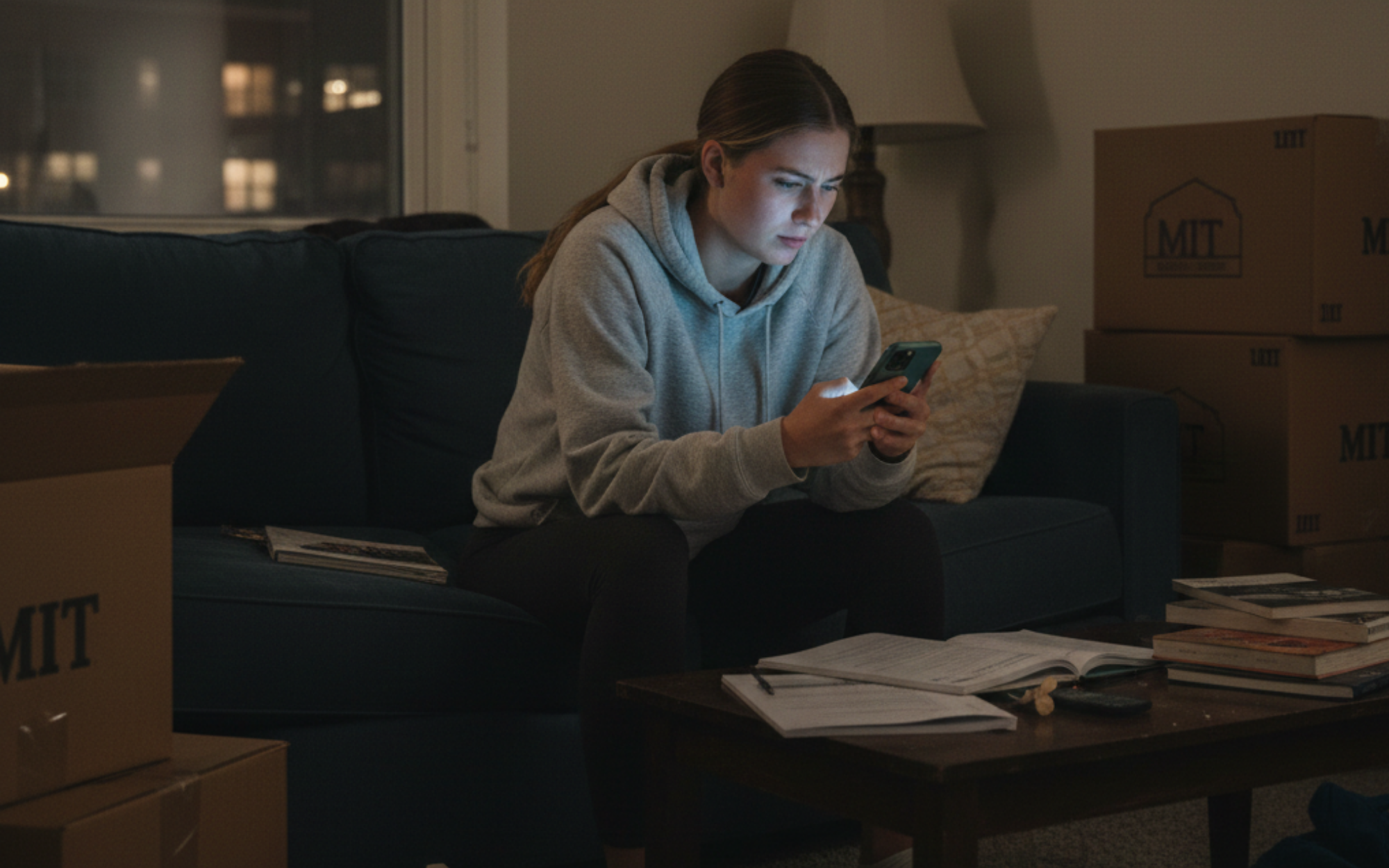
A listing can look polished. The messages are where scammers slip.
Here are the biggest red flags MIT students should watch for:
1) Pressure to act quickly
Any of these lines should raise your risk level:
- “Lots of interest—first deposit gets it.”
- “I need a decision today.”
- “Someone is paying now, you must act quickly.”
- “Urgent deal—send the holding deposit within the hour.”
This is a classic scam tactic. Pressure reduces your verification steps. A real landlord might move quickly in a tight market, but they won’t usually object to basic verification like a tour, a lease review, and identity confirmation.
2) They can’t or won’t meet in person
If the landlord can’t or won’t meet in person, your job is to increase verification—not to compensate with money.
Common excuses:
- “I’m overseas.”
- “I’m in the military.”
- “I’m traveling and can’t show it.”
- “I’m sick; just do the paperwork online.”
If you can’t see the property in person (or at least via a live, interactive video tour), treat it as high risk.
3) They refuse a live tour or dodge basic questions
A real landlord can answer:
- Exact address and unit number
- Lease start/end dates
- What utilities are included
- Building rules
- How maintenance requests work
- Who manages the property
Scammers often respond with vague or overly emotional language, or they keep redirecting you back to “just send the deposit.”
4) They want untraceable payments
This is huge. The moment you hear any of these, stop:
- request to wire money
- wire transfer
- Western Union
- “money transfer service”
- crypto
- gift cards
- “friends and family” payment links
- “non-refundable holding deposit” via a random app
These methods are hard to reverse and easy to vanish with. Scammers love them because you can’t easily recover funds.
5) They ask for sensitive personal information too early
Some landlords do run a background check, but timing and method matter. Red flags include requests for:
- full SSN
- passport scans
- bank account numbers
- a photo of your ID before you’ve toured or verified them
- “application fees” paid directly to an individual
This can turn a rental scam into identity theft.
Where scams show up: Zillow, Craigslist, Facebook Marketplace, Apartments.com
Scams can appear anywhere, but certain platforms tend to be more scam-prone simply because they’re open and fast-moving.
Craigslist
Craigslist can be useful, but it’s also a common home for fake listings. Many scams here involve copied photos, vague descriptions, and direct email-only communication.
Protect yourself:
- Avoid off-platform pressure immediately.
- Never pay without verifying.
- Be extra cautious of listings with unusually low rent.
Facebook Marketplace
Marketplace scams often exploit social trust:
- profiles that look real
- friendly tone
- “I’m helping my cousin rent this place”
Protect yourself:
- Verify the landlord’s identity, not just the messenger.
- Confirm they have legal authority to rent the unit.
Zillow / Apartments.com
These sites can still have fraudulent listings, but they often contain more structured data and history. Scammers may impersonate property managers or post a “too-good-to-be-true” rental that looks professional.
Protect yourself:
- Cross-check the address.
- Confirm the listing appears on the property manager’s official site (if applicable).
- Still tour and verify before paying.
The biggest platform risk: going off-platform too early
A scammer’s goal is to get you into private texting/email, rush you, and remove the platform’s protections or reporting tools. If the conversation turns into “just send the deposit and I’ll email you a lease,” your risk skyrockets.
The verification playbook: verify the landlord and verify the property
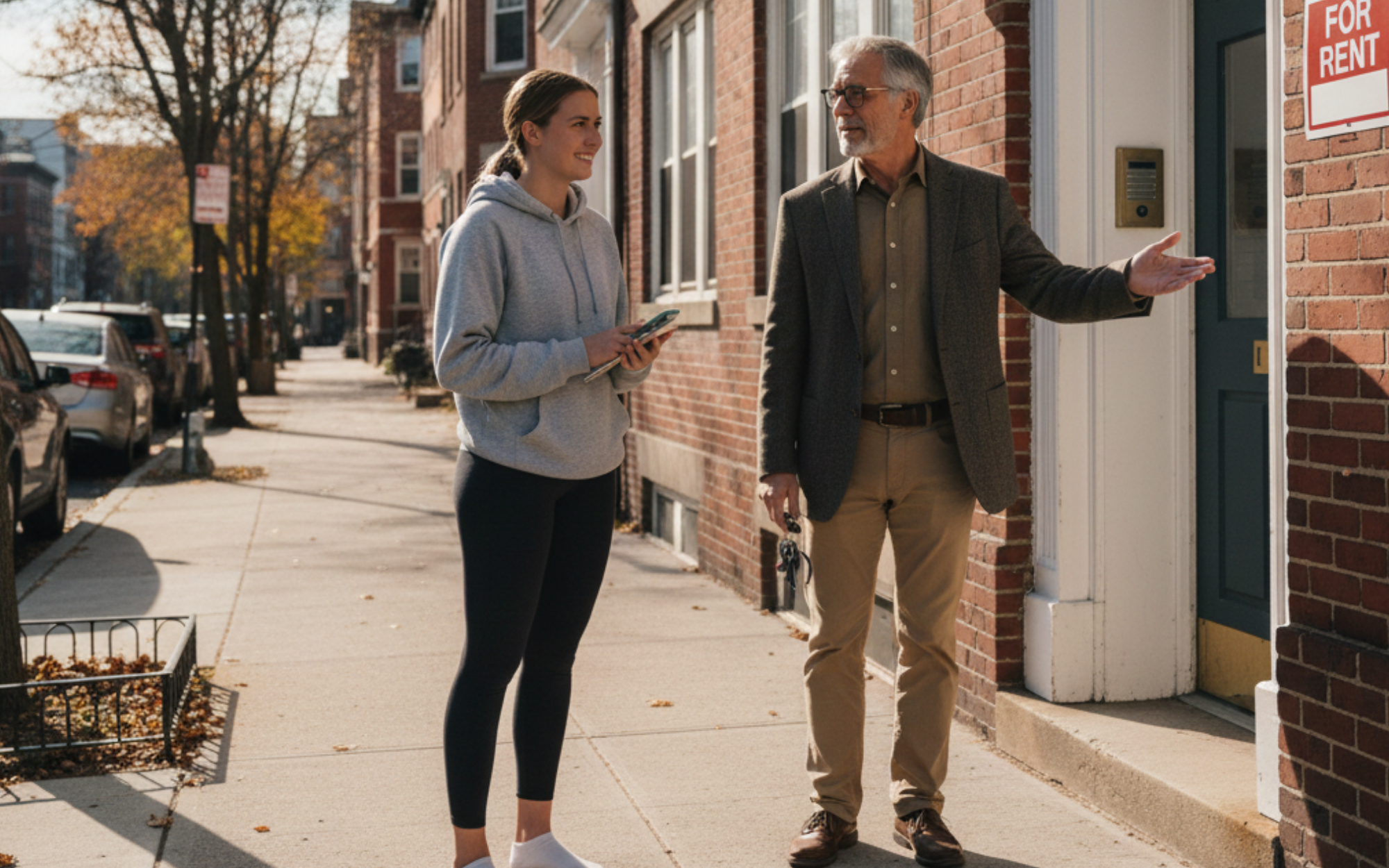
You don’t need to be a detective. You just need a repeatable process.
Step 1: Verify the property exists and matches the listing
Before you fall in love with the photos:
- Confirm the address is real and formatted correctly.
- Check that photos match the building type and neighborhood.
- Look for contradictions (e.g., “backyard in downtown high-rise,” or “in-unit laundry” when building listings never mention it).
Step 2: Verify the landlord’s identity
A legitimate landlord (or property manager) should be able to provide consistent, verifiable details.
Ask for:
- Full name
- Role (owner vs. management company vs. agent)
- A professional email (especially if they claim to be a company)
- A phone number you can call (not just text)
Then look for consistency:
- Does the name match the email domain?
- Do they have an online presence consistent with a landlord or management company?
- Are their details stable across communication?
Important safety note: Verification should not require you to give away your most sensitive data. You can verify them without handing over your identity.
Step 3: Meet in person whenever possible
If you can meet in person, do it. And don’t just meet at a coffee shop—tour the unit.
A legit tour usually includes:
- access to the building
- actual keys or keypad access
- the ability to answer basic questions
- a normal lease process
Step 4: If you can’t meet in person, demand a live interactive tour
If you’re not local yet:
- Ask for a live video tour (not a pre-recorded clip).
- Ask them to show specific things on request (“Can you show the kitchen sink cabinet?” “Can you show the unit number on the door?”).
- Ask for a quick external view of the building and street.
Scammers often refuse because they don’t have access.
Step 5: Confirm the lease is real before paying anything
A real lease:
- names the landlord or management entity clearly
- includes a real address + unit number
- lists rent, deposit, fees, dates, and terms
- is not a one-page “template” with missing details
- doesn’t require weird payment methods
If the lease looks sloppy, inconsistent, or rushed, slow down.
Deposits, holding deposits, and “send money to lock it in”
This is the point where most students get burned.
Deposit vs. holding deposit
- A deposit is usually part of the normal leasing process—often tied to signing a lease.
- A holding deposit is often framed as “pay to reserve it,” sometimes before you’ve toured or signed anything.
Holding deposits aren’t automatically scams, but they’re a favorite scam tool because they create urgency.
The scam pattern
- You find a great listing.
- The landlord says there are multiple applicants.
- They request a holding deposit quickly.
- They push an untraceable payment method.
- The listing disappears.
Safe payment principles
- Never pay before verifying the property and landlord.
- Avoid wire transfer, Western Union, and any money transfer service for first-time payments to an unknown party.
- Avoid payments that are hard to dispute or reverse.
- Prefer payments tied to an established business process (property management portal, documented check payment to a verified entity, etc.).
If you’re unsure, treat it as a scam until you can verify more.
Protect your personal information: avoid identity theft in “rental screening”
Rental searches are also a common gateway to identity theft. Scammers may pretend to run a background check to collect your data.
What’s safe to share early
Before you’ve toured and verified:
- your name
- general move-in date
- general budget
- basic renter profile (“MIT student, no pets, non-smoker”)
- references without sensitive personal identifiers
What to never share upfront
Until you have verified the landlord and are in a real application flow:
- SSN
- passport scans
- full driver’s license images
- bank account numbers
- copies of immigration documents
- “pay stubs” that reveal too much personal data
Background check best practices
A legitimate landlord may use a known screening provider or a formal application process. If someone demands:
- a “background check fee” sent to them personally,
- a suspicious link,
- or excessive data too soon, walk away.
If you do submit any information, keep a record of what you sent and when.
MIT off-campus housing: safer ways to search and filter
MIT students should prioritize safer channels when possible. MIT off-campus housing resources can reduce exposure to scam listings by keeping the search closer to a campus community context and providing guidance on fraud prevention.
Even if you still use public platforms, use MIT resources as your “validation layer”:
- compare pricing expectations
- learn typical lease norms
- understand local moving costs and deposit expectations
- know how to report suspicious listings
Think of it as your scam-resistant foundation.
The 10-minute verification checklist (copy/paste)
Use this checklist every time you consider a listing—especially if it feels like an “urgent deal.”
Listing sanity check
- Rent is not wildly below market rent
- Photos are not duplicated across multiple addresses (reverse image search)
- Address and unit details are clear and consistent
- The story isn’t “too perfect” or overly emotional
Landlord verification
- You can verify the landlord’s identity (consistent name, email, phone, role)
- They answer basic questions without dodging
- They’re willing to meet in person or do a live video tour
Tour + lease
- You can see the property in person or via a live interactive tour
- Lease includes real details: entity, address, dates, rent, deposit, terms
- There’s no pressure to skip steps
Payment safety
- They do not request wire transfer, Western Union, or a money transfer service
- They do not demand untraceable payment
- You are not asked for sensitive personal information upfront
Instinct check
- You don’t feel rushed, threatened, or manipulated
- If it feels weird, you pause and verify more
If you fail two or more boxes, assume it’s a fake rental listing until proven otherwise.
What to do if you think you found a scam listing
1) Stop communication and don’t send money
If you’ve identified clear warning signs, don’t negotiate with the scammer. Scammers are good at emotionally pulling you back in.
2) Screenshot and document everything
Save:
- listing URL
- photos
- messages
- email headers (if possible)
- payment instructions
- phone numbers and names used
This documentation helps you report the scam effectively.
3) Report suspected scams in the right places
When you report suspected scams, you help protect other students too. Common reporting routes include:
- MIT off-campus housing reporting tools (if the listing appeared there)
- The platform where you found it (Zillow/Craigslist/Facebook Marketplace/Apartments.com) — report the listing/profile
- FBI’s IC3 (Internet Crime Complaint Center) for internet-enabled fraud
- The Federal Trade Commission for consumer fraud reporting
- Local police if money was stolen, threats were made, or you have identifying details
4) If you already sent money, act immediately
Time matters. If you’ve already paid a deposit or holding deposit:
- Contact your bank/payment provider right away
- Attempt to cancel or dispute the transaction
- File reports (IC3, FTC, platform)
- Save all records of payment and communication
Even if you don’t recover money, reporting can help stop repeat scams.
Real-world scam scripts (so you recognize them instantly)
Here are common scam phrases. If you see one, slow down:
- “I’m out of town, but you can drive by and look from outside.”
- “I’ll mail you the keys after you send the deposit.”
- “My agent can’t show it, but trust me—photos are accurate.”
- “Pay by wire transfer to secure it.”
- “Use Western Union; it’s faster.”
- “I have many applicants. You must act quickly.”
- “Send money now and we’ll do the lease later.”
A legitimate landlord doesn’t need to rush you past basic verification.
FAQs: Quick answers for MIT students
What are the biggest red flags of a fake rental listing near MIT?
The biggest red flags include below market rent, refusal to let you tour or meet, demands for wire transfer or Western Union, pressure to act quickly, and requests for sensitive personal information before verification.
Is “below market rent” always a scam?
Not always, but it’s one of the strongest signals. If the price is dramatically lower than comparable units, assume high risk and verify aggressively before doing anything else.
Should I ever pay a holding deposit before seeing the property?
Avoid it. Most students who lose money do so by paying a holding deposit under pressure. If you can’t tour, can’t verify the landlord, or can’t review a real lease, don’t send money.
Why do scammers ask for wire transfer or money transfer services?
Because these payments can be hard to reverse and are easy to disappear with. A request to wire money is a major sign of rental fraud.
What if the landlord can’t meet in person—how can I verify safely?
Ask for a live interactive video tour and verify identity details. If they won’t do a live tour, won’t answer basic questions, or demand payment first, treat it as a scam.
What personal information should I never share upfront?
Don’t share your SSN, passport scans, full ID images, or bank details until you’ve verified the landlord and are in a legitimate application process.
Where should MIT students report suspected rental scams?
Report the listing on the platform where you found it, notify MIT off-campus housing channels if relevant, and file with the FBI’s IC3 and the FTC. Contact local police when money is stolen or threats occur.
Are Zillow, Craigslist, Facebook Marketplace, and Apartments.com safe?
They can be useful, but scams exist on all of them. Use the verification checklist every time, and never pay before confirming the landlord and property.
Final thoughts: Your best scam defense is a boring process
Scammers win when you skip steps. They want you rushed, excited, and afraid of missing out. Your job is to make apartment hunting boring in the best way:
- Run the “too good to be true” test.
- Collect red flags and warning signs early.
- Meet in person or demand a live tour.
- Verify the landlord’s identity and the property.
- Protect your personal information to prevent identity theft.
- Avoid untraceable payments like wire transfers and money transfer services.
- If it feels off, trust your instincts and walk away.
- And when you spot a scam, report suspected scams so other MIT students don’t get hit next.