

For a lot of students, off-campus housing near Northeastern feels confusing at first. You hear people talk about apartment hunting in Boston like it is a race.
Someone mentions a lease, someone else warns you about broker fees, and then another friend says you should check the NU housing database before you sign anything.
It can all sound more complicated than it should be.
The good news is that the off-campus housing process is not random. It moves fast, but it usually follows the same pattern.
Students decide they want to live off campus, build a budget, find roommates, compare neighborhoods, search listings, tour apartments, and then sign a lease contract once they find the right fit.
Once you understand that sequence, the whole process becomes much easier to manage.
If you are wondering how off-campus housing near Northeastern actually works, this guide breaks it down step by step. From apartment search tactics to lease contracts, Boston neighborhoods, sublets, and roommate decisions, here is what students should know before making a move.
What Off-Campus Housing Means for Northeastern Students
Off-campus housing simply means living in an apartment, rented house, or sublet that is not operated as part of university housing. Instead of living in a residence hall or university-managed space, students rent from private landlords, property managers, or owners in the Boston rental market.
For Northeastern students, off-campus housing often becomes part of the normal college experience. Some students move off campus because they want more independence. Others want more space, lower costs compared with some campus options, or more flexibility around co-op schedules. In many cases, students also prefer choosing their own roommates and neighborhoods.
There are several housing options available. Some students rent a full apartment with a group of roommates. Others join an existing lease in a shared apartment. Some choose a sublet for a semester or summer. The right option depends on budget, timing, and how long you plan to stay in Boston.
The main thing to understand is that off-campus housing is not just one decision. It is a process involving search tools, listings, lease terms, move-in costs, and often multiple people making decisions together.
When Students Usually Start the Apartment Search
One reason apartment hunting near Northeastern feels intense is that Boston is a competitive rental market. Good apartments can move quickly, especially in popular student neighborhoods. That is why many students begin their apartment search earlier than they expect.
In practice, students often start researching months before their target move-in date. Even if they are not ready to sign, they begin comparing neighborhoods, talking to potential roommates, and tracking rent prices. This early research helps them understand what is realistic for their budget.
Starting early matters because the apartment search is not just about finding listings. It is also about preparing for fast decisions. If you wait until the last minute, you may end up with fewer housing options, higher prices, or a location that is not ideal for commuting to campus.
This does not mean you should panic and sign the first apartment you see. It means you should understand the housing process early enough to make smart decisions. Students who do well during apartment hunting usually start with research, not rushing.
How the Off-Campus Housing Process Actually Works
The off-campus housing process near Northeastern usually follows a clear sequence.
First, students decide when they want to move and how long they want to stay. That sounds simple, but it matters because a full lease and a sublet are different commitments. A standard lease may lock you in for a set term, while a sublet may offer more flexibility.
Next comes budget planning. Before you seriously search for apartments, you need to know what you can spend each month and what you can afford upfront. A lot of students focus only on rent and forget about total move-in costs.
After that, many students figure out their roommate situation. Some already know who they want to live with. Others use the Northeastern housing database or student networks to connect with roommates. This is a major part of the process because your roommate choice affects apartment size, location, budget, and lease structure.
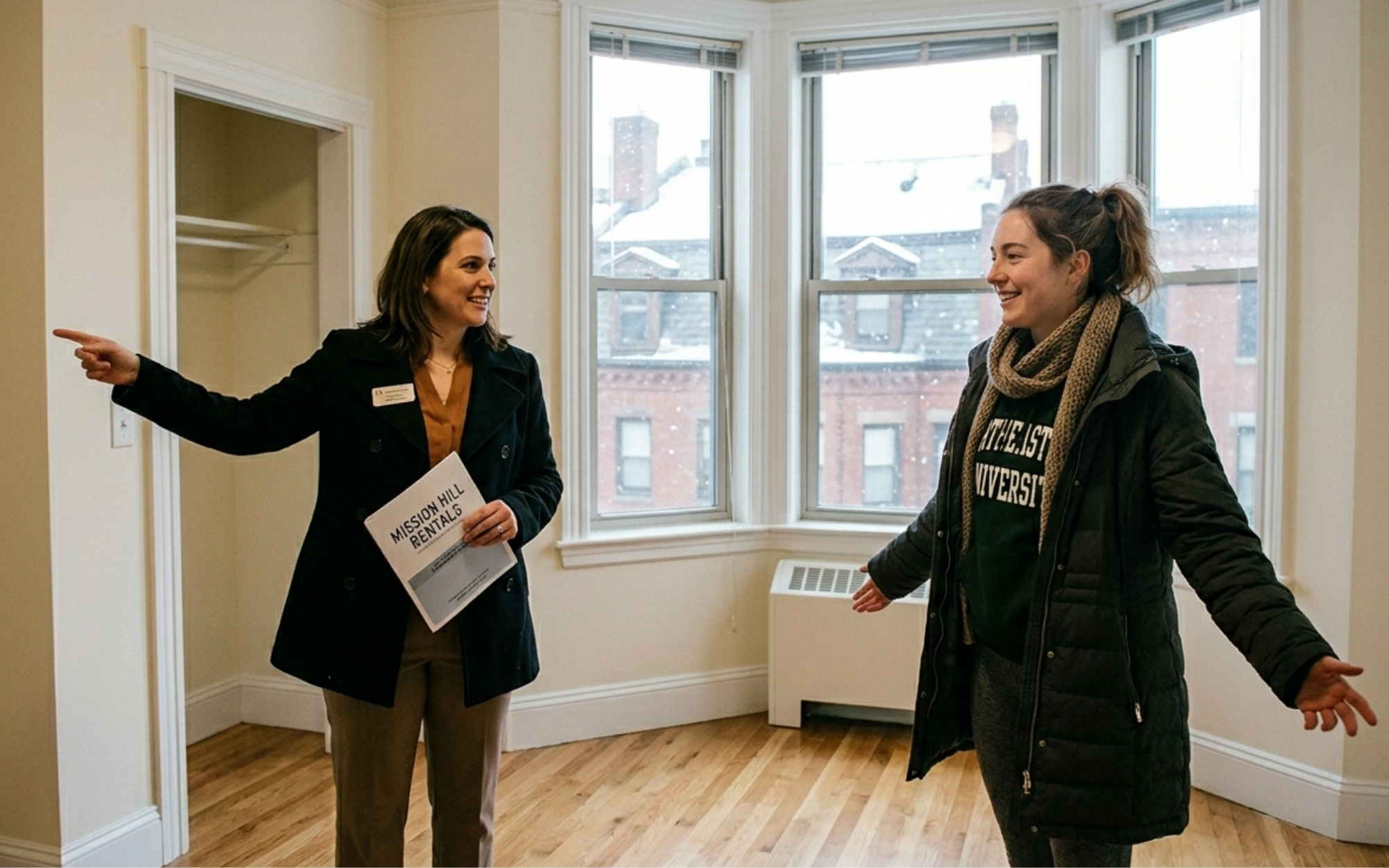
Then comes the actual apartment search. Students use the NU housing database, listing sites, word of mouth, realtors, and student groups to find properties. Once promising apartments appear, students schedule tours, ask questions, compare listings, and review the neighborhood.
If they find the right place, the next step is the application and lease review. This is where students often need to move quickly, but they still need to read the lease contract carefully. Signing matters because a lease is a binding agreement, not just a reservation.
Finally, once the lease is signed, students prepare for move-in, utilities, furniture, and whatever else the apartment requires.
That is how off-campus housing actually works. It is not one giant mystery. It is a chain of decisions, and each one affects the next.
Using the NU Housing Database and Other Search Tools
One of the most useful starting points for finding off-campus housing is the NU housing database. Many students begin there because it is specifically relevant to the Northeastern community and can help with listings, sublets, and roommate connections.
The Northeastern housing database can make the apartment search feel more organized. Instead of searching the entire Boston rental market with no filter, students can focus on options that are more likely to fit their needs. It can also help students discover roommate opportunities or short-term housing options they might otherwise miss.
That said, most students do not rely on a single database alone. Off-campus housing searches often include several channels. Students commonly use listing platforms, referrals from friends, neighborhood groups, and realtors. Some also hear about available apartments through classmates or older students who are moving out.
This is where an apartment search toolkit becomes useful. A strong search toolkit usually includes a saved budget range, a list of preferred neighborhoods, a set of must-have apartment features, a way to compare listings, and a few trusted search sources. Apartment hunting becomes much easier when you stay organized.
A broad search strategy helps because the best housing options do not always show up in the same place. Some listings appear in databases, some through realtors, and some through direct student connections.
How to Build a Realistic Boston Housing Budget
Budget is one of the most important parts of finding off-campus housing, especially in Boston. A lot of students think only about monthly rent, but rent is just one piece of the total cost.
A realistic housing budget should include monthly rent, utilities, internet, groceries, transportation, and basic apartment supplies. Depending on the property, students may also need to pay for laundry, furniture, or move-in costs that are easy to overlook.
Upfront costs can be even more important than monthly costs. Some apartments require first month’s rent, last month’s rent, a security deposit, and possibly other fees before move-in. That means a seemingly affordable apartment may still be difficult to secure if the upfront payment is too high.
When building your budget, it helps to separate costs into two categories: monthly living expenses and one-time move-in expenses. This gives you a more honest view of what you can afford.
It is also smart to leave some room for flexibility. The Boston rental market can shift quickly, and the cheapest apartment is not always the best choice if it creates stress in other areas, like commuting time, safety, or roommate compatibility.
A good housing decision is not just about getting the lowest rent. It is about finding a place you can realistically afford and live in comfortably.
Choosing the Right Boston Neighborhood Near Northeastern
Neighborhood choice shapes the entire off-campus experience. Two apartments may look similar on paper, but the neighborhood can change your daily routine, commute, and overall quality of life.
Many Northeastern students look at Boston neighborhoods based on a few core factors: distance to campus, rent level, apartment size, transit access, and general lifestyle. Some students want to be as close to campus as possible. Others are willing to live farther out if it means paying less or getting more space.
Popular student areas often balance convenience with cost. Some neighborhoods feel more connected to campus life, while others offer quieter residential living. For some students, being near class buildings matters most. For others, access to grocery stores, public transportation, coffee shops, or green space matters just as much.
The key is to think beyond the apartment itself. Ask how the neighborhood fits your real life. How long is the commute? Will you feel comfortable walking there? Does the area match your class schedule, co-op needs, and social habits? Does it support your budget over time?
Students sometimes focus so much on a property listing that they forget the neighborhood is part of the housing decision. In practice, where you live can matter as much as what you rent.
How Roommates Fit Into the Housing Process
For many students, roommates are central to the off-campus housing process. Sharing an apartment can reduce rent and make better housing options possible, but it also introduces more decision-making.
Before you start serious apartment hunting, it helps to talk through the basics. What is everyone’s budget? How close to campus does everyone want to live? Does anyone need a quieter space? How will rent be split if the bedrooms are different sizes? Who is willing to take the lead during the search?
These conversations may feel awkward at first, but they are much easier than dealing with conflict after signing a lease. Roommates should discuss expectations early, not after the contract is final.
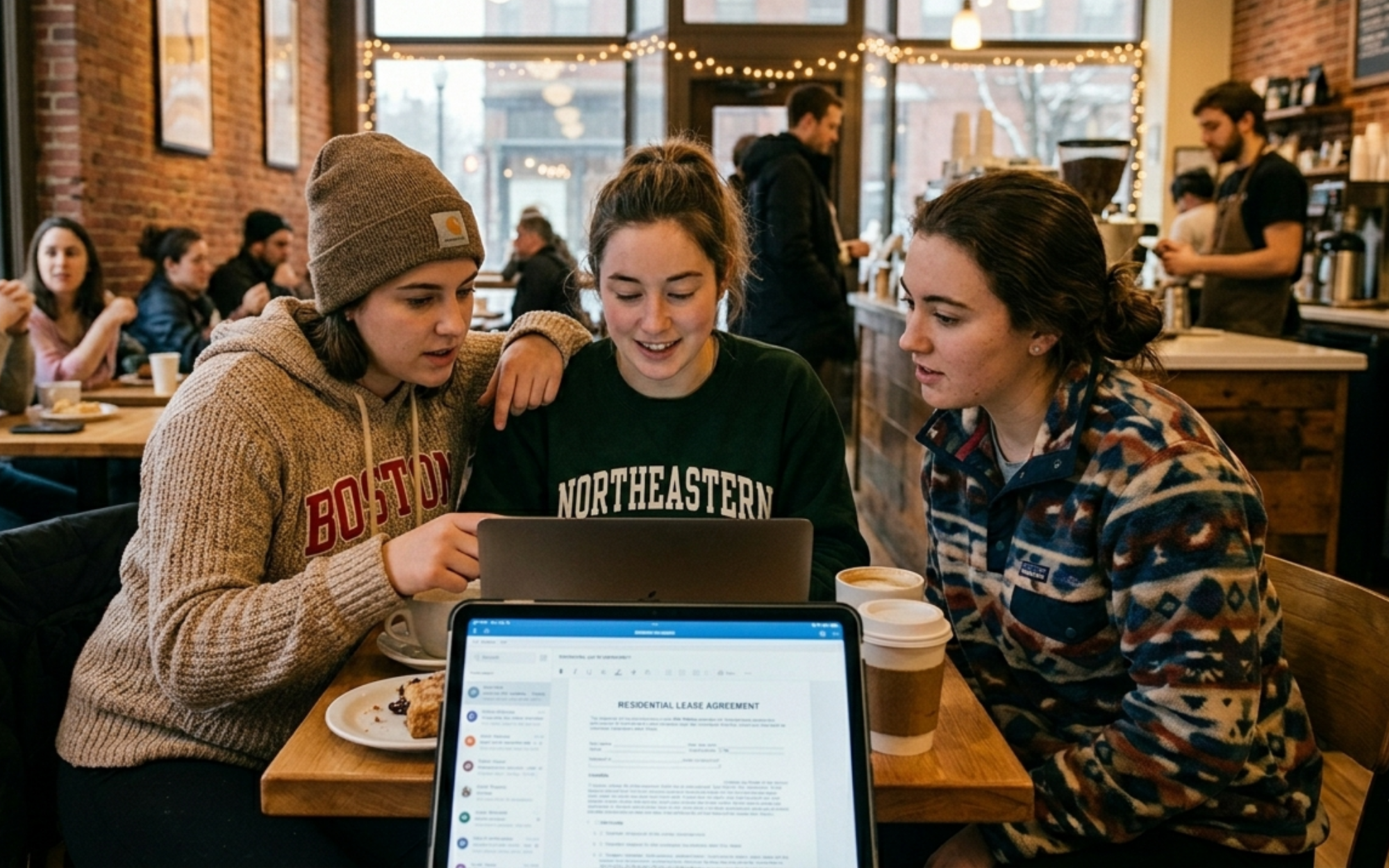
It is also important that everyone reads the lease contract carefully. Some students assume one person can handle the paperwork for the group, but everyone on the lease should understand what they are signing. Lease contracts can affect payment responsibility, move-in rules, and what happens if someone wants to leave early.
Good roommates do more than share rent. They communicate clearly during the search, respect deadlines, and stay realistic about what the group can afford. In a fast-moving housing market, strong communication can make the difference between a smooth process and a stressful one.
What Happens During Tours, Applications, and Lease Signing
Once you find promising listings, the next stage is tours, applications, and lease signing. This is the point where many students feel pressure to move fast, but it is also where details matter most.
During an apartment tour, students should pay attention to more than appearance. Check the actual condition of the apartment. Look at kitchen appliances, bathroom condition, windows, locks, water pressure, storage, and signs of maintenance issues. Think about how the apartment works for daily life, not just how it looks in photos.
It is also worth asking practical questions. What utilities are included? When is move-in? How is maintenance handled? Are there laundry facilities? Is the apartment furnished or unfurnished? Who manages the property? These questions can reveal whether a listing is truly a good fit.
If you decide to apply, be prepared to move quickly. The application process may involve personal information, proof of income or guarantor details, and other documentation. In a competitive market, delays can cost you the apartment.
Before signing, slow down enough to read the lease contract. Understand the term length, payment schedule, renewal rules, and conditions around breaking the lease or subletting. Signing a contract is a serious step. Even if the apartment search has been stressful, do not rush past the lease review stage.
The best apartment is not just one that looks good. It is one with a lease you fully understand.
Where Sublets Fit Into Off-Campus Housing
Sublets are an important part of off-campus housing near Northeastern because student schedules are not always traditional. Co-op cycles, summer terms, study abroad, and changing plans all make flexible housing valuable.
A sublet usually means one person temporarily rents a space from someone who already holds the lease. This can be useful for students who do not want a full-term commitment or who only need housing for a limited period.
Sublets can offer flexibility, but they still require caution. Students should verify the arrangement, confirm the dates, understand what they are paying for, and make sure the setup is legitimate. They should also clarify whether utilities, furniture, and building access are included.
For some students, sublets are the easiest way to handle short-term housing needs. For others, they are a backup option when a full lease does not make sense. Either way, sublets are a normal part of the off-campus housing process and worth considering when your timeline does not match a standard apartment lease.
Off-Campus Engagement and Student Support
Students do not have to navigate the housing process completely on their own. Off campus engagement resources can help make apartment hunting more manageable by offering tools, guidance, and educational support.
These types of resources may include apartment search checklists, budgeting guidance, roommate advice, housing events, and practical information about lease contracts and renter responsibilities. Some students also benefit from apartment fairs or housing-focused campus engagement programming that introduces common housing steps in a more structured way.
Even if you plan to search independently, support resources can help you avoid common mistakes. They can also give you a better understanding of how the Northeastern housing process connects with the wider Boston rental market.
Students often think help is only necessary once something goes wrong. In reality, support is most useful before signing, when you are still comparing housing options and trying to understand the process.
Common Mistakes Students Make During Apartment Hunting
A lot of stress in off-campus housing comes from preventable mistakes.
One common issue is waiting too long to start. Students sometimes assume they can begin searching only when they are ready to sign, but by then they may have fewer choices.
Another mistake is underestimating costs. Monthly rent is only part of the housing budget. Upfront expenses and utility costs can change what is truly affordable.
Some students also choose roommates too casually. Living with friends can work well, but only if expectations are clear. Budget, cleanliness, schedules, and communication all matter.
A major mistake is signing a lease without reading it carefully. A lease contract is not just paperwork. It defines your responsibility and financial commitment.
Finally, students sometimes focus too much on the apartment and not enough on the neighborhood. A good-looking apartment may still be a poor fit if the location creates an exhausting commute or does not match your daily needs.
How to Start Your Northeastern Off-Campus Search
So, how does off-campus housing near Northeastern actually work? It works as a step-by-step process. Students research the Boston rental market, decide on a budget, choose roommates, use the NU housing database and other listings, compare neighborhoods, tour apartments, and sign a lease once they find the right match.
What makes the process feel overwhelming is not that it is impossible. It is that several decisions happen close together, and each one affects the next. The more prepared you are, the easier apartment hunting becomes.
The goal is not just to find any apartment. It is to find housing that fits your budget, your commute, your roommates, and your schedule. Once you understand how the off-campus housing process works, you can make better choices and avoid costly mistakes.
For Northeastern students, off-campus housing is less about luck and more about preparation. Start early, stay organized, understand the lease, and make decisions based on your real needs. That is how the process actually works.