

In Boston, Massachusetts law ties a broker fee to whoever hired the broker: if your landlord or property manager brought in the agent, the landlord pays, not you. Spot Easy's no-broker-fee search puts those listings in front of you directly, so you can start with apartments marked as no-fee instead of guessing from the listing text.
The rule now: who pays a broker fee in Boston
Since August 1, 2025, Massachusetts law (M.G.L. c. 112, § 87DDD½) says a real estate broker's fee can only be paid by the party who hired that broker. When a landlord or property manager brings on an agent to list, market, and show a unit, that landlord is the one who hired the broker, so the landlord owes the fee, not the renter. If you never hired the agent yourself, the fee is the landlord's obligation, regardless of what the listing says or what the agent tells you at a showing. Our complete guide to the Boston broker fee law walks through the rule in full, including what changed and why it changed.
When you could still owe a broker fee
You only owe a broker fee if you are the one who hired the broker. That happens when a renter brings on an agent directly, for example to search from out of state, line up a batch of showings, or handle a tight timeline, and agrees, in writing or out loud, to have that agent work for them. The fee in that case is for work the agent is doing for you specifically, separate from whatever arrangement exists between the landlord and their own listing agent. Hiring your own agent is a choice, not something that happens by default just because you contacted an agent about a listing or asked them to show you a unit.
How to avoid paying a broker fee
The simplest way to avoid a broker fee is to never hire one yourself. Don't agree, in writing or out loud, to have an agent work for you unless you understand what it costs. A fee obligation doesn't require a signature, just a clear yes. Touring an apartment, asking an agent questions, or getting a showing scheduled does not, on its own, create a fee you owe.
Before you sign anything with an agent, ask in writing who hired them and who is responsible for paying their fee. A short text or email answer is enough, and having it in writing protects you if the question comes up again after you've already toured the place or started paperwork.
Read any agreement or disclosure form an agent hands you before you sign it, even if it's presented as routine paperwork. Massachusetts requires agents working on a rental to put the fee terms in writing before you owe anything. If an agent says you owe a fee, ask for the amount and the reason in writing before you agree to anything.
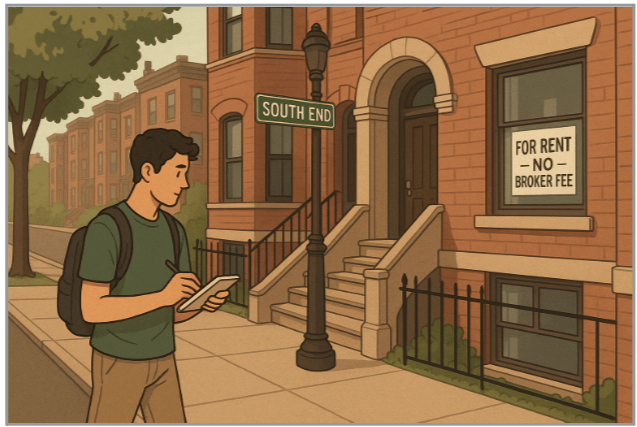
Spot Easy's no-broker-fee search filters listings down to the ones marked no-fee. Management companies with their own on-site leasing offices are also worth a direct visit, since many lease without an outside broker at all, and their staff can tell you upfront whether any fee applies.
Fees that show up somewhere else
A broker fee is not the only cost that can appear on a Boston lease, and not every fee on a lease is a broker fee wearing a different name. Application fees, background checks, and credit checks are separate charges with their own rules, and our application fee vs. broker fee breakdown covers what's still legal to charge and what isn't.
Some renters have also noticed asking rents creeping up since the broker fee law took effect, which raises a fair question: did landlords just move the cost from an upfront fee into the monthly rent instead? Our look at whether landlords raised rent instead of paying broker fees covers what that pattern actually looks like and where it holds up.
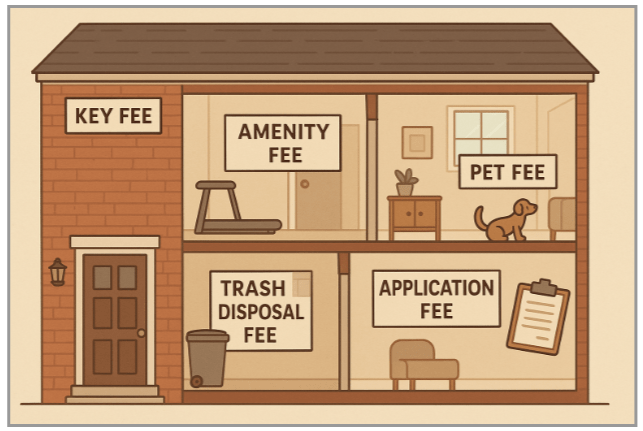
What to do if you're charged a fee you don't owe
If a landlord-hired broker asks you to pay their fee, start by asking them directly, in writing, who hired them. If they can't answer, or the answer confirms the landlord hired them, you are not the party responsible for that fee under the law, and you should say so before any money changes hands.
Hold onto the listing, any messages with the agent, and anything in writing about the fee itself. Those records are what make a complaint credible if it comes to that. Our step-by-step guide to reporting an illegal broker fee in Massachusetts walks through what else to document and where to file a complaint if you were charged one anyway.
Fee patterns aren't the same in every part of the city, so once you know where in Boston you're searching, our neighborhood-by-neighborhood no-fee guide is the place to start.