

If you were asked to pay a broker fee for a Massachusetts apartment, your first question should not be, “Is this normal?” It should be, “Who hired the broker?”
That detail matters because Massachusetts rental broker fee rules now focus on the party who hired the broker or salesperson. If a landlord hired the broker to list, market, show, or lease the apartment, the landlord is generally responsible for paying that broker fee. If a renter directly hired a broker to help them find an apartment, the renter may be responsible for the fee.
This guide explains how to report an illegal broker fee in Massachusetts, what evidence to collect, where to file a complaint, and what to do if your goal is to get your money back.
This article is for general educational purposes only and is not legal advice.
Quick Answer: How Do You Report an Illegal Broker Fee in Massachusetts?
To report a suspected illegal broker fee in Massachusetts, start by gathering proof of the fee, including the apartment listing, emails, text messages, payment receipts, lease documents, and any broker fee agreement. Then file a consumer complaint with the Massachusetts Attorney General’s Office through its consumer complaint process.
Depending on the situation, you may also report the broker to the Massachusetts Board of Registration of Real Estate Brokers and Salespersons, especially if the issue involves a licensed real estate broker or salesperson.
If the broker is a REALTOR®, you may also consider filing an ethics complaint through the appropriate local REALTOR® association or Massachusetts REALTOR® dispute resolution channel.
The best path depends on what you want to accomplish. Reporting a broker’s conduct, filing an ethics complaint, and recovering your money are related, but they are not always the same process.
When Is a Broker Fee Illegal in Massachusetts?
A broker fee may be illegal or improper if you were required to pay it even though you did not hire the broker.
The core issue is not whether the apartment is in Boston, Cambridge, Somerville, Brookline, Medford, Quincy, or another competitive rental market. The core issue is whether the broker was working for you or for someone else.
In simple terms:
- If you hired the broker to help you find an apartment, you may owe the broker fee.
- If the landlord hired the broker to market the apartment, the landlord generally owes the broker fee.
- If you never agreed to hire the broker, you should question why you are being charged.
- If the fee was presented as mandatory without a clear written agreement, you should ask for documentation.
A broker fee can become questionable when the renter is simply responding to a public listing, touring an apartment, or applying for a unit that the broker was already marketing on behalf of the landlord.
The Key Question: Who Hired the Broker?
Before you file any complaint, focus on this question:
Who hired the broker?
This is the fact that usually determines whether the fee makes sense.
If you contacted a broker and said, “Please help me find an apartment,” and the broker helped you search, tour, negotiate, and apply, then the broker may argue that you hired them.
But if you found an apartment listing online, contacted the listing agent, toured that specific apartment, and were then told you owed a one-month broker fee, the situation may be different. In that case, the broker may have been working for the landlord, property owner, or listing side.
That distinction matters.
Many renters get pressured with phrases like:
- “Tenant pays broker fee.”
- “One-month broker fee due at lease signing.”
- “Broker fee required to secure the apartment.”
- “This is standard in Boston.”
- “Everyone pays this.”
- “No fee to the landlord.”
- “You need to pay now or the apartment will go to someone else.”
Those statements do not automatically prove the fee is legal. A broker or landlord should be able to explain, in writing, why you owe the fee and what agreement created that obligation.
Common Signs of a Potential Illegal Broker Fee
A broker fee may deserve closer review if:
- The broker was advertising a landlord’s apartment.
- You found the apartment through a public rental listing.
- You did not sign an agreement hiring the broker to represent you.
- The broker or landlord demanded the fee as a condition of renting the unit.
- The broker refused to explain who hired them.
- The broker did not provide a written broker fee agreement.
- The fee was added to your move-in costs without explanation.
- The broker asked for payment through Venmo, Zelle, cash, or check without a proper invoice.
- The listing disappeared or changed after you questioned the fee.
- The landlord and broker both said, “This is just how rentals work.”
The phrase “this is standard” is not the same as a legal explanation. If you are being asked to pay hundreds or thousands of dollars, you should ask for written proof showing why you are responsible for the fee.
Step 1: Save Everything Before You Complain
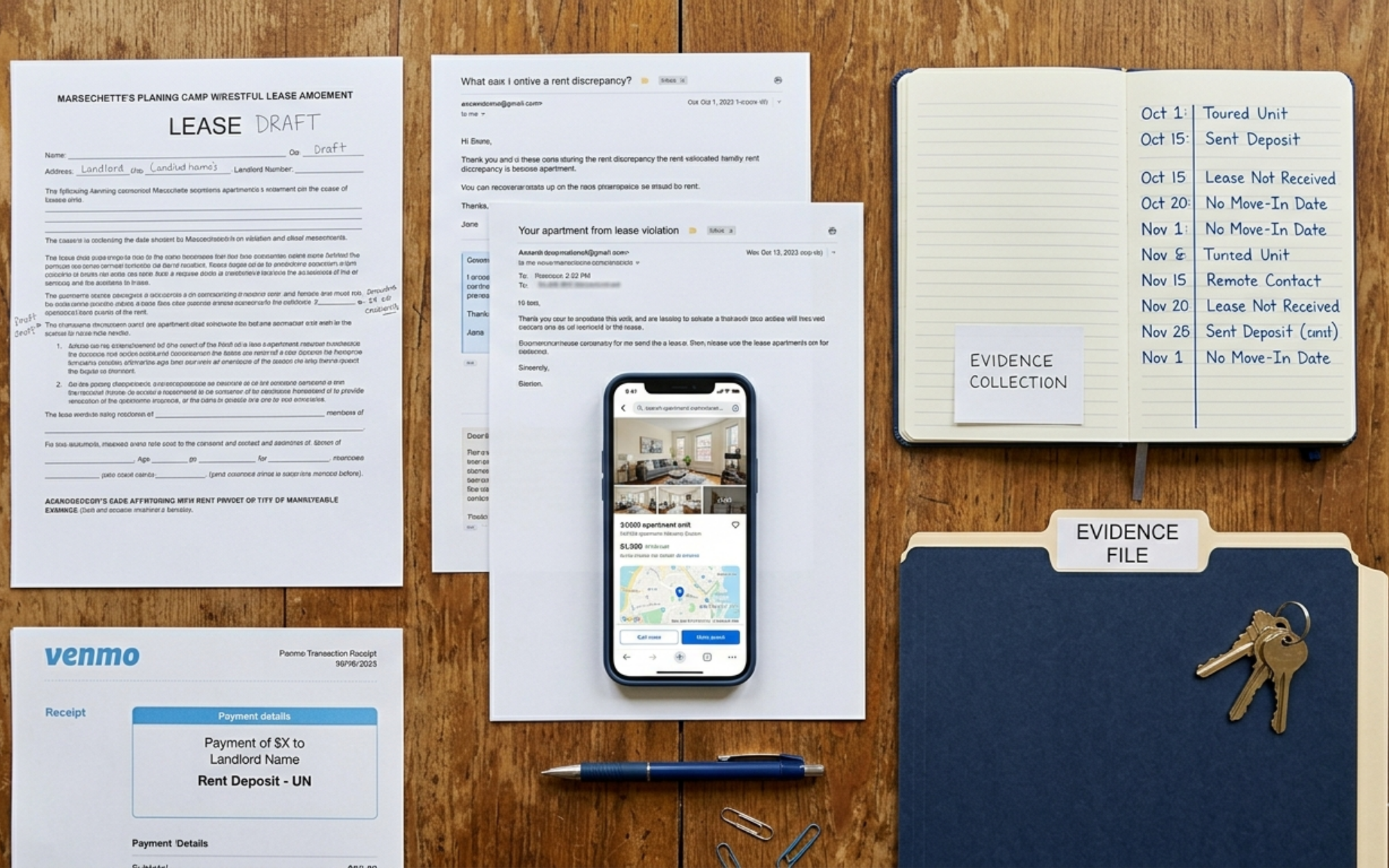
Before you report an illegal broker fee, collect your evidence. The stronger your documentation, the easier it is for an agency, association, attorney, mediator, arbitrator, or small claims court to understand what happened.
Do not rely on memory. Save the actual records.
Evidence Checklist
Save copies of:
- Apartment listing screenshots
- Listing URL
- Name of the broker
- Name of the brokerage
- Broker’s license number, if available
- Landlord or property manager name
- Apartment address
- Lease or proposed lease
- Rental application
- Broker fee agreement
- Fee disclosure
- Move-in cost sheet
- Emails from the broker, landlord, or property manager
- Text messages
- Payment requests
- Venmo, Zelle, wire, ACH, credit card, or check records
- Receipt or invoice
- Any message saying the fee was required
- Any message explaining who hired the broker
- Any message refusing a refund
If the listing is still live, screenshot it immediately. Rental listings can be edited, removed, or replaced quickly.
You should also save the date and time of each important event, including:
- The date you first contacted the broker
- The date you toured the apartment
- The date you applied
- The date you were told about the broker fee
- The date you paid the fee, if applicable
- The date you requested clarification
- The date you requested a refund
A simple timeline can make your complaint much easier to understand.
Step 2: Ask the Broker Who Hired Them
Before filing a complaint, send a short written message to the broker or brokerage. The goal is not to argue. The goal is to create a clear paper trail.
You can write:
Hi, before I pay or discuss the broker fee further, please confirm in writing who hired you for this rental: me, the landlord, the property manager, or another party. Please also send a copy of any broker fee agreement or fee disclosure that shows why I am responsible for this fee.
This message helps you clarify the most important fact: whether the broker was hired by you or by someone else.
If the broker does not respond, avoids the question, or pressures you to pay quickly, save that too. A refusal to explain the fee may become part of your complaint.
You can also ask:
Are you representing me as the renter, the landlord, or both sides of the transaction?
This matters because renters often assume the broker is “helping them,” while the broker may actually be marketing the unit for the owner.
Step 3: Ask for a Written Breakdown of Move-In Costs
Illegal broker fee issues are often hidden inside a larger move-in cost request. You may see a single line that says “total due,” without a clear breakdown.
Ask for a written itemized list of all charges.
You can write:
Please send an itemized breakdown of all move-in costs, including first month’s rent, last month’s rent, security deposit, lock-change fee, broker fee, application fee, or any other required payment. Please identify who each payment is made to and why it is required.
This matters because a broker fee may be described in different ways, such as:
- Broker fee
- Agency fee
- Rental agency fee
- Finder’s fee
- Listing fee
- Admin fee
- Move-in fee
- Placement fee
- Leasing fee
The name of the fee is not the only thing that matters. What matters is the purpose of the fee, who charged it, who received it, and why the renter was told to pay it.
Step 4: File a Consumer Complaint With the Massachusetts Attorney General’s Office

If you believe you were charged an illegal broker fee, one of the most important reporting options is the Massachusetts Attorney General’s Office.
This route is especially relevant when the issue looks like a consumer protection problem. For example, you may have been charged a fee you did not agree to, misled about who the broker represented, pressured into paying a fee, or denied a clear explanation.
When This Route Makes Sense
File a consumer complaint if:
- You were required to pay a broker fee you believe you did not owe.
- You did not hire the broker.
- The landlord or broker demanded payment as a condition of renting.
- You already paid and want the issue reviewed.
- The broker or landlord refuses to explain the fee.
- You believe other renters may be affected by the same practice.
- The fee was advertised one way but charged another way.
- You were told the fee was mandatory without a written agreement.
- The broker refused to provide documentation.
- You believe the fee was deceptive, unfair, or improperly shifted to you.
What to Include in the Complaint
Your complaint should be specific and organized. Include:
- Your full name and contact information
- Apartment address
- Broker’s name
- Brokerage name
- Landlord or property manager name
- Date you first contacted the broker
- Date you were told to pay the fee
- Amount of the broker fee
- Whether you paid it
- How you paid it
- Whether you signed a broker fee agreement
- Whether you hired the broker
- What the broker said when you asked who hired them
- What resolution you want
Do not simply write, “The broker fee was illegal.” Explain why you believe it was improper.
For example:
I do not believe I hired this broker. I found the apartment through a public listing, and the broker appeared to be marketing the apartment for the landlord. I was told I had to pay a one-month broker fee to rent the unit. I asked who hired the broker and requested a written fee agreement, but I did not receive a clear answer.
That type of explanation is much stronger than a vague complaint because it gives the reviewer facts, timeline, and context.
Step 5: Use a Clear Complaint Template
Here is a sample complaint paragraph you can adapt:
I am filing this complaint because I believe I was required to pay a rental broker fee for an apartment in Massachusetts even though I did not hire the broker. The apartment was listed publicly, and the broker appeared to be representing the landlord or property owner. I was told that payment of the broker fee was required to move forward with the rental. I requested clarification about who hired the broker and asked for a written broker fee agreement, but I did not receive documentation showing that I hired the broker. I am requesting review of whether this broker fee was lawful and assistance in resolving the issue, including a refund if appropriate.
If you already paid, add:
I paid the fee on [date] in the amount of [$ amount] by [payment method]. I have attached proof of payment and communications showing that the fee was required.
If you have not paid yet, add:
I have not paid the fee yet, but I am being told that the fee is required before I can rent the apartment.
If the broker refused to explain who hired them, add:
I asked the broker to confirm who hired them for this rental, but I did not receive a clear written answer.
If the landlord was involved, add:
The landlord or property manager also communicated that the broker fee was required as part of the move-in costs.
Step 6: Check Whether the Broker Is Licensed
After filing or preparing your consumer complaint, check whether the person is a licensed real estate broker or salesperson in Massachusetts.
This step matters because licensed real estate professionals are subject to licensing rules and professional standards. If the person charging the fee is licensed, you may have an additional reporting path through the licensing system.
Why License Status Matters
License status helps you understand:
- Whether the person is authorized to act as a broker or salesperson
- Which state board may have authority over them
- Whether you can file a licensing complaint
- Whether the brokerage can also be identified
- Whether the issue involves professional misconduct
- Whether the person used a real brokerage or operated independently
- Whether the name used in communication matches the licensed name
If you cannot find the person’s license, save that information. An unlicensed person demanding a rental broker fee may create additional concerns.
When checking license information, save:
- Broker name
- License number
- Brokerage name
- License status
- Expiration date, if listed
- Any mismatch between the person who contacted you and the licensed person or company
Step 7: File a Complaint Against a Licensed Broker or Salesperson if Appropriate
If the issue involves a licensed real estate broker or salesperson, you may consider filing a complaint with the state licensing authority.
This type of complaint is different from a general consumer complaint. A licensing complaint focuses on whether a licensed professional violated rules, laws, or professional standards.
When a Licensing Complaint May Make Sense
Consider this path if:
- The broker is licensed in Massachusetts.
- The broker misrepresented who they worked for.
- The broker demanded a fee without a proper agreement.
- The broker refused to provide documentation.
- The broker used pressure tactics.
- The broker may have charged a fee they were not allowed to charge.
- The brokerage ignored your request for clarification.
- The broker’s conduct appears misleading or dishonest.
- The broker asked for payment in a suspicious way.
- The broker’s license information does not match their communications.
A licensing complaint may help create accountability, but it may not automatically result in a refund. If your primary goal is getting money back, you may also need a written refund request, mediation, arbitration, a demand letter, or small claims court.
Step 8: Determine Whether the Broker Is a REALTOR®
Not every real estate agent is a REALTOR®.
A real estate broker or salesperson is licensed by the state. A REALTOR® is a real estate professional who is also a member of a REALTOR® association and agrees to follow the REALTOR® Code of Ethics.
This distinction matters because REALTOR® associations may handle ethics complaints involving REALTORS®, but they generally do not handle every complaint against every licensed real estate professional.
When an Ethics Complaint May Make Sense
An ethics complaint may be useful if:
- The broker is a REALTOR®.
- The issue involves honesty, disclosure, misrepresentation, pressure, or professional conduct.
- You want a REALTOR® association to review whether the member violated ethical rules.
- The local association has jurisdiction over the REALTOR®.
- The broker made statements that appear misleading.
- The broker failed to disclose important information.
- The broker pressured you to pay without documentation.
- The broker refused to clarify their role.
What an Ethics Complaint May Not Do
An ethics complaint may not be the fastest way to get your money back.
It may lead to discipline, education, fines, or membership consequences depending on the process and outcome. But if your main goal is recovering a broker fee, you may also need a refund request, mediation, arbitration, demand letter, or court option.
Think of an ethics complaint as a way to address professional conduct. Think of a refund request or legal claim as a way to pursue money.
Step 9: Understand the Difference Between Complaint, Ethics, Arbitration, and Refund
Many renters get stuck because they do not know which process to use. The right path depends on what you want.
| Your Goal | Best Starting Point | Why |
|---|---|---|
| Report a suspected illegal fee | Massachusetts consumer complaint | Consumer protection route |
| Report a licensed broker’s conduct | Licensing complaint | Professional licensing issue |
| Report a REALTOR® ethics issue | Local REALTOR® association or Massachusetts REALTOR® channel | Ethics process |
| Get your money back | Refund request, mediation, demand letter, small claims | Complaint alone may not guarantee refund |
| Resolve a fee dispute with a REALTOR® | Mediation or arbitration, if available | May address monetary disputes |
| Ask basic questions before filing | Consumer support, legal aid, or tenant attorney | Helps clarify your options |
Do not assume one complaint solves everything. Reporting a broker and recovering money can be related, but they are not always the same process.
Consumer Complaint vs. Licensing Complaint
A consumer complaint focuses on a problem between you and a business or professional. It may be the right route when you believe you were treated unfairly, misled, or charged improperly.
A licensing complaint focuses on whether a licensed person violated professional rules or standards. It may be the right route when the issue involves a licensed broker or salesperson.
Ethics Complaint vs. Arbitration
An ethics complaint focuses on conduct. It asks whether a REALTOR® violated professional ethical duties.
Arbitration focuses more on resolving certain monetary or contractual disputes. It may be relevant in some fee disputes, but it depends on the facts and the rules of the association handling the dispute.
Complaint vs. Refund
This is the most important distinction for renters.
A complaint can document the issue, trigger review, or create pressure. But if your main goal is getting your money back, you may need to directly request a refund and consider additional recovery options.
Step 10: Request a Refund in Writing
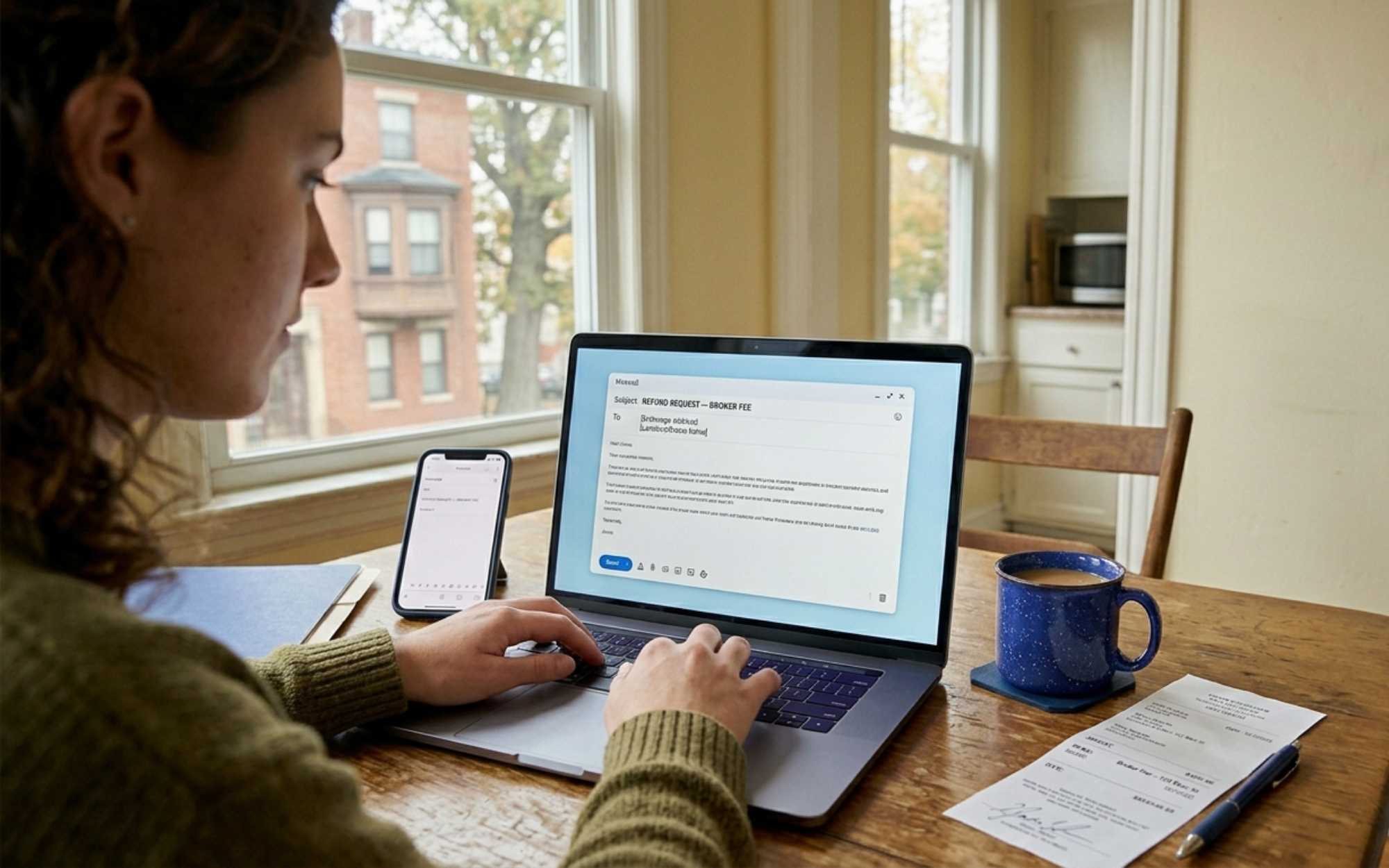
If you already paid the broker fee, send a written refund request. Keep the message factual, polite, and specific.
You can write:
Hi [Broker/Brokerage Name], I am requesting a refund of the broker fee I paid on [date] in the amount of [$ amount]. I do not believe I hired you to represent me in this rental transaction, and I have not received documentation showing that I agreed to pay this fee as the party who hired the broker. Please refund the fee by [date]. I have attached proof of payment and relevant communications.
Send this by email if possible. If you send it by text, screenshot the message after sending it.
What to Include in a Refund Request
Include:
- Your name
- Apartment address
- Date of payment
- Amount paid
- Payment method
- Name of recipient
- Reason you are requesting a refund
- Deadline for response
- Copies of supporting documents
What to Avoid
Do not threaten, exaggerate, or make unsupported claims. Keep the tone professional. Your message may later be reviewed by an agency, mediator, arbitrator, attorney, or judge.
A clear written refund request also helps show that you gave the broker or brokerage a chance to resolve the issue before escalating.
Step 11: Consider Mediation, Arbitration, a Demand Letter, or Small Claims Court
If the broker or brokerage refuses to refund the fee, you may need to consider additional options.
Mediation can help both sides reach a voluntary resolution. Arbitration may apply in certain REALTOR®-related disputes. Small claims court may be an option if your goal is to recover a specific amount of money.
You may also consider a formal demand letter if you believe the fee involved unfair, deceptive, or unlawful conduct. A demand letter should be written carefully because it may affect later options.
Before taking legal action, consider speaking with a tenant attorney, legal aid organization, or consumer protection resource. This is especially important if:
- The amount is large.
- You signed multiple documents.
- The broker claims you agreed to the fee.
- The landlord is also involved.
- The broker refuses to refund the money.
- You are unsure which process applies.
- You are worried about retaliation or losing the apartment.
Where Should You Report an Illegal Broker Fee in Massachusetts?
Use this table to decide where to start.
| Situation | Where to Report or Start | Why |
|---|---|---|
| You were forced to pay a broker fee you did not agree to | Massachusetts consumer complaint process | Consumer protection issue |
| You were charged by a licensed broker or salesperson | Board of Registration of Real Estate Brokers and Salespersons | Licensing and professional conduct |
| The broker is a REALTOR® | Local REALTOR® association or Massachusetts REALTOR® dispute channel | Ethics complaint route |
| You want a refund | Written refund request, mediation, demand letter, small claims | Reporting may not automatically recover money |
| You are unsure whether the fee is illegal | Consumer support, legal aid, or tenant attorney | Helps confirm next steps |
| The broker may be unlicensed | Consumer complaint and licensing authority | Possible unauthorized conduct |
| The listing says “tenant pays broker fee” | Ask who hired the broker and save the listing | Listing language alone is not enough |
| The landlord hired the broker but told you to pay | Consumer complaint process | Potential forced renter-paid fee issue |
What If the Listing Says “Tenant Pays Broker Fee”?
A listing that says “tenant pays broker fee” does not automatically mean the fee is valid.
The more important question is:
Did the tenant hire the broker?
If the broker was hired by the landlord to market the apartment, show the unit, collect applications, or secure a tenant, the landlord may be responsible for the fee.
If you see “tenant pays broker fee,” take these steps:
- Screenshot the listing.
- Save the listing URL.
- Ask who hired the broker.
- Ask for the written broker fee agreement.
- Ask who the broker represents.
- Ask who receives the fee.
- Ask whether the fee is refundable.
- Do not rely only on verbal explanations.
- Save all responses.
A listing description is not a substitute for a clear agreement.
What If You Already Paid the Broker Fee?
If you already paid, you still have options.
Start by organizing your records:
- How much did you pay?
- Who received the money?
- When did you pay?
- How did you pay?
- Did you receive a receipt?
- Did you sign anything?
- Did the broker explain who hired them?
- Did the landlord require payment?
- Did the broker provide a fee disclosure?
- Did you ask for a refund?
- Did the broker refuse?
Then send a written refund request and file the appropriate complaint. If the broker refuses to refund the money, consider speaking with legal aid or a tenant attorney about next steps.
Do not assume it is too late simply because you already paid. Payment may make the issue more urgent, but it does not prevent you from documenting what happened and requesting review.
What If You Have Not Paid Yet?
If you have not paid yet, slow the process down and ask for documentation.
Send this message:
Before I pay the broker fee, please send the written agreement showing that I hired the broker and agreed to pay this fee. Please also confirm who the broker represents in this transaction.
If the broker or landlord says you will lose the apartment unless you pay immediately, save that message. Pressure tactics can be relevant when explaining your complaint.
You can also ask:
Is payment of this broker fee required by the landlord, the brokerage, or another party? Please confirm in writing.
If the answer is unclear, consider getting advice before paying.
What If the Broker Says You Agreed to the Fee?
A broker may claim you agreed to the fee because you:
- Replied to a listing
- Scheduled a showing
- Submitted an application
- Signed a move-in cost sheet
- Paid a deposit
- Communicated with the broker
- Signed a lease
But agreeing to rent an apartment is not always the same as hiring a broker to represent you.
Ask the broker to identify the specific document showing that you hired them and agreed to pay their fee.
You can write:
Please identify the exact agreement that you believe makes me responsible for the broker fee. Please also explain whether you were originally hired by me, the landlord, the property manager, or another party.
Save the response. If the broker points to a document, review it carefully. If you are unsure what it means, consider getting legal help before paying or before giving up on a refund.
What If the Landlord Says the Fee Is Required?
Sometimes the broker is not the only person involved. A landlord or property manager may say the broker fee is required as part of the apartment’s move-in costs.
If that happens, ask the landlord or property manager:
Please confirm whether you hired the broker for this rental listing. If so, please explain why I am being required to pay the broker fee.
This is important because the landlord’s involvement may support your complaint. If the landlord hired the broker but shifted the fee to the renter, that may be exactly the issue you need to report.
Save all landlord communications, especially if they say the fee is required to get the apartment.
What If the Broker Fee Is Hidden Under Another Name?
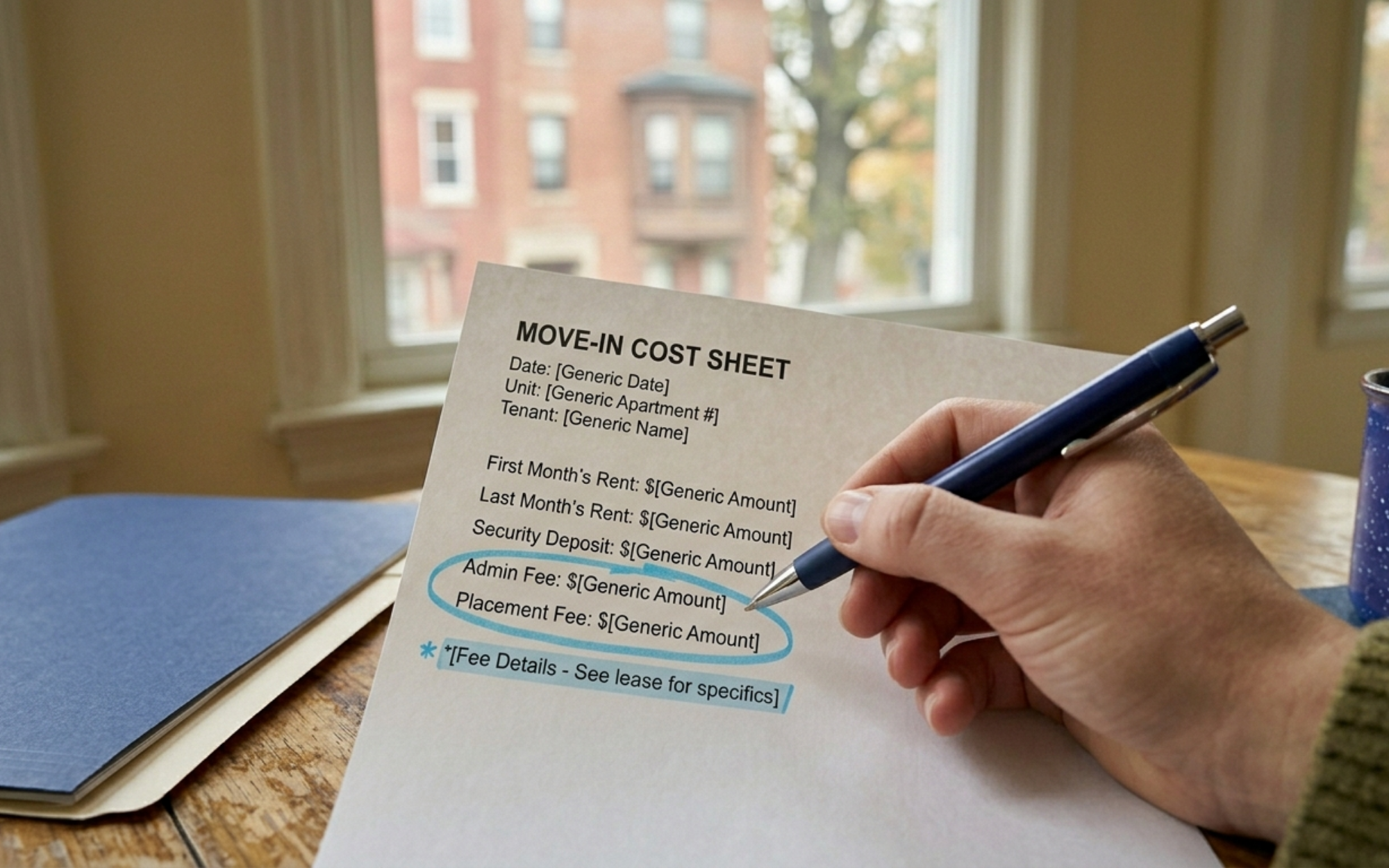
A fee does not become valid just because it is renamed.
Watch for vague labels such as:
- Admin fee
- Listing fee
- Agency fee
- Placement fee
- Service fee
- Application processing fee
- Move-in coordination fee
- Rental fee
- Leasing fee
Ask what the fee is for, who receives it, and whether it is connected to broker services.
You can write:
Please clarify whether this fee is a broker fee, leasing fee, agency fee, or payment for broker services. Please also confirm who receives the fee and why I am responsible for it.
The more specific the written explanation, the easier it is to evaluate the charge.
What Not to Do When Reporting a Broker Fee
Avoid these mistakes.
Do Not Pay Cash Without a Receipt
Cash payments are harder to prove. If you already paid cash, write down the date, amount, location, and who received it.
Do Not Delete Texts or Emails
Even short messages can matter. Keep the full thread, not just the parts you think are important.
Do Not Rely on Phone Calls Alone
If something important was said on a call, send a follow-up email:
Thanks for speaking with me today. My understanding is that you are saying I must pay a broker fee of [$ amount] before renting the apartment. Please confirm whether that is correct and who hired the broker.
Do Not Assume All Broker Fees Are Banned
Broker fees are not automatically illegal in every situation. A tenant who hires a broker may still be responsible for paying that broker.
Do Not File Only an Ethics Complaint if You Want a Refund
An ethics complaint may address conduct, but it may not be the best or only path to recover money.
Do Not Wait Too Long to Document the Issue
Listings disappear. Messages get buried. Memories fade. Save everything as soon as you suspect a problem.
Frequently Asked Questions About Reporting Illegal Broker Fees in Massachusetts
Can a landlord make me pay a broker fee in Massachusetts?
If the landlord hired the broker, the landlord generally should be responsible for the broker fee. The key question is who hired the broker or salesperson.
Can a broker charge me if I hired them?
Yes. A broker may be able to charge you if you hired the broker and agreed to pay the fee. Ask for the written agreement showing that you hired the broker.
Is every broker fee illegal in Massachusetts?
No. Broker fees are not automatically illegal. The issue is whether the person being charged is the person who hired the broker.
What if the broker says I agreed because I applied for the apartment?
Applying for an apartment is not always the same as hiring a broker. Ask for the written broker fee agreement and any disclosure showing that you hired the broker.
What if the fee was listed before I toured the apartment?
Save the listing, but still ask who hired the broker. A listing saying “tenant pays broker fee” does not by itself answer who legally owes the fee.
What if the broker refuses to tell me who hired them?
Save that refusal and include it in your complaint. Ask again in writing so you have a record.
Can I report both the broker and the landlord?
Yes. If both were involved in requiring the fee, include both in your complaint narrative. Explain each person’s role.
What if the broker is not licensed?
If you cannot verify the broker’s license, mention that in your consumer complaint and consider reporting the issue through the appropriate licensing channel.
What if the broker is licensed but not a REALTOR®?
You may still be able to file a consumer complaint and possibly a licensing complaint. REALTOR® ethics channels generally apply to REALTORS®, not every licensed real estate professional.
What if the broker is a REALTOR®?
If the broker is a REALTOR®, you may consider an ethics complaint through the appropriate REALTOR® association. This can address professional conduct, but it may not automatically recover your money.
Will filing a complaint get my broker fee refunded?
Not necessarily. Filing a complaint can help document and escalate the issue, but a refund may require a written refund request, mediation, arbitration, demand letter, or small claims court.
Should I talk to a lawyer?
Consider talking to a lawyer, legal aid organization, or tenant rights group if the fee is large, the broker refuses to refund it, or you are unsure whether your documents created an obligation to pay.
Can I still report the fee if I decided not to rent the apartment?
Yes. If you were charged or pressured to pay a questionable broker fee, you can still document the issue and consider filing a complaint, even if you did not end up renting the unit.
What if I paid the broker fee but never got the apartment?
That may raise additional concerns. Save proof of payment, all communications, and any explanation the broker gave. Then consider a refund request and complaint.
What if the broker says the fee is non-refundable?
Ask where that was disclosed and whether you agreed to it in writing. A “non-refundable” label does not automatically make a fee proper if the fee itself should not have been charged.
Final Takeaway
If you are trying to report an illegal broker fee in Massachusetts, focus on one question first:
Who hired the broker?
If you did not hire the broker, and the broker or landlord still required you to pay, gather your evidence, ask for written clarification, file a consumer complaint, and consider additional routes if the broker is licensed or is a REALTOR®.
The strongest complaint is specific, documented, and clear. Save the listing, keep every message, request the fee agreement, document the payment, and explain exactly why you believe the fee was improper.
A broker fee can be expensive, but renters do not have to accept vague explanations like “that’s just how it works.” In Massachusetts, the person who hired the broker is the starting point for determining who should pay.