

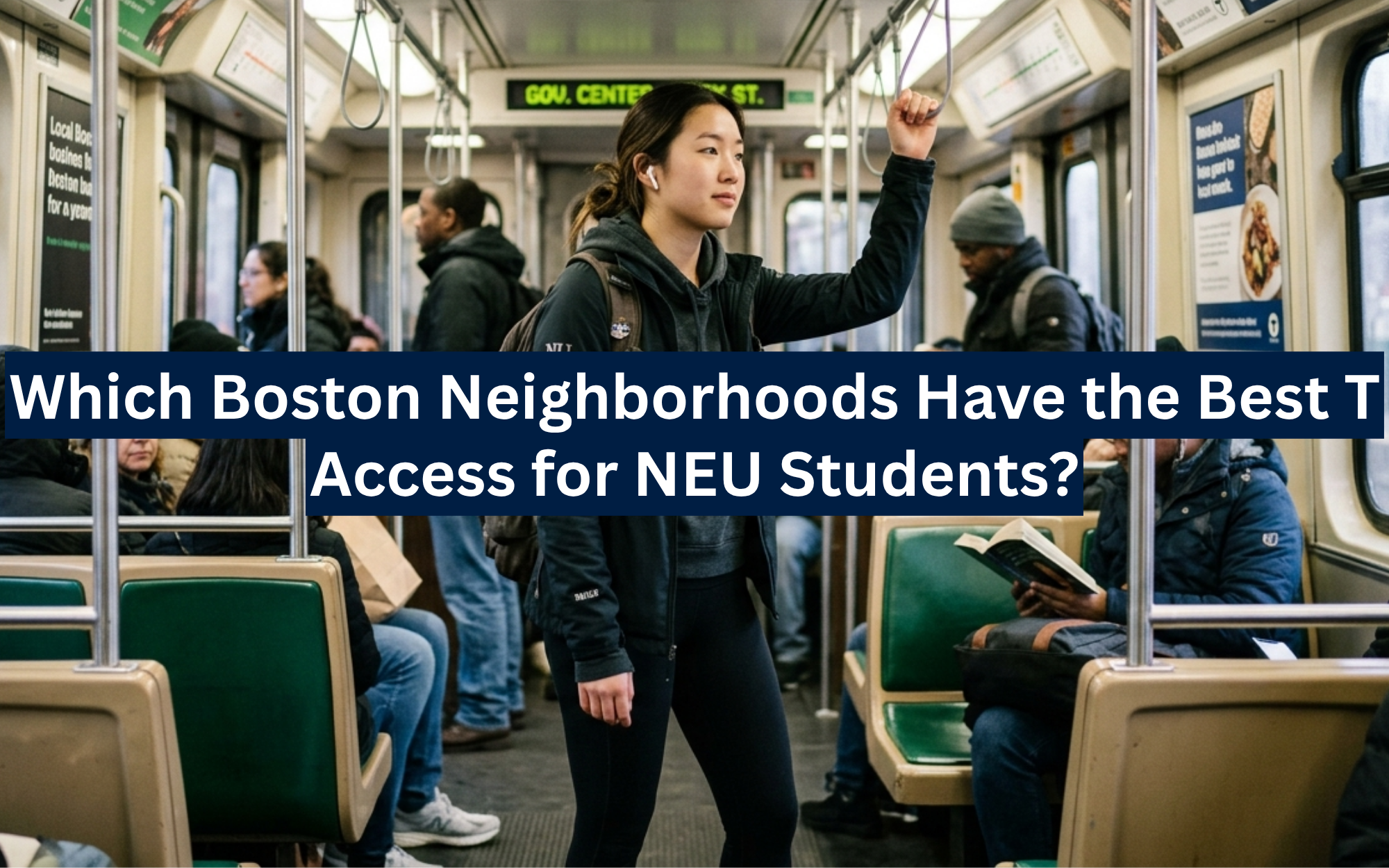
For Northeastern students, choosing where to live off campus is not just about rent. It is also about how easily you can get to class, co-op, the library, and everywhere else you need to go in Boston. The right neighborhood can cut your commute, reduce stress, and make daily life much easier. The wrong one can leave you dealing with long rides, unreliable transfers, and a housing choice that feels inconvenient every single day.
That is why T access matters so much.
Northeastern sits in a strong transit location, with access to the Green Line at the Northeastern University stop and nearby Orange Line access through Ruggles Station and Roxbury Crossing. For students, that means some neighborhoods offer a quick, simple ride to campus, while others may look affordable on paper but involve a more frustrating commute in practice.
So which Boston neighborhoods have the best T access for NEU students? The answer depends on what you value most. Some students want to walk to campus. Others want the cheapest neighborhood with a decent ride. Some care more about Orange Line access for co-op commuting, while others want a quieter area with easy public transportation.
This guide breaks down the best Boston neighborhoods for Northeastern students based on T-stop access, commute time, campus proximity, and overall student fit.
How NEU Students Should Evaluate T Access
Before comparing neighborhoods, it helps to define what “best T access” actually means.
A neighborhood is not automatically a great fit just because it has a nearby station. For Northeastern students, the best neighborhood usually combines several factors:
Direct access matters more than just being near a station
A neighborhood with a simple, direct ride can be better than one with a shorter distance but a more awkward route. Students usually prefer neighborhoods where they can reach campus with no transfer or with a very short walk from the stop.
Walking distance to campus still matters
Some neighborhoods are technically on a useful line, but the station is not especially convenient once you get off. For NEU students, neighborhoods with access to the Northeastern University stop, Ruggles Station, or Roxbury Crossing tend to be more practical because they connect more naturally to campus.
Commute time should be realistic
A neighborhood may sound close on a map, but your real experience depends on:
- how far you are from the station
- how often trains run
- whether you need to transfer
- how much walking is involved after the ride
For most students, a commute under 25 minutes feels manageable. Once it gets much longer, the lower rent needs to be worth the tradeoff.
Rent and convenience should be balanced
The best T access neighborhoods are often more expensive. That does not mean cheaper neighborhoods are bad choices. It just means students should think in terms of value, not only price.
A smart question is not, “Which neighborhood is cheapest?” It is, “Which neighborhood gives me the best commute for what I can afford?”
Best Boston Neighborhoods for NEU Students by T Access
Fenway and Kenmore
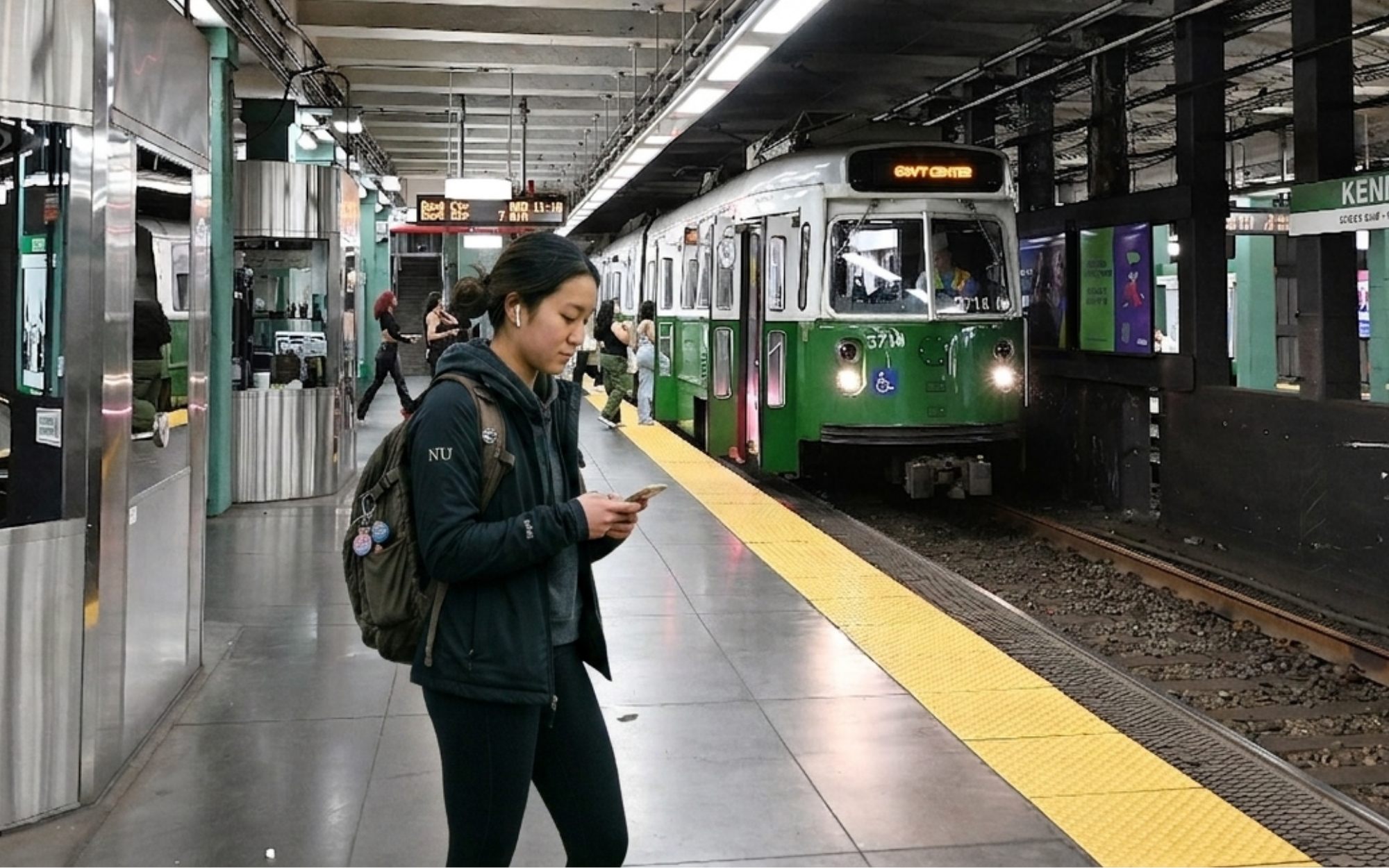
Fenway and Kenmore are often at the top of the list for Northeastern students, and it is easy to see why. This area offers strong campus proximity, multiple Green Line connections, and a very student-friendly environment.
Why it works for NEU students
Fenway is one of the easiest neighborhoods for many Northeastern students because it is close enough to campus that some students can walk, bike, or take a very short ride. The neighborhood also feels built around student life, with easy access to restaurants, grocery stores, study spots, and other colleges nearby.
T-stop access
Fenway and Kenmore benefit from Green Line access and proximity to the Northeastern University stop. Depending on your exact apartment location, you may also be close to other Green Line stops in the area.
Typical commute to campus
For many students, the commute is short enough to feel effortless. In some cases, campus is within walking distance. Even when it is not, the ride is usually simple and manageable.
Tradeoff
The biggest downside is cost. Fenway and Kenmore tend to be among the more expensive student housing areas. Still, many students consider the premium worth it because of the convenience.
Best for
- students who want short commutes
- students who value walkability
- students who want to be near campus activity
- students willing to pay more for convenience
Roxbury and Lower Roxbury
Roxbury is one of the most practical options for Northeastern students because it is close, often more affordable than Fenway, and very well positioned for campus access.
Why it works for NEU students
This is one of the most NEU-relevant neighborhoods on the list. Depending on where you live, you may be able to walk to campus or use nearby Orange Line access through Roxbury Crossing or Ruggles.
T-stop access
Roxbury benefits from strong Orange Line access, especially for students near Roxbury Crossing or Ruggles Station. This can be especially useful not just for getting to class, but also for co-op commuting across the city.
Typical commute to campus
Often very short. For many students, this is one of the easiest areas for reaching Northeastern without a complicated transit routine.
Tradeoff
Street-by-street variation matters here. Some parts of Roxbury feel extremely convenient, while others may feel less connected or less polished than more expensive areas.
Best for
- students who want strong value
- students who want fast campus access
- students who want Orange Line convenience
- students who prefer being close without paying Fenway prices
Jamaica Plain
Jamaica Plain is a favorite among students who want a more residential feel without giving up public transportation access.
Why it works for NEU students
JP offers a mix of affordability, character, and useful Orange Line access. It can be a very smart choice for Northeastern students who want more space or a calmer living environment than the busier student-heavy neighborhoods.
T-stop access
The neighborhood connects well through the Orange Line, with stations like Jackson Square and Stony Brook often playing an important role for student commuters.
Typical commute to campus
Generally solid, especially for students near an Orange Line stop. The commute is usually straightforward and reasonable, making Jamaica Plain one of the strongest balance picks on this list.
Tradeoff
It is not as immediately walkable to campus as Fenway or parts of Roxbury. Your experience will depend heavily on how close your apartment is to a station.
Best for
- students who want a better rent-to-commute balance
- students who like a neighborhood feel
- students who want Orange Line access
- students who want more space and a quieter atmosphere
Allston and Brighton
Allston and Brighton are classic Boston student neighborhoods. They are popular, lively, and often more affordable than the most campus-adjacent options.
Why it works for NEU students
These neighborhoods appeal to students who want a strong student community, more rental inventory, and easier access to roommates and shared apartments.
T-stop access
Allston and Brighton are strongly tied to the Green Line. That gives students a public transit option to campus, though the ride may be longer and sometimes less convenient than living closer to Northeastern.
Typical commute to campus
Manageable, but not always ideal. Students may find the Green Line useful, but commute quality can vary depending on where exactly they live and whether they are close to the right stop.
Tradeoff
The neighborhood is often appealing on rent and social life, but the commute may feel less efficient than neighborhoods closer to campus or better connected to the Orange Line.
Best for
- students who want a classic Boston student neighborhood
- students who prioritize roommates and shared apartments
- students who want better value than Fenway
- students comfortable with a somewhat longer T commute
Brookline and Coolidge Corner
Brookline and Coolidge Corner can be excellent options for students who want a quieter neighborhood without giving up transit access.
Why it works for NEU students
This area tends to appeal more to graduate students, older students, or anyone who prefers a calmer environment than the more crowded student hubs.
T-stop access
Brookline is connected through Green Line stops, giving students a route toward campus while still allowing them to live in a more residential setting.
Typical commute to campus
Usually reasonable, though not as fast as the closest NEU-adjacent neighborhoods. Still, the transit access is strong enough to make it a viable option for students who care about quality of life.
Tradeoff
You may pay a bit more than expected for a quieter feel, and some areas will be better than others depending on their proximity to a stop.
Best for
- grad students
- students who want a quieter home environment
- students who still want good T access
- students willing to trade some commute time for a more peaceful neighborhood
Dorchester
Dorchester often enters the conversation when students want affordability and are willing to think carefully about commute tradeoffs.
Why it works for NEU students
Dorchester offers a wider range of housing options and can be more budget-friendly than areas closer to campus. For students watching rent closely, it can be worth considering.
T-stop access
Transit access varies a lot depending on the part of Dorchester. Some sections are much more convenient than others, so this is not a neighborhood where you can assume every listing has equally good T-stop access.
Typical commute to campus
Mixed. Some locations offer a reasonable public transportation commute, while others may feel too far or too indirect for daily campus life.
Tradeoff
Dorchester can be a value play, but only if you choose the right part of the neighborhood. Students need to look carefully at station access and daily commute reality before signing a lease.
Best for
- students prioritizing affordability
- students open to a longer commute
- students who evaluate listings carefully rather than choosing by neighborhood name alone
Malden
Malden is not the first neighborhood many students think of, but it can be a surprisingly practical option for some Northeastern students.
Why it works for NEU students
Malden often gives students more space and potentially better rent value than neighborhoods closer to campus. It may appeal to students who do not need to be in the middle of student social life every day.
T-stop access
Malden’s strength comes from Orange Line access. For NEU students, that makes it more relevant than many outer neighborhoods that lack a clear transit connection.
Typical commute to campus
Longer than the closer neighborhoods, but still workable for students who want a direct line and are comfortable with more travel time.
Tradeoff
The commute is the main tradeoff. Malden can make sense financially, but students should be honest about whether they want that ride every day.
Best for
- students seeking value and space
- students comfortable with a longer commute
- students who want Orange Line access
- students who do not need to be near campus nightlife
Cambridge and Somerville
Cambridge and Somerville are often attractive because of their energy, amenities, and popularity with students and young professionals, but they are not always the most convenient options for Northeastern students specifically.
Why it works for NEU students
These neighborhoods have plenty to offer in terms of restaurants, culture, and housing options. They may especially appeal to students with friends, work, or routines that connect them to that part of the Boston area.
T-stop access
Both neighborhoods have strong transit systems overall, but not always the most direct NEU commute compared with neighborhoods closer to the Green or Orange Line routes most useful for campus.
Typical commute to campus
Usually manageable, but often less efficient than the neighborhoods most directly tied to Northeastern. For students who are on campus often, that extra complexity may matter.
Tradeoff
Great neighborhoods, but not always the best answer to this specific question. They can make sense for some students, though they are usually not the top choices if your priority is the easiest ride to NEU.
Best for
- students with reasons to be in those neighborhoods
- students who value city lifestyle over shortest campus commute
- students with flexible schedules
Best Neighborhoods by Commute Type

Different students define “best” differently. Here is a practical way to think about the top neighborhood choices.
Best for walking distance to campus
- Fenway
- parts of Roxbury
- parts of Lower Roxbury
These neighborhoods give students the greatest chance of reducing dependence on the T altogether.
Best for Orange Line access
- Roxbury
- Jamaica Plain
- Malden
These options are especially useful for students who want access through Ruggles or Roxbury Crossing.
Best for Green Line access
- Fenway and Kenmore
- Allston and Brighton
- Brookline and Coolidge Corner
These neighborhoods can work well for students who want a Green Line-based routine and are comfortable with the tradeoffs of different branches and travel times.
Best value for commute plus rent
- Roxbury
- Jamaica Plain
- selected parts of Allston
These neighborhoods often provide a stronger balance between cost and convenience than the highest-priced, closest-in options.
Best for graduate students
- Brookline
- Jamaica Plain
- selected parts of Fenway
These areas can offer a better mix of transit access and a quieter living environment.
How to Choose Between Price and Convenience
This is where many NEU students get stuck. A cheaper apartment farther away can look like a win at first. But if you are spending extra time and energy on transit every day, the savings may not feel worth it.
Here is a simple way to decide:
Choose a closer neighborhood if:
- you go to campus often
- you value flexibility
- you want to walk or keep your commute very short
- you expect late nights at the library, clubs, or campus events
Choose a value neighborhood farther out if:
- your budget is tight
- you do not need to be on campus every day
- you are comfortable relying on the T
- you want more space or a quieter apartment
For many students, the smartest move is not choosing the absolute closest neighborhood. It is choosing the neighborhood where the commute still feels easy enough that you will not resent it.
Which Neighborhood Is Best Overall for NEU Students?
There is no one perfect answer for everyone, but there are a few standouts.
Best overall T access
Fenway and Kenmore
Great campus proximity, strong student environment, and very easy day-to-day access.
Best value with strong access
Roxbury
Often one of the strongest combinations of location, transit, and relative affordability.
Best balance of affordability and quality of life
Jamaica Plain
A very strong choice for students who want Orange Line access without living right next to campus.
Best classic student neighborhood
Allston and Brighton
Ideal for students who want a broader housing market and a social student-heavy environment.
Best for a quieter lifestyle
Brookline and Coolidge Corner
A smart option for grad students or anyone who values calm surroundings with decent transit.
Final Thoughts
For Northeastern students, the best Boston neighborhood is not just the one with the nearest T stop. It is the one that fits your daily life.
If your top priority is the easiest commute to campus, Fenway, Kenmore, and parts of Roxbury stand out. If you want a better balance between rent and public transportation access, Jamaica Plain deserves serious attention. If you want classic student housing options and are comfortable with a slightly longer ride, Allston and Brighton remain strong contenders.
The key is to think beyond broad neighborhood names. Look closely at the exact T stop, the line, your typical commute time, and whether the location actually fits how often you need to be on campus.
For many NEU students, the best off-campus housing decision comes down to one simple question: how much convenience do you want, and what are you willing to pay for it?
Answer that honestly, and the right neighborhood becomes much easier to find.