

If you're living in Boston or even thinking of moving here, you've likely asked yourself: “Why is Boston rent so high?” You’re not alone.
Over the past decade, Boston has become one of the most expensive rental markets in the U.S., and prices have continued to rise—even amid a national conversation about affordability.
In this article, we’ll break down the complex web of economic, political, and social factors that explain why apartment rent in Boston is so high, and what—if anything—can be done to change it.
How the Boston Rental Market Got So Expensive
Boston's rent problem didn’t happen overnight.
Since 2019, rents in the city have steadily increased due to a combination of limited supply, growing demand, and real estate market shifts.
When COVID-19 hit, some people briefly fled the city, leading to a temporary dip in rent. But this quickly rebounded—a phenomenon some economists call "COVID rubber banding."
People returned en masse in 2021 and 2022, and so did the demand.
Unfortunately, rental inventory never fully recovered, and landlords seized the opportunity to raise prices.
Meanwhile, out-of-state investors and large developers began purchasing multi-unit buildings, often turning them into luxury units that cater to wealthier tenants.
This pushed many working-class residents out of neighborhoods they had called home for decades.
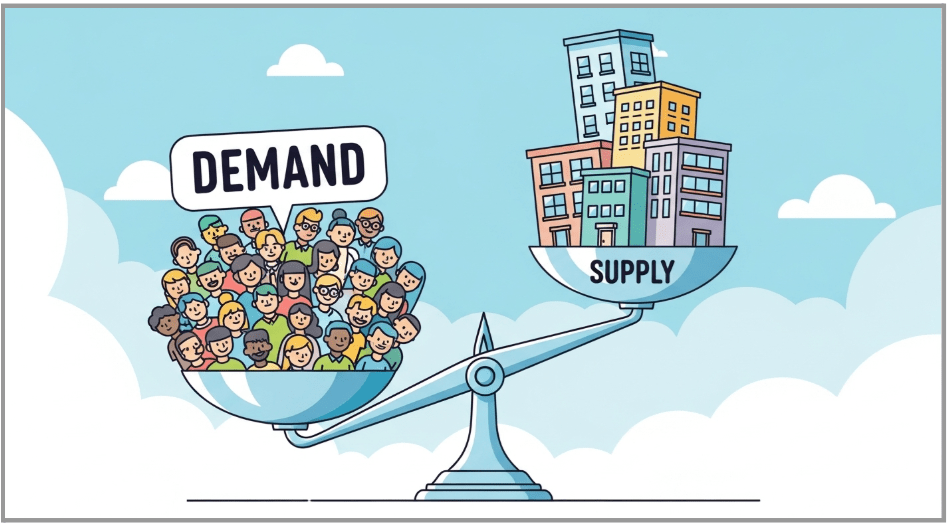
Demand Has Outpaced Supply
Boston’s economy is booming—particularly in the biotech industry and university sectors.
These industries attract high-end salaried workers, many of whom are willing to pay top dollar for premium housing.
The city’s position as a tech, education, and healthcare hub means demand rises year after year.
Unfortunately, housing production hasn’t kept up.
Despite population growth, Boston has added far fewer new housing units than required.
As a result, the apartment stock remains limited, and competition drives up prices.
In neighborhoods like Jamaica Plain, Mission Hill, and South End, locals have seen rapid gentrification and price hikes as developers rush to serve higher-income tenants.
Additionally, regulations around Accessory Dwelling Units (ADUs)—like basement or in-law apartments—have prevented homeowners from adding more rentable units quickly.
These small-scale solutions could help alleviate pressure, but restrictive laws keep them from being part of the solution in many areas.
Zoning Laws & NIMBYism Are Major Obstacles
One of the biggest roadblocks to solving Boston’s housing crisis is zoning law resistance.
Across the city, restrictive zoning makes it difficult to build multi-family homes, especially in areas dominated by single-family housing.
Permit zoning opposition—often driven by “NIMBYism” (Not In My Backyard)—slows down or blocks new construction projects entirely.
Even when developers try to create affordable housing, neighborhood opposition can delay or derail plans.
And when building does happen, it’s often expensive.
Construction costs—fueled by rising material prices and labor shortages—mean developers prioritize luxury housing, which delivers higher returns on investment.
This worsens the imbalance, making the city even less accessible to working-class residents.
The result? A construction slowdown, especially in middle-income and affordable housing segments.
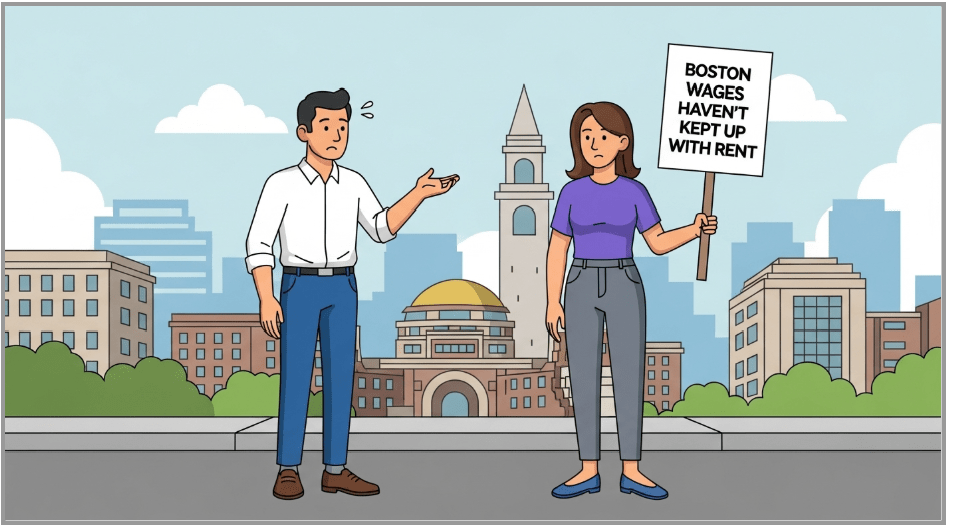
Boston Wages Haven’t Kept Up with Rent
A major piece of the puzzle lies in income stagnation.
While housing costs have skyrocketed, median household incomes in Boston have not kept pace.
This widening wage gap has made it increasingly difficult for the average renter to afford a one-bedroom or two-bedroom apartment.
Let’s put this in perspective: Boston one-bedrooms averaged $2,928 a month in the Spot Easy Rent Index for August 2026, and the common rule of thumb that rent should stay under 30% of income puts the salary needed at about $117,000 a year.
Yet, many essential workers—nurses, teachers, hospitality employees—earn far below that threshold.
This disconnect is at the heart of the housing crisis.
It has led to increasing rent hikes, often pushing families to the brink or forcing them to leave the city altogether.
As rents have outpaced wages, the concept of “affordable housing” in Boston has become a moving target.
Economic Pressures: Inflation, Interest Rates, and the Labor Crisis
In recent years, broader economic pressures have worsened Boston’s housing affordability issues:
- Inflation has increased the cost of living across the board, making everything from groceries to utilities more expensive.
- Interest rates have soared, discouraging home buying and increasing demand for rentals.
- A labor force crisis in construction has delayed many building projects. With fewer skilled workers available, timelines stretch, and housing production slows.
These issues increase construction costs, which developers often pass on to renters in the form of higher rents.
Some tenants and activists have pointed to price gouging, accusing landlords of taking advantage of the tight market.
This has revived debates around rent control—a policy banned statewide in 1994 but recently gaining attention as rents soar to unsustainable levels.
Boston’s Transit & University Sectors Fuel Rent Hikes
Another contributing factor is transit infrastructure. Boston’s MBTA system, while flawed, provides access to downtown and employment hubs.
Rental properties near T-stops or major bus routes command higher prices due to their convenience.
Additionally, the city’s large population of university students—from Northeastern, Boston University, MIT, and Harvard—drives demand for housing.
Many students (or their parents) can afford higher rents, which further inflates prices in areas like Allston, Fenway, and Cambridge.
This intense competition between students and long-term residents exacerbates the shortage, leading to steeper rent prices.
Luxury Units vs. Affordable Housing in Boston
Over the last decade, the majority of new housing development in Boston has consisted of luxury units.
While these buildings bring modern amenities and boost local tax bases, they do little to help the affordable housing shortage.
Developers are incentivized to build high-end units because of the high construction costs and longer timelines associated with more affordable projects.
And when developers do include affordable units, it’s often the minimum required by inclusionary zoning policies.
This creates a growing divide: more high-end housing, but a shrinking pool of options for low- and middle-income residents.
Can Rent Ever Go Down in Boston?

So, is there any hope?
Some city officials and housing advocates are pushing for solutions like:
- Reforming zoning laws to allow more multi-unit and ADU construction.
- Creating tax incentives for developers to build affordable housing.
- Reviving discussions about rent control.
- Streamlining construction permitting to avoid costly delays.
However, meaningful change will require broad political will, collaboration between public and private sectors, and a cultural shift away from NIMBYism.
Without these changes, rents in Boston are unlikely to fall anytime soon—and may continue climbing in the years to come.
Final Thoughts
Boston's sky-high rent is the result of years of compounded problems—low housing production, strong economic growth, zoning barriers, and wage stagnation.
These systemic challenges won’t be solved overnight, but recognizing them is the first step.
Understanding why rent is so high allows residents to advocate for better housing policies, vote for reform, and make more informed decisions about where—and how—they live in this rapidly evolving city.