


Most apartment hunting advice is about the unit — the layout, the light, the walk to the T. Almost none of it is about the company that will actually run your day-to-day life as a renter: who picks up the phone when the heat goes out, who decides whether your maintenance request gets fixed this week or next month, who you're stuck negotiating with if something goes wrong.
That's the part worth vetting before you sign, not after. This guide covers two things: how to actually check out a Boston property management company before you commit, and what your rights are under Massachusetts law if a landlord or management company goes unresponsive once you've moved in (because sometimes you find out the hard way anyway).
Before you sign: how to actually vet a Boston property management company
Ask about maintenance response time — and verify it, don't just take their word
Every management company will tell you they're responsive. The question is how you'd actually know. Ask directly: what's the typical turnaround on a routine repair request, and what happens for something urgent, like no heat or a leak? A company that gives you a specific, confident answer ("usually within 48 hours, same-day for emergencies") is telling you something different than one that gets vague.
Then verify it independently — that's the part people skip. Look for a pattern across multiple reviews, not just one bad one (every company has an unhappy tenant somewhere). What you're looking for is a repeated complaint about the same thing: multiple people describing slow repairs, or multiple people describing a manager who's hard to reach.
Check for a pattern of complaints (review platforms, public records)
Beyond a general search, dedicated renter-review platforms exist specifically so tenants can leave feedback on landlords and management companies the way you'd leave feedback on a restaurant — read a handful of recent reviews (the last year or two is more useful than reviews from five years ago, since staff and ownership change). You're not looking for a perfect record. You're looking for whether complaints, if they exist, are about things you'd actually care about (communication, maintenance, honesty about fees) versus one-off personality conflicts.
If the building or company has had code violations or complaints filed with the city, that's public information. Boston's Inspectional Services Department (ISD) fields housing-code complaints and can give you a sense of a property's history if you ask.
In-person viewing, current photos, and other basic-trust signals
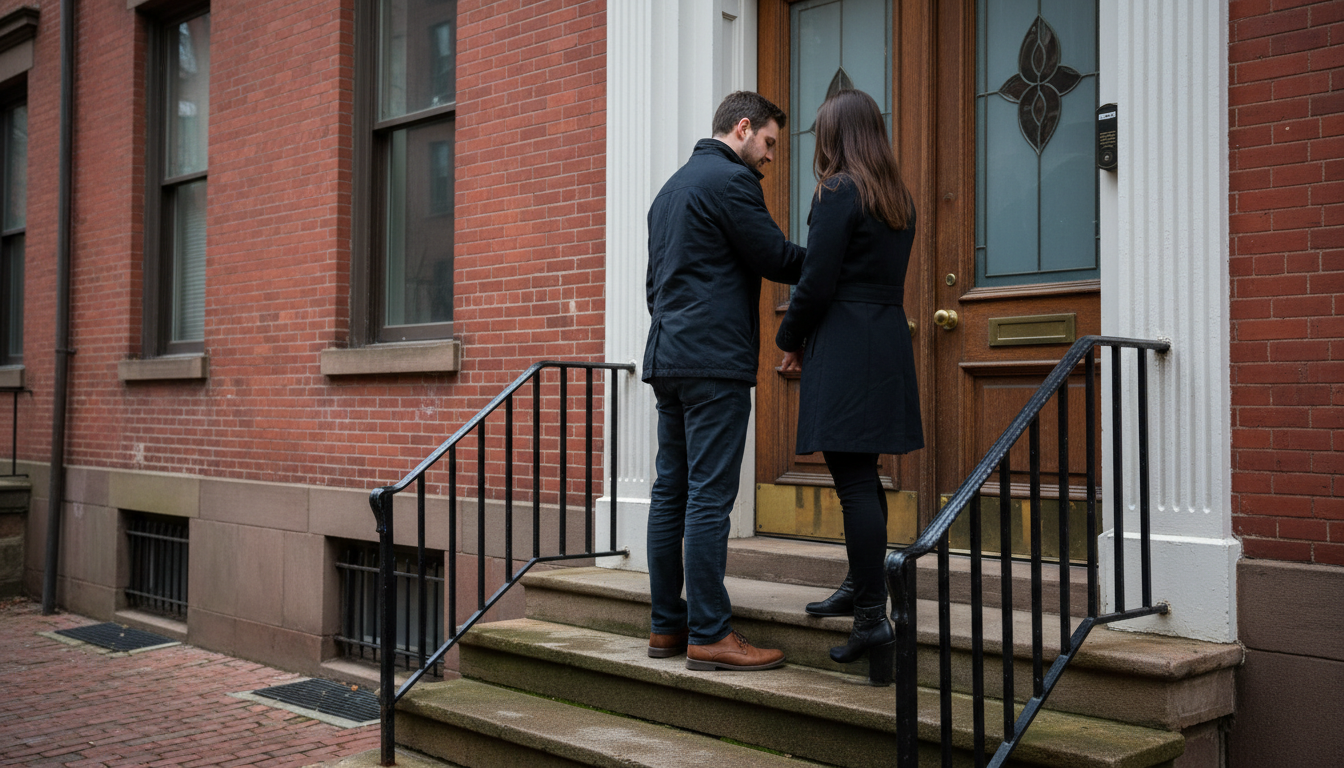
A management company that won't let you view the actual unit in person, insisting on a virtual tour only or showing you a "similar" unit instead, is a signal worth taking seriously, especially in a market where scams and misrepresented listings are common. Same with photos that look suspiciously old, generic, or staged. Ask when the listing photos were taken.
Read the fee structure and lease terms closely (vague = red flag)
Ask for the fee structure in writing before you're standing in front of a lease with a pen in hand: application fees, deposit terms, any recurring charges beyond rent. A company that can't give you a straight, itemized answer, or that gets cagey about it, is telling you something. Vague lease terms are a red flag for the same reason: a company that writes clearly when it benefits them (the rent due date, the late fee) but stays vague on their own obligations (maintenance response, what "reasonable notice" means for entry) is negotiating in their favor before you've even signed.
Red flags to walk away from
A few signs are worth treating as a hard stop rather than a maybe:
- They won't show you the actual unit in person before you sign.
- Listing photos are thin, generic, or clearly outdated.
- They're vague or evasive about fees or lease terms when asked directly.
- They demand cash-only payment, with no formal receipt or lease process.
- There's no tenant screening process at all — for anyone, including you. A company that doesn't screen anyone isn't running a serious operation, and you may end up with unpredictable neighbors as a result.
- Visible neglect during your viewing — water stains, broken fixtures, common areas that clearly aren't maintained. If they don't fix what's in front of you before a viewing, they're not going to prioritize your unit's maintenance request later.
Heads up: a lot of these red flags (thin photos, a landlord who won't show you the unit in person, vague terms) show up because nobody's checking listings before they go live. Spot Easy has every listing verified by a human, so you're not the one doing the detective work on whether a listing is even real.
Your rights don't disappear once you've signed
Vetting reduces your risk. It doesn't eliminate it. Sometimes a management company looks fine at signing and turns unresponsive six months later. If that happens, you're not without options.
The warranty of habitability, in plain English
Massachusetts law includes an implied "warranty of habitability" — in exchange for your rent, your landlord is legally obligated to keep the unit safe, sanitary, and fit to live in (Mass.gov). This applies regardless of what your lease says, and a landlord can't waive it away with lease language.
What counts as a real habitability violation vs. an annoyance
Not every inconvenience is a legal violation. A slow response to a cosmetic issue (a scuffed wall, a slightly sticky door) is annoying but usually not actionable. What crosses the line, under the Massachusetts Sanitary Code, are things that actually threaten health or safety: no heat, no working plumbing, a serious pest infestation, structural hazards, or a landlord who's aware of a health-or-safety issue and doesn't act (Mass Legal Help). If you're not sure which side of the line something falls on, documenting it and asking is worth more than guessing.
The repair timeline landlords are supposed to follow
After you give written notice of a needed repair (sending it in a form you can prove, like certified mail or a dated email, is worth doing even though it's not always strictly required), Massachusetts practice generally follows a tiered timeline based on severity: true emergencies (no heat, a sewage backup) should be addressed within about 24 hours; major sanitary-code violations (no hot water, a serious leak) generally have up to about 5 days; everything else generally has up to about 14 days. If they don't act, you have options — see below.
What to do if your property manager goes unresponsive
Document everything, in writing
Before you do anything else: put your repair requests in writing (email is fine, but keep records), note dates, and keep photos or video if the issue is visible. If you've only called or texted, follow up in writing so there's a paper trail. This documentation is what makes every option below actually usable if it comes to that.
Escalate: 311 → Boston Inspectional Services
If your landlord isn't responding, Boston renters can file a complaint with the Inspectional Services Department (ISD) — call 311, call ISD directly at 617-635-5300, email [email protected], or use the city's online portal (Boston.gov). An inspector can come out, document code violations, and order the landlord to fix them. This step matters even if you don't plan to take further legal action — a written inspection report is powerful documentation.
Rent withholding and repair-and-deduct — what they actually mean and the risk of doing them wrong
Massachusetts law gives tenants facing a genuine habitability violation two possible remedies, rent withholding or repair-and-deduct, but both carry real risk if you get the notice or documentation wrong. Our unpermitted-apartment guide walks through the exact conditions the repair-and-deduct remedy requires under Chapter 111 §127L; rent withholding follows a separate, common-law standard, so don't assume the same rules cover both.
If they retaliate (rent hike, non-renewal, lockout) — what protection you have
Massachusetts law (G.L. c. 186 §18) protects tenants from retaliation after they report a problem — see our unpermitted-apartment guide's full breakdown of the six-month presumption, the remedies, and the unsettled question of whether a lease non-renewal counts the same way.
A landlord physically locking you out or shutting off utilities to force you out, instead of going through the formal eviction process, is illegal in Massachusetts regardless of the reason — see our guide to reading a Boston lease for exactly what the law requires instead.
Can you break your lease early because of this?
This is the question that comes up most often when a property manager has genuinely gone unresponsive on a serious issue — and it's also the one with the least clear-cut answer. In some cases, a landlord's failure to maintain a habitable unit can amount to what's called "constructive eviction," which may give you grounds to treat the lease as effectively ended. But whether that applies to your specific situation, and whether a landlord's early-termination penalty would hold up if challenged, depends heavily on the facts — how serious the issue is, how well it's documented, and how the landlord responded.
This isn't a question this article can answer for you with confidence, and it shouldn't try to. If you're facing a lease-break decision over an unresponsive landlord, talk to Mass Legal Help, the Massachusetts Attorney General's Consumer Advocacy and Response Division hotline at (617) 727-8400 (weekdays, 8 a.m.–4 p.m.), or a tenant-rights attorney before you act. Getting this wrong, either by staying somewhere unsafe because you assumed you had no options or by breaking a lease you were actually still bound to, can be costly either way.
FAQ
Do I need to see a property management company's license before signing? Massachusetts doesn't require a standalone "property manager" license — but a company that lists units, shows them, and negotiates lease terms on behalf of multiple owners generally needs a real estate broker's license to do that legally. So it's fair to ask whether they (or someone on their team) is a licensed broker, especially if they're managing on behalf of an owner rather than being the owner themselves. Treat a clear, confident answer as a good sign and a dodge as a red flag.
How do I find reviews of a specific Boston landlord or management company? Search the company name plus "reviews," and check dedicated landlord-review platforms in addition to general review sites. Look for patterns across multiple recent reviews rather than a single complaint.
What's the difference between a landlord and a property management company? A landlord owns the property; a property management company is often hired by the owner to handle day-to-day operations — maintenance, rent collection, tenant communication. Functionally, for a renter, the management company is usually who you deal with directly.
Can I withhold rent if my landlord isn't fixing something? Only for a genuine habitability violation, and only after proper written notice — see the rent-withholding section above. Doing this incorrectly carries real risk, so get guidance first if you're unsure.
What counts as an emergency repair versus something that can wait? No heat, no water, electrical hazards, and serious safety issues are emergencies. A slow drain or a cosmetic issue, while annoying, generally isn't — though a pattern of ignored non-emergency requests is itself worth documenting.
Is it illegal for a landlord to lock me out instead of formally evicting me? Yes. Massachusetts requires landlords to go through the formal eviction process in court — a landlord can't lock you out, shut off utilities, or remove your belongings on their own to force you out.
This article is informational and isn't legal advice.