

If your landlord is still charging a broker fee in Boston in 2026, you are right to question it. Massachusetts changed the rules for residential rental broker fees, and many renters are still being asked to pay fees they may not legally owe.
The simple answer is this: if your landlord hired the broker, your landlord generally has to pay the broker fee. A Boston renter may still be responsible for a broker fee only when the renter actually hired the broker or salesperson to work on their behalf, received the required fee disclosure, and agreed in writing to pay that fee.
That means broker fees are not completely illegal in Massachusetts. But a landlord usually cannot force a tenant to pay a broker fee just because the landlord used a broker to advertise, show, or lease the apartment.
This 2026 guide explains when a broker fee is legal, when it may be an illegal charge, what to do if your landlord or broker is still demanding payment, and how to protect yourself before signing a lease.
Is It Legal for a Boston Landlord To Charge a Broker Fee in 2026?
In most cases, a Boston landlord cannot make the tenant pay a broker fee if the landlord hired the broker.
Under the Massachusetts broker fee law that took effect on August 1, 2025, the person who hired the real estate broker or broker salesperson is generally responsible for paying that broker’s fee. So if the landlord hired a broker to list the apartment, find tenants, schedule showings, process applications, or help rent out the unit, the landlord is usually the one who must pay the fee.
However, a tenant may still have to pay a broker fee if the tenant hired the broker. For example, if you contacted a broker and asked them to help you search for apartments, arrange showings, negotiate terms, or represent you in the rental process, then you may be responsible for the fee — but only if the proper written agreement and fee disclosure requirements were met.
The important question is not simply, “Is there a broker fee?” The better question is:
Who hired the broker?
If the landlord hired the broker, the fee is generally the landlord’s responsibility. If the tenant hired the broker, the fee may be the tenant’s responsibility.
The 2025 Massachusetts Broker Fee Law: What Changed?
Before the new law, Boston renters were often expected to pay a broker fee equal to one month’s rent, even when the landlord hired the broker. This was one of the most frustrating parts of renting in Boston, especially because tenants were already paying first month’s rent, last month’s rent, a security deposit, moving costs, and application-related expenses.
The new law changed the default rule.
As of August 1, 2025, the party that hired the broker or salesperson is generally the party that pays the fee. This applies to residential rentals in Massachusetts, including Boston apartments.
That means a landlord cannot simply say, “The tenant always pays the broker fee,” if the landlord was the one who hired the broker.
Broker fees are not totally banned
One common misunderstanding is that all broker fees are now illegal in Massachusetts. That is not accurate.
A broker fee may still be legal when:
- The tenant hired the broker.
- The broker is working on the tenant’s behalf.
- The tenant received the required written fee disclosure.
- The tenant agreed in writing to pay the broker fee.
- The agreement complies with Massachusetts law.
So the law does not eliminate broker fees entirely. It limits when a tenant can be forced to pay them.
The label does not control the answer
A landlord or broker may not be able to get around the law by calling the charge something else. A fee labeled as an “admin fee,” “leasing fee,” “finder’s fee,” “selection fee,” “listing fee,” or “move-in coordination fee” may still be improper if it is really a disguised broker fee.
What matters is the substance of the charge. If the fee is connected to broker services hired by the landlord, and the tenant did not hire the broker, the tenant should question whether the charge is legal.
When Does the Tenant Have To Pay a Broker Fee?
A tenant may have to pay a broker fee when the tenant actually hires the broker.
This usually means the broker is helping you find an apartment, not merely showing you an apartment that the landlord listed through them.
For example, a tenant may owe a broker fee if:
- You contacted a real estate broker and asked them to help you find apartments.
- The broker searched for units based on your budget, location, pet needs, move-in date, or other preferences.
- The broker arranged multiple showings for you.
- The broker represented your interests rather than the landlord’s interests.
- You signed a written agreement saying you would pay the broker.
- You received a written fee disclosure before the broker began working for you.
In that situation, the broker is acting more like your rental agent. You hired them to perform a service for you, so you may be responsible for paying them.
But simply seeing an apartment, emailing about a listing, or attending a showing does not automatically mean you hired the broker. This is one of the biggest areas of confusion for Boston renters.
When Does the Landlord Have To Pay the Broker Fee?
The landlord generally has to pay the broker fee when the landlord hired the broker.
This is common in Boston. A landlord or property manager may hire a broker to:
- Advertise the apartment.
- Post the listing online.
- Take photos or write listing descriptions.
- Schedule showings.
- Communicate with renters.
- Collect applications.
- Screen prospective tenants.
- Prepare or coordinate lease documents.
- Help fill the vacancy quickly.
If that is what happened, the broker is likely working for the landlord. The landlord hired the broker to help rent out the property. In that case, the landlord generally cannot shift the broker fee to the tenant just because that was common practice in the past.
Example: landlord-hired broker
Suppose a landlord owns an apartment in Allston and hires a broker to list the unit. You see the apartment online, attend a showing, apply, and get approved. Then the broker says you owe a one-month broker fee.
In that situation, you should ask: Did I hire this broker, or did the landlord hire this broker?
If the landlord hired the broker to lease the apartment, the landlord generally pays the broker fee.
Example: tenant-hired broker
Now suppose you are moving to Boston from out of state and you hire a broker to find apartments in Back Bay, Beacon Hill, and South Boston. The broker sends you options, arranges tours, advises you, and helps you apply. Before doing so, they give you a written fee disclosure and you sign an agreement to pay them.
In that case, you may be responsible for the broker fee because you hired the broker.
Do I Owe a Broker Fee If I Found the Apartment Online?

Not necessarily.
This is one of the most important questions for Boston renters in 2026. Many tenants find apartments through online listings on rental websites, brokerage sites, social media, or apartment platforms. A broker may be listed as the contact person, and the renter may email, call, or request a showing.
That does not automatically mean the renter hired the broker.
The key issue is whether the broker was already representing the landlord or whether the broker became your agent.
Ask who the broker represents
Before signing anything or paying a fee, ask the broker this question in writing:
“Do you represent the landlord, or are you asking me to hire you as my broker?”
If the broker represents the landlord, then the landlord generally pays the fee. If the broker wants to represent you, then they should clearly explain that, provide the required fee disclosure, and ask you to sign a written agreement.
Be careful with forms
Some brokers may send documents through an application portal or lease package. Read everything carefully. A document may say that you are hiring the broker or agreeing to pay a broker fee. Do not sign a broker fee agreement unless you understand what it means.
If you are only trying to apply for one apartment that the broker listed for a landlord, be cautious about signing anything that makes it look like you hired the broker.
60-Second Decision Tree: Do You Have To Pay the Broker Fee?
Use this checklist to evaluate whether the broker fee may be legal.
| Question to ask | What it may mean |
|---|---|
| Did the landlord hire the broker to list or lease the apartment? | The landlord generally pays. |
| Did you independently hire the broker to help you find housing? | You may have to pay. |
| Did you sign a written agreement hiring the broker? | You may have agreed to pay. |
| Did you receive a written fee disclosure before the broker worked for you? | This is important for a valid tenant-paid fee. |
| Is the broker representing the landlord? | The landlord generally pays. |
| Is the fee required just to rent this specific unit? | Question whether it is a landlord-hired broker fee. |
| Is the fee labeled as an admin, leasing, finder’s, or selection fee? | It may be a disguised broker fee. |
| Was the lease or fee agreement signed before August 1, 2025? | Older agreements may be treated differently. |
| Are you being pressured to pay before getting answers? | Ask for the basis of the fee in writing. |
If you are unsure, do not rely on a verbal explanation. Ask the landlord or broker to confirm everything in writing.
What If the Broker Fee Is Called Something Else?
A broker fee does not become legal just because it has a different name.
Some renters may see charges labeled as:
- Admin fee
- Leasing fee
- Finder’s fee
- Selection fee
- Placement fee
- Listing fee
- Broker processing fee
- Move-in coordination fee
- Rental service fee
These fees deserve scrutiny. If the charge is really compensating a broker, salesperson, listing agent, or leasing agent hired by the landlord, the tenant may not be responsible for it.
The same is true if the fee is added into a lease package in a confusing way. For example, a landlord may not be able to avoid the law by saying, “It is not a broker fee; it is just a required leasing fee.”
Again, the key question is: What is the fee actually for, and who hired the person being paid?
Can My Landlord Raise the Rent To Cover the Broker Fee?
This is a more complicated issue.
A landlord can generally set the asking rent for a new apartment, subject to applicable housing laws and lease rules. But a landlord should not disguise a broker fee as a separate charge or force the tenant to reimburse the landlord for a broker the landlord hired.
For example, a landlord may list an apartment at a certain monthly rent and choose to price the unit based on their costs. That is different from saying:
- “You must pay one month’s rent as a broker fee.”
- “You must reimburse us for the broker we hired.”
- “You must pay a leasing fee equal to the broker’s commission.”
- “This admin fee covers the broker.”
If the charge is specifically tied to the broker fee, and the landlord hired the broker, renters should question it.
What If I Already Paid the Broker Fee?
If you already paid a broker fee in Boston after August 1, 2025, do not assume you are out of options. You may still be able to challenge the charge, especially if the landlord hired the broker and you did not sign a valid agreement hiring the broker yourself.
Start by gathering your records.
Save:
- The original apartment listing.
- Screenshots showing who posted the listing.
- Emails and text messages with the broker.
- Emails and text messages with the landlord or property manager.
- The lease.
- Any broker fee agreement.
- Any fee disclosure form.
- Receipts or proof of payment.
- Application portal screenshots.
- Names and license information for the broker or salesperson.
- The date you paid the fee.
- The date you signed the lease.
Then review the basic timeline. Was the lease signed before or after August 1, 2025? Did you sign a broker agreement? Did the broker work for you or for the landlord? Did you receive a written disclosure before agreeing to pay?
If the answers suggest the fee was improper, you may want to contact a tenant attorney, local housing organization, the Boston Office of Housing Stability, the Massachusetts Attorney General’s consumer division, or the state licensing board for real estate brokers and salespersons.
What Penalties Can Landlords or Brokers Face?
Improper broker fees can create serious consequences.
Depending on the facts, landlords may face financial penalties, including repayment obligations, attorney’s fees, and potentially damages. Brokers and salespersons may also face professional consequences if they violate the law or licensing rules.
For renters, the most important thing is to preserve evidence. If a landlord or broker violated the law, written proof will matter. Screenshots, signed documents, payment records, and messages can help show who hired the broker, what was disclosed, and why the tenant was charged.
Do not rely on a phone call alone. If a landlord or broker tells you that you must pay, ask them to put the legal basis for the charge in writing.
What To Say If Your Landlord or Broker Still Demands the Fee
If you are being asked to pay a broker fee and you are not sure it is legal, use calm, specific language. The goal is to get the facts in writing before you pay or sign.
Copy-paste message to the landlord
Hi [Name], I’m reviewing the broker fee listed for this apartment. Can you please confirm in writing who hired the broker or salesperson for this listing, who the broker represents, and why the tenant is being asked to pay the fee? My understanding is that under Massachusetts law effective August 1, 2025, the party who hired the broker is generally responsible for paying the broker fee.
Copy-paste message to the broker
Hi [Name], before I sign or pay anything, can you please confirm whether you represent the landlord or whether you are asking me to hire you as my broker? If you are saying I hired you, please send the written broker agreement and fee disclosure that explains when I agreed to pay your fee.
Copy-paste message if the fee has another name
Hi [Name], I see a charge listed as [admin fee/leasing fee/finder’s fee/selection fee]. Can you please explain what this fee pays for, who receives it, and whether it is connected to broker or leasing services? I’d like to understand whether this is a broker-related fee before moving forward.
These messages are not aggressive, but they force clarity. If the fee is legitimate, the landlord or broker should be able to explain why. If the fee is questionable, asking in writing may prevent you from paying something you do not owe.
What If I’m Afraid I’ll Lose the Apartment?
This is a real concern. Boston is competitive, and renters may worry that questioning a broker fee will cause the landlord to choose another applicant.
Unfortunately, some renters may feel pressured to pay first and fight later. Whether to do that is a personal decision, and it may depend on the amount of money involved, your housing urgency, your risk tolerance, and whether you can get legal advice quickly.
If you are under pressure, try to at least create a paper trail. Ask for the fee explanation in writing. Save every message. Take screenshots before listings disappear. If you decide to pay, make sure you have proof of what the payment was for and who received it.
You can also contact local tenant resources before making a final decision.
Where To Report an Illegal Broker Fee in Boston or Massachusetts
If you believe a landlord, broker, or salesperson is violating the law, you may have several options.
Boston Office of Housing Stability
Boston renters can contact the Office of Housing Stability for guidance on rental housing issues. This can be especially useful if the apartment is in Boston and you need local tenant resources.
Massachusetts Attorney General
The Massachusetts Attorney General’s office handles consumer protection issues, including landlord-tenant and fee-related complaints. If you believe you were charged an illegal broker fee, this may be one place to file a complaint or request guidance.
Real estate broker licensing board
Because brokers and salespersons are licensed professionals, complaints may also involve the state board that oversees real estate brokers and salespersons. This can be relevant if a broker misrepresented who they worked for, failed to provide required disclosures, or tried to collect a fee that may not be legal.
Tenant legal aid or housing attorney
If you already paid a large fee, are being threatened, or are considering legal action, speak with a qualified tenant attorney or legal aid organization. This article is for general information and is not legal advice.
Broker Fee Checklist for Boston Renters
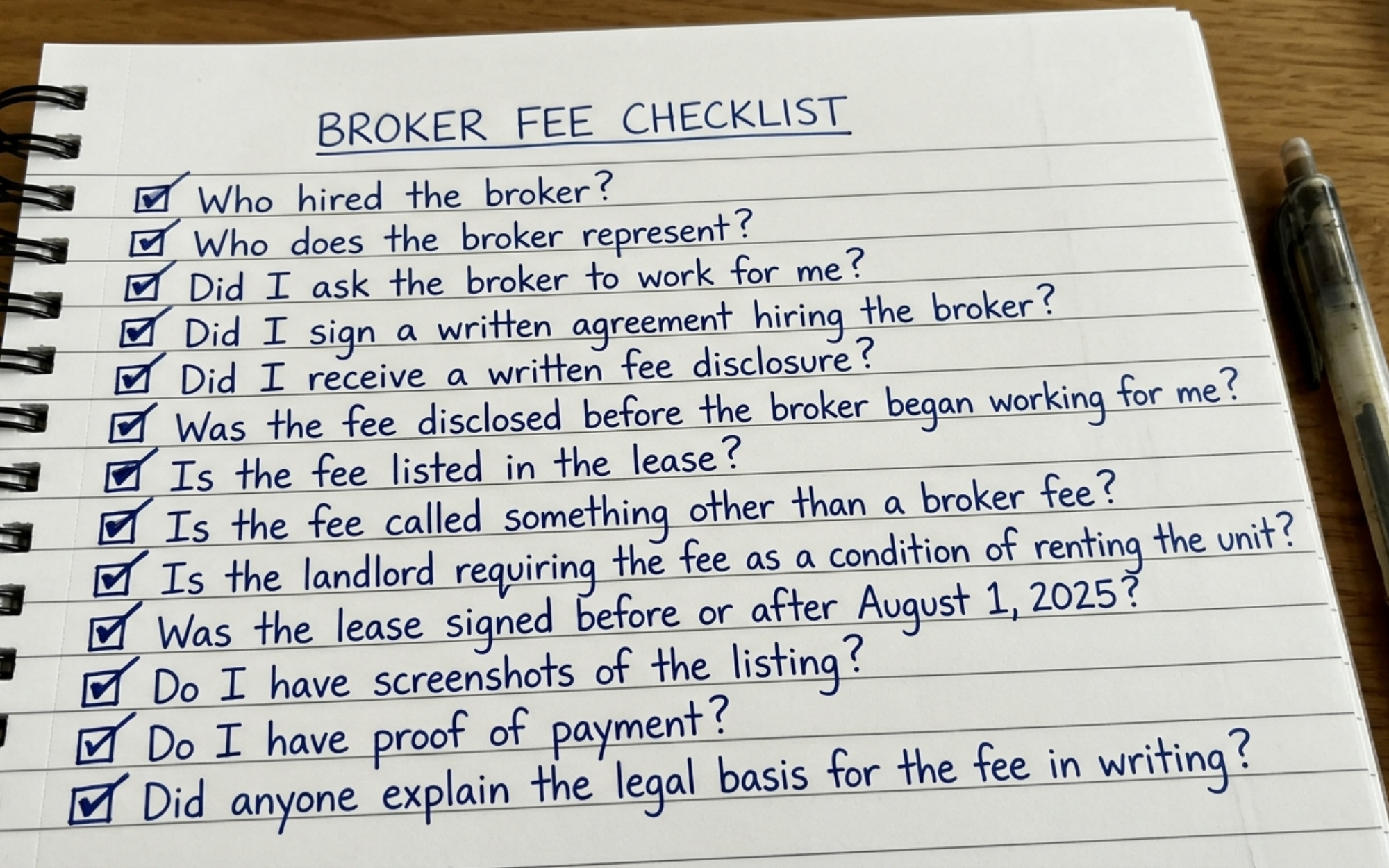
Before paying a broker fee in Boston in 2026, ask these questions:
- Who hired the broker?
- Who does the broker represent?
- Did I ask the broker to work for me?
- Did I sign a written agreement hiring the broker?
- Did I receive a written fee disclosure?
- Was the fee disclosed before the broker began working for me?
- Is the fee listed in the lease?
- Is the fee called something other than a broker fee?
- Is the landlord requiring the fee as a condition of renting the unit?
- Was the lease signed before or after August 1, 2025?
- Do I have screenshots of the listing?
- Do I have proof of payment?
- Did anyone explain the legal basis for the fee in writing?
If the landlord hired the broker and you did not separately hire the broker, you should be cautious about paying.
Common Broker Fee Scenarios in Boston
Scenario 1: The landlord’s broker posted the apartment online
You found the apartment online, contacted the listed broker, and toured the unit. The broker later says you owe one month’s rent as a fee.
Likely answer: You may not owe the fee if the landlord hired the broker to list the apartment and you did not hire the broker to represent you.
Scenario 2: You hired a broker to search for apartments
You asked a broker to help you find a pet-friendly apartment near the Green Line. The broker sent you several listings and arranged showings. You signed a written agreement to pay them.
Likely answer: You may owe the fee because you hired the broker.
Scenario 3: The lease says the tenant pays the broker fee
You receive a lease that says the tenant is responsible for the broker fee, but you never hired the broker.
Likely answer: A lease clause alone may not make the fee legal if the landlord hired the broker. Ask for clarification before signing.
Scenario 4: The fee is called an admin fee
The landlord says there is no broker fee, but there is a required admin fee equal to one month’s rent.
Likely answer: Question it. If the admin fee is really a disguised broker fee, it may be improper.
Scenario 5: The broker says contacting them means you hired them
You emailed a broker about a listing, and they say that means you hired them.
Likely answer: Simply asking about a listed apartment does not necessarily mean you hired the broker. Ask for the written agreement and fee disclosure.
FAQ: Boston Broker Fees in 2026
Are broker fees illegal in Boston now?
Not all broker fees are illegal. A tenant may still pay a broker fee if the tenant hired the broker and agreed in writing. But if the landlord hired the broker, the landlord generally must pay.
Can my landlord make me pay the broker fee if they hired the broker?
Usually no. If the landlord hired the broker to list, show, or lease the apartment, the landlord is generally responsible for the broker fee.
Can I still pay a broker fee if I hired the broker?
Yes. If you hired a broker to help you find housing, received the required disclosure, and signed a written agreement, you may be responsible for the fee.
What if I found the apartment online?
Finding an apartment online does not automatically mean you hired the broker. Ask whether the broker represents the landlord or whether they are asking you to hire them.
What if the broker says I hired them by requesting a showing?
Requesting a showing alone may not be enough. Ask for the written agreement and fee disclosure showing that you hired the broker and agreed to pay.
Can a landlord hide the broker fee as an admin fee?
A landlord should not disguise a broker fee as an admin fee, leasing fee, finder’s fee, selection fee, or similar charge if the tenant is not legally responsible for the broker fee.
Can the landlord raise rent to cover the broker fee?
A landlord may set rent for a new tenancy, but they should not impose a separate broker-fee reimbursement or disguised broker-related charge if the landlord hired the broker.
What if I signed a lease before August 1, 2025?
Older agreements may be treated differently. If your lease or broker fee agreement was signed before the law took effect, review the documents carefully and consider getting legal advice.
Can I get my broker fee back if I already paid?
Possibly. It depends on who hired the broker, what you signed, what was disclosed, and when the payment was made. Gather your documents and consider contacting a tenant attorney or housing agency.
Can I sue for triple damages?
Some broker fee violations may expose landlords or brokers to significant penalties, including multiple damages in certain circumstances. Speak with a qualified attorney about your specific situation.
Does this law apply outside Boston?
Yes. The broker fee rule is a Massachusetts law, so it applies statewide to covered residential rentals, not only Boston apartments.
Does this apply to buying a home or commercial leases?
The residential rental broker fee rules discussed here are focused on residential tenancies. Home purchases and commercial leases may involve different rules.
Final Answer: Is Your Boston Broker Fee Legal?

If your landlord is still charging a broker fee in Boston in 2026, do not assume you have to pay it.
The most important question is:
Who hired the broker?
If the landlord hired the broker, the landlord generally pays the broker fee. If you hired the broker to help you find an apartment, and you signed the proper written agreement after receiving the required disclosure, then you may have to pay.
Before paying any broker fee, ask for written confirmation of:
- Who hired the broker.
- Who the broker represents.
- What agreement requires you to pay.
- What fee disclosure was provided.
- Whether the charge is really a broker fee under another name.
Boston renters now have more protection than they did before August 1, 2025. But landlords, brokers, and renters are still adjusting to the new law. That means tenants need to be careful, ask direct questions, save documents, and challenge fees that do not appear to follow the law.
When in doubt, get the explanation in writing before you pay.