


Yes. A Massachusetts real estate broker or salesperson can potentially face disciplinary action for charging, attempting to charge, or helping collect unlawful renter-paid broker fees. Depending on the facts, consequences may include complaints, fines, consumer protection enforcement, license suspension, license revocation, or refusal to renew a license.
That does not mean every disputed broker fee automatically leads to license loss. A licensing consequence usually depends on the evidence, the broker’s conduct, the documents signed, whether the tenant actually hired the broker, and whether regulators find a violation.
The short version is simple: if a broker charges a renter for a broker fee the renter did not legally owe, the broker may be risking more than a refund. They may be risking their license.
Quick Answer: Can a Broker Lose Their License for Illegal Broker Fees?
A broker can potentially lose their license if the conduct violates Massachusetts real estate licensing rules, consumer protection laws, or the state’s residential rental broker fee requirements.
Massachusetts law gives the Board of Registration of Real Estate Brokers and Salesmen authority to investigate complaints and suspend, revoke, or refuse to renew a broker or salesperson license in certain circumstances. The licensing statute expressly allows the board to suspend, revoke, or refuse renewal when a licensee fails to comply with applicable requirements.
In 2026, Governor Maura Healey and Attorney General Andrea Campbell warned brokers and landlords against illegal renter-paid broker fees after reports that some were still attempting to charge renters unlawfully.
For renters, that means an unlawful broker fee may be reportable. For brokers, it means broker fee compliance is now a serious license-risk issue.
What Counts as an Illegal Broker Fee in Massachusetts?
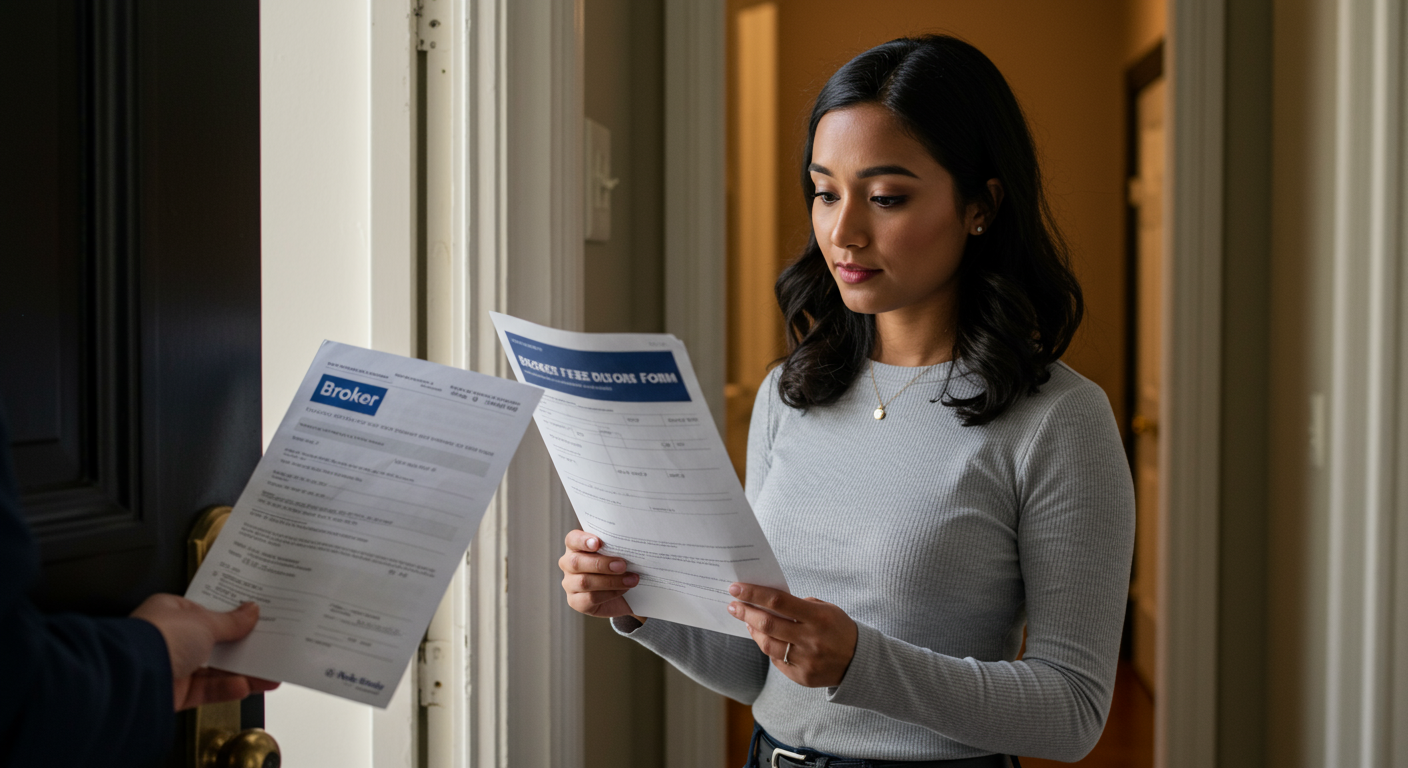
An illegal broker fee is generally a fee charged to the wrong party.
Under the Massachusetts residential rental broker fee rule, beginning August 1, 2025, only the person who hires a broker or salesperson is allowed to pay that broker’s fee. Mass.gov states that if a broker is hired by a landlord to find a tenant, the landlord is responsible for paying that broker.
A fee may be unlawful if:
- the landlord hired the broker, but the tenant is told to pay;
- the tenant never hired the broker;
- the tenant did not sign a written agreement accepting the broker fee;
- the broker claims the tenant hired them merely by asking about an online listing;
- the fee is disguised as a “commission,” “leasing fee,” “admin fee,” or “finder’s fee”;
- the broker or landlord makes broker fee payment a condition of getting the apartment.
The law does not ban every broker fee. A tenant can still hire a rental broker to help find an apartment. In that case, the tenant may owe a fee if there is a clear agreement. The problem arises when a renter is forced to pay for a broker who was really working for the landlord.
What Changed Under the Massachusetts Broker Fee Law?
Before the new law, Boston-area renters were often expected to pay a broker fee equal to one month’s rent, even when the broker listed the apartment for the landlord. That meant many renters had to pay first month’s rent, last month’s rent, a security deposit, and a broker fee before moving in.
The new rule changed who pays.
As of August 1, 2025, the broker fee must be paid by the person who first engaged or hired the broker to list or find a rental property. WBUR summarized the rule by explaining that the law is not a total ban on broker fees, but it prevents renters from being forced to pay four-figure fees to brokers originally hired by landlords.
The key question is no longer simply, “Was there a broker involved?” The key question is:
Who hired the broker?
If the landlord hired the broker, the landlord pays. If the tenant hired the broker, the tenant may pay.
Can a Broker Actually Lose Their License?

Yes, a broker can potentially lose their license, but license revocation is not automatic.
The Massachusetts licensing board has authority over licensed brokers and salespersons. Under Chapter 112, Section 87AAA, the board may investigate complaints and may suspend, revoke, or refuse to renew a license in certain circumstances.
Charging an unlawful broker fee could create license risk if the conduct involves:
- failure to comply with legal requirements;
- misrepresentation;
- charging or receiving an undisclosed commission;
- misleading a tenant about who hired the broker;
- pressuring a tenant to pay a fee they do not owe;
- repeated illegal fee demands;
- refusing to correct improper conduct;
- unfair or deceptive conduct under consumer protection law.
The most accurate answer is:
A broker can lose their license for conduct connected to illegal fees, but regulators decide the outcome after reviewing the facts.
A one-time misunderstanding, a confusing form, a refunded fee, and repeated intentional fee-shifting are not all treated the same. Evidence matters.
Who Has Authority to Discipline or Punish a Broker?
Several agencies or legal systems may be involved. They do not all do the same thing.
Massachusetts Attorney General’s Office
The Attorney General’s Office handles consumer protection issues and may investigate unfair or deceptive conduct. In the broker fee context, that can include complaints from renters who were charged broker fees they did not owe.
The Attorney General’s Office may seek resolutions, refunds, penalties, or other enforcement outcomes depending on the case. The 2026 warning from Governor Healey and Attorney General Campbell focused specifically on illegal renter-paid broker fees.
Board of Registration of Real Estate Brokers and Salesmen
The Board of Registration is the licensing body that can investigate broker and salesperson conduct. Its powers can include suspension, revocation, or refusal to renew a license.
This is the agency most directly connected to the question: “Can a broker lose their license?”
Division of Occupational Licensure
The Division of Occupational Licensure oversees many professional boards in Massachusetts, including licensing systems. It may be involved in the administration of professional licensing complaints and board processes.
Courts
Courts may become involved if a tenant, landlord, broker, or government agency files a legal action. In some cases, consumer protection claims may involve damages, attorney’s fees, or other remedies.
Fines vs. Suspension vs. Revocation: What’s the Difference?
Illegal broker fee consequences can sound confusing because different penalties do different things.
| Consequence | What It Means | Who It Affects |
|---|---|---|
| Refund | Money is returned to the renter | Broker, landlord, or brokerage |
| Fine / civil penalty | Monetary penalty for unlawful conduct | Landlord, broker, brokerage, or other party |
| Consumer protection enforcement | Action based on unfair or deceptive conduct | Businesses, landlords, brokers |
| License suspension | Broker or salesperson temporarily loses ability to practice | Licensed broker or salesperson |
| License revocation | Broker or salesperson loses license | Licensed broker or salesperson |
| Refusal to renew | License may not be renewed | Licensed broker or salesperson |
| Lawsuit | Court action seeking damages or other relief | Any party involved |
A landlord may face fines even if the landlord does not hold a real estate license. A broker, however, faces the additional risk of professional discipline.
That is why illegal broker fees can be especially dangerous for licensed real estate professionals.
Broker License Risk Matrix
The following table explains which conduct is most likely to create license risk.
| Broker Conduct | Risk Level | Why It Matters |
|---|---|---|
| Charging a tenant for a landlord-hired broker | High | Tenant may not legally owe the fee |
| Telling a tenant they hired the broker by clicking a listing | High | Could be misleading |
| Using an open listing to shift the fee to the tenant | High | Common disputed scenario |
| Failing to disclose who the broker represents | High | Agency confusion can create compliance risk |
| No written tenant representation agreement | High | Harder to prove tenant hired the broker |
| Calling the fee an “admin fee” or “commission” | Medium-high | Labels do not control legality |
| Charging an undisclosed commission | Very high | Licensing rules may treat this seriously |
| Refusing to refund a questionable fee | Medium-high | May increase complaint risk |
| Repeated illegal fee demands | Very high | Pattern evidence can worsen consequences |
| Clear written tenant-broker agreement | Lower | Tenant may legally hire and pay a broker |
The safest broker practice is to document who hired the broker before asking anyone to pay.
Can a Real Estate Salesperson Lose Their License Too?
Yes. A real estate salesperson can also face discipline.
Many renters use the word “broker” to describe anyone showing an apartment, but Massachusetts licensing distinguishes between real estate brokers and salespersons. The broker fee law and licensing framework can involve both brokers and salespersons.
Chapter 112, Section 87AAA refers to complaints, investigations, and license consequences involving real estate brokers and salesmen. The board may suspend, revoke, or refuse to renew a license in qualifying circumstances.
So the risk is not limited to brokerage owners. A salesperson involved in unlawful fee demands, misleading statements, or improper collection practices may also face consequences.
Can a Landlord Be Punished Too?
Yes. A landlord can face consequences for requiring a tenant to pay a broker fee that the landlord should have paid.
The law places responsibility on the person who hired the broker. If a landlord hires a broker or salesperson to rent a residential unit, the landlord cannot simply pass that broker fee to the tenant as a mandatory charge. Mass.gov’s FAQ states that beginning August 1, 2025, only the person who hires a broker or salesperson may pay that fee.
Landlord risk may include:
- tenant complaints;
- refund demands;
- Attorney General review;
- civil penalties;
- consumer protection exposure;
- reputational damage;
- lease disputes.
A landlord may not have a broker license to lose, but that does not mean the landlord can ignore the rule.
Open Listings: The Biggest Gray Area

Open listings are one of the most confusing parts of Massachusetts broker fee enforcement.
In a typical open listing situation, a landlord or property manager may share an available rental unit with multiple brokers rather than signing an exclusive listing agreement with one broker. A broker may then advertise the apartment and try to find a renter.
Some brokers have argued that if there is no formal written agreement with the landlord, the tenant can be charged. But that argument is risky. WBUR reported that the Attorney General’s Office said the lack of a formal contract with a landlord is not enough for a broker to charge a tenant.
That point matters because a broker cannot safely assume:
“No written landlord contract means the tenant must pay.”
The better question is still:
Who first engaged the broker’s services, and who was the broker working for?
If the broker was marketing the landlord’s unit, communicating with the landlord or property manager, or trying to fill the landlord’s vacancy, charging the renter may create legal and license risk.
What If a Tenant Only Clicked an Online Listing?
A tenant does not necessarily hire a broker by clicking a listing, emailing about an apartment, or scheduling a showing.
Many renters find apartments through Zillow, Apartments.com, brokerage websites, social media, or local listing platforms. A renter may reasonably believe they are responding to an advertised apartment, not hiring a personal broker.
A broker should be careful before claiming that a renter hired them merely by:
- clicking “request tour”;
- texting about availability;
- emailing through a rental platform;
- attending an open house;
- asking whether pets are allowed;
- applying for one advertised apartment.
To charge the tenant safely, the broker should be able to show that the tenant actually engaged the broker to provide services for the tenant and agreed to pay.
What If the Broker Calls It a Commission, Admin Fee, Leasing Fee, or Finder’s Fee?
Changing the name of a fee does not necessarily make it legal.
A charge may still be problematic if it is really a broker fee for services provided to the landlord. A fee labeled as a “leasing fee,” “commission,” “admin fee,” “listing fee,” “finder’s fee,” or “service fee” may still raise issues if the tenant did not hire the person collecting the money.
Renters should ask:
- Who receives the fee?
- Is the recipient a broker, salesperson, brokerage, landlord, or property manager?
- What service is the fee paying for?
- Who requested that service?
- Is payment required to rent the apartment?
- Was the fee disclosed in writing?
- Did the tenant sign an agreement hiring the broker?
For brokers, the lesson is clear: do not rely on labels. Regulators may look at the substance of the transaction.
What If the Tenant Signed a Fee Agreement?
A signed agreement matters, but it may not end the analysis.
If a tenant clearly hired a broker and signed a written agreement to pay a fee, the broker may be allowed to collect that fee. But if the agreement was misleading, rushed, unclear, or presented as a condition of viewing a landlord-listed apartment, there may still be questions.
A valid tenant-paid broker fee is strongest when:
- the tenant voluntarily hired the broker;
- the broker clearly represented the tenant;
- the broker disclosed the fee;
- the tenant agreed in writing;
- the agreement was signed before services were performed;
- the fee amount and trigger were clear;
- the broker was not actually acting for the landlord.
A weak fee agreement may create risk if it appears to be a paper form used to shift a landlord’s cost onto renters.
What If the Broker Refunds the Fee?
A refund can help, but it does not automatically erase the conduct.
If a broker collected a questionable fee and later refunds it, that may reduce harm to the tenant. It may also help resolve a complaint informally. But a refund does not necessarily prevent a renter from reporting the incident, and it does not guarantee that regulators will ignore the conduct.
The risk is higher if:
- multiple tenants were charged the same way;
- the broker only refunded after a complaint;
- the broker used misleading documents;
- the fee demand was repeated;
- the brokerage had a policy of charging renters improperly.
For brokers, prompt correction is better than refusal, but compliance should happen before collection.
What Evidence Should Renters Save?

A broker fee complaint is easier to evaluate when the renter has documents. Renters should save:
- screenshots of the rental listing;
- the listing URL;
- the date the listing was viewed;
- the broker’s name;
- the brokerage name;
- the broker or salesperson license number, if available;
- the landlord or property manager name;
- emails;
- text messages;
- application materials;
- fee disclosure forms;
- representation agreements;
- lease documents;
- payment requests;
- receipts;
- bank transfer records;
- refund requests;
- notes from phone calls.
The most important evidence usually answers three questions:
- Who hired the broker?
- What was the tenant told?
- What did the tenant sign or pay?
How Can a Renter File a Complaint About an Illegal Broker Fee?
A renter who believes they were charged an illegal broker fee should first organize the evidence. Then they can consider contacting the Massachusetts Attorney General’s Office, the relevant licensing authority, a tenant advocacy organization, or a lawyer.
A practical complaint process may look like this:
- Save the listing and all communications.
- Identify the broker, brokerage, landlord, and property manager.
- Find out whether the tenant signed a fee disclosure or representation agreement.
- Write a timeline of what happened.
- Ask in writing who hired the broker.
- Request a refund if a fee was improperly charged.
- File a complaint with the appropriate Massachusetts office.
- Speak with legal aid or a tenant attorney if the amount is significant.
Renters should avoid relying only on phone calls. Written records are more useful if a dispute arises.
What Happens After a Complaint Is Filed?
A complaint does not guarantee a specific result. Regulators may review the documents, contact the business, seek an informal resolution, request a refund, investigate further, or decide that more evidence is needed.
Possible outcomes include:
- no action;
- education or warning;
- refund;
- settlement;
- civil penalty;
- referral;
- licensing investigation;
- disciplinary hearing;
- suspension;
- revocation;
- refusal to renew.
The more serious outcomes are usually tied to stronger evidence, repeated conduct, intentional misrepresentation, or refusal to comply.
Renters should be prepared for the process to depend heavily on documentation.
What Brokers Should Do to Avoid License Risk
Brokers and salespersons should treat the broker fee law as a compliance priority.
Best practices include:
- identify who hired the broker before advertising the unit;
- disclose who the broker represents;
- do not charge tenants for landlord-hired broker services;
- use clear tenant representation agreements when representing tenants;
- avoid claiming a renter hired you just by clicking a listing;
- update listing templates;
- remove outdated “tenant pays broker fee” language;
- train salespersons and leasing staff;
- document landlord communications;
- keep copies of fee disclosures;
- review open listing practices;
- consult counsel before collecting renter-paid fees;
- refund questionable fees quickly when appropriate.
A broker’s safest position is a clear file showing who hired them, who they represented, what fee was disclosed, and why the person paying the fee legally owed it.
What Landlords Should Do to Avoid Fines
Landlords should also update their practices.
A landlord who hires a broker should expect to pay that broker. Landlords should avoid lease language, listing language, or property manager instructions that require tenants to pay the landlord’s broker fee.
Landlord compliance steps include:
- review all active rental listings;
- remove “tenant pays broker fee” language where inappropriate;
- clarify broker relationships in writing;
- instruct property managers not to shift broker fees to tenants;
- do not relabel broker fees as admin fees;
- keep records of broker agreements;
- respond carefully to tenant complaints;
- avoid threats or pressure tactics;
- consult a landlord-tenant attorney when uncertain.
The law does not prevent landlords from using brokers. It prevents landlords from making renters pay for brokers the landlords hired.
Frequently Asked Questions
Can a broker lose their license for charging an illegal broker fee?
Yes, potentially. A broker can face disciplinary action, including suspension, revocation, or refusal to renew, if the conduct violates licensing rules or legal requirements.
Is license revocation automatic?
No. Revocation is not automatic. It depends on the facts, evidence, prior conduct, and regulatory process.
Can a broker be suspended instead of revoked?
Yes. Suspension is one possible licensing consequence. It may be temporary, while revocation is more severe.
Can a salesperson be disciplined too?
Yes. Massachusetts licensing rules apply to real estate salespersons as well as brokers.
Can a landlord be fined?
Yes. A landlord who requires a tenant to pay a broker fee that the landlord should pay may face enforcement risk, including possible fines.
Can a tenant still legally pay a broker fee?
Yes. A tenant can still pay a broker fee when the tenant actually hires the broker and agrees to pay.
Does clicking an online listing mean the tenant hired the broker?
Not necessarily. Clicking, emailing, or touring one listed apartment is not automatically the same as hiring a broker to represent the tenant.
What if the broker says there was no landlord contract?
That may not be enough. The key issue is not only whether a formal landlord contract existed, but who engaged the broker and whose interests the broker served.
What if the broker refunds the fee?
A refund may help resolve the issue, but it does not automatically prevent a complaint or investigation.
What should renters do before paying?
Ask who hired the broker, who the broker represents, what fee is being charged, and what written agreement makes the tenant responsible.
Key Takeaways
A Massachusetts broker can potentially lose their license for conduct connected to illegal broker fees, but license loss is not automatic. The risk depends on what happened, what was disclosed, what was signed, and whether the tenant actually hired the broker.
The most important rule is this: the person who hires the broker pays the broker fee.
For renters, that means you should not pay a broker fee without understanding who hired the broker and what document makes you responsible. For brokers, it means every fee should be supported by clear representation, clear disclosure, and clear documentation. For landlords, it means the broker you hire is generally your expense, not the tenant’s.
In 2026, illegal renter-paid broker fees are no longer just a move-in cost dispute. They can become a consumer protection issue, a licensing issue, and a serious professional risk.