

![What Documents Do You Need to Rent a Boston Apartment? [A 2025 Guide]](https://storage.ghost.io/c/a0/b2/a0b24891-6a6c-47f1-ab75-80aa819e6bed/content/images/2025/08/1-2.png)
Boston’s rental market moves fast. Apartments can be listed and rented in just a few days, sometimes even within hours.
In such a competitive environment, having the right documents ready can make the difference between landing your dream place or losing it to another applicant.
Whether you’re a local, a student, an international renter, or moving from another state, this guide will walk you through exactly what documents you’ll need to rent an apartment in Boston, why landlords require them, and how to prepare for a smooth application process.

Why Landlords and Property Managers Require Documentation
Renting an apartment isn’t just about finding a place you like — it’s also about convincing a landlord or property manager that you’re a reliable tenant. Documents serve several purposes:
- Verify identity – to confirm you are who you say you are.
- Confirm income – to ensure you can afford the monthly rent.
- Check credit and rental history – to assess your financial responsibility.
- Comply with Massachusetts rental laws – including security deposit and lease regulations.
A well-prepared application increases your approval odds and speeds up the process — critical in Boston, where desirable apartments don’t stay vacant for long.
Proof of Identity – Required Documents
The first step in renting is proving your identity.
Government-Issued Photo ID
Most landlords in Boston will require at least one of the following:
- Driver’s License – A Massachusetts license is preferred, but an out-of-state one is usually acceptable for newcomers.
- State ID Card – An alternative for those who don’t drive.
- Passport – Particularly common for international renters.
- Digital Copies – Always keep scanned copies ready to email quickly.
Additional ID for International Renters
If you’re moving from abroad, landlords may also request:
- Visa documents
- Proof of immigration status
- Student enrollment verification (for student housing)
These help landlords verify legal residence and ensure lease terms comply with federal and state laws.
Proof of Income – Showing You Can Afford Rent.
In Boston, where the average rent is significantly above the national average, landlords want reassurance that you can pay rent consistently.
Commonly Accepted Proof of Income
- Recent Pay Stubs – Usually the last 2–3 pay periods.
- Employment Verification Letter – Signed by your employer and on official letterhead.
- Bank Statements – Showing regular income deposits.
- Tax Returns – Especially for self-employed renters or freelancers.
Special Cases
- Offer Letter – If you’re starting a new job, provide your signed offer letter with salary details.
- Proof of Assets – Savings, investments, or retirement accounts can show financial stability.
- Financial Aid Letters – For students relying on scholarships, grants, or stipends.

Credit and Background Checks
Most Boston landlords will run a credit report and background check as part of the application process.
Credit Report & Credit Score
- Landlords use this to evaluate your payment history and debt levels.
- While there’s no universal minimum score, many Boston rentals expect at least 650+ for approval.
- You may be asked to provide your own credit report to speed things up.
Background Check
- Look at criminal history and eviction records.
- Massachusetts landlords cannot discriminate based on certain criminal records, but they may still review past evictions.

Rental History and References
Your past rental experience is a strong predictor of future tenancy.
Rental History
- Previous lease agreements or tenancy-at-will agreements.
- Proof of past rent payments (receipts, bank statements).
References
- Former Landlords – To confirm you paid on time and followed lease terms.
- Professional References – Helpful if you have no landlord references (e.g., first-time renters).
- Pet References – If you have pets, a previous landlord’s note on good behavior can help.
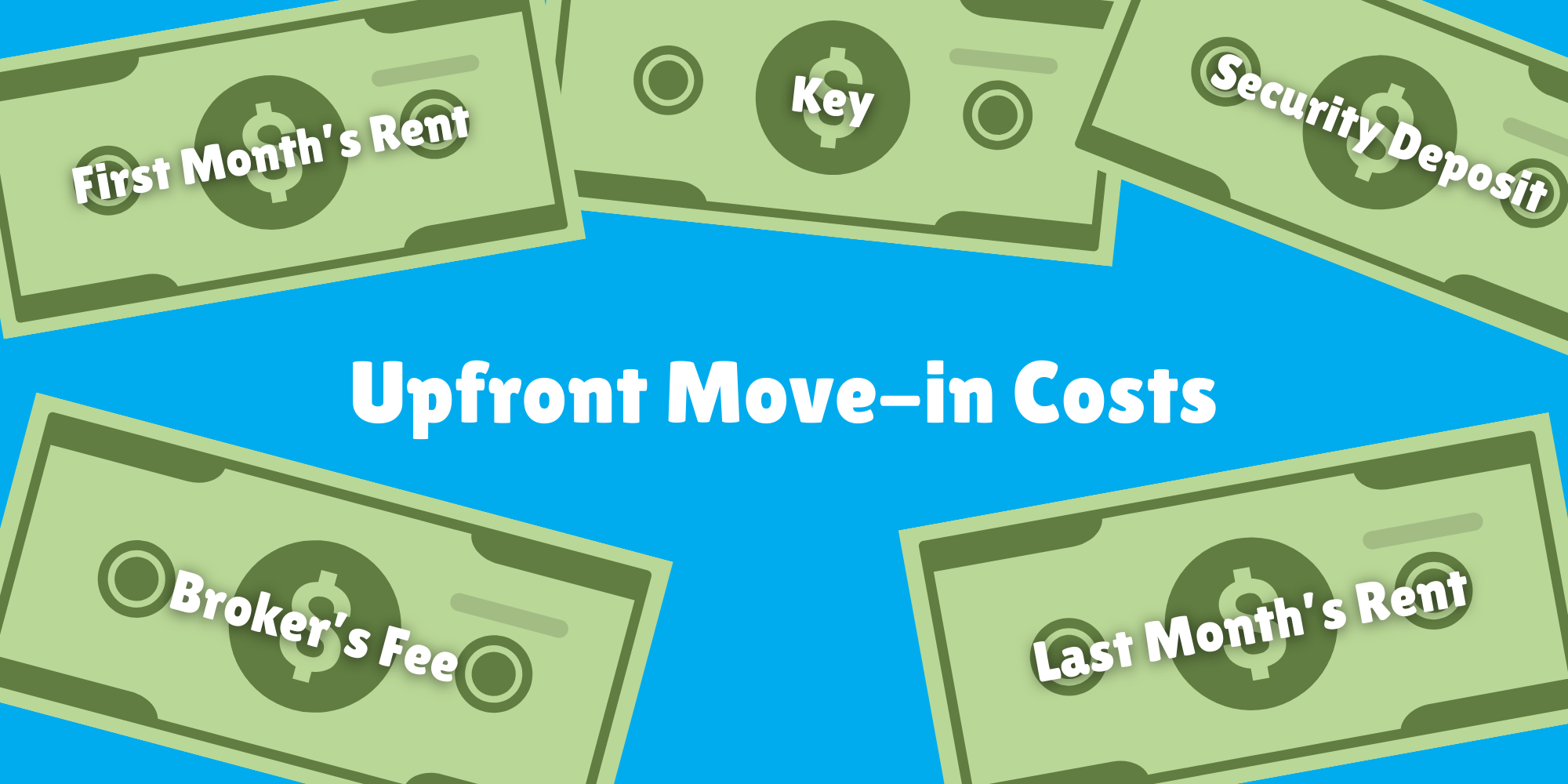
Upfront Costs and Proof of Payment
Before you get the keys, you’ll typically need to pay several upfront costs.
Upfront Move-In Payments
- First Month’s Rent – Paid before move-in and required for application (most of the time)
- Last Month’s Rent – Also common in Boston rentals.
- Key Fee/Deposit – Often required to change lock and key.
- Broker Fees – Since August 1, 2025, whoever hires the broker pays them, so most renters owe nothing here. See the Boston broker fee law guide.
- Acceptable Payment Methods – Certified check, personal check, or electronic transfer.
Security Deposit Rules in Massachusetts
- Legal Maximum: One month’s rent.
- Renters must provide a condition statement to the landlord within 10 days of move-in (if security deposit is required).
- Security deposits must be held in a separate, interest-bearing account.
What a Landlord Can Legally Collect at Signing
Massachusetts limits this to four things. Under M.G.L. c.186 §15B, a landlord may collect only the first month’s rent, the last month’s rent, a security deposit, and the cost of a new lock and key. Nothing else is lawful before you move in, whatever the listing says.
Two things landlords in Boston get wrong often enough to be worth checking:
- You are owed a receipt within 30 days. It has to name the bank holding your deposit, where that bank is, the amount, and the account number.
- A deposit held for a year or more earns you 5% interest annually, or the lower rate the bank actually paid, at the end of each year of the tenancy. Last month’s rent earns interest too, however long you stay.
So on a $2,500 apartment, the most a landlord can lawfully ask for at signing is $2,500 first month, $2,500 last month, a $2,500 deposit, and the cost of the lock. An application fee on top of that, under any name, is worth questioning before you pay it. We cover which fees survived the 2025 law change in Application Fee vs. Broker Fee in Boston.

Additional Documents Some Boston Landlords May Require
Depending on the property type and landlord’s policies, you might also need:
- Renters Insurance – Proof of coverage before moving in.
- Co-Signer or Guarantor Agreement – For renters with low credit or insufficient income.
- Affordable Housing Eligibility Documents – For income-restricted units.
- Tenancy-at-Will Agreement – For short-term or flexible rentals.
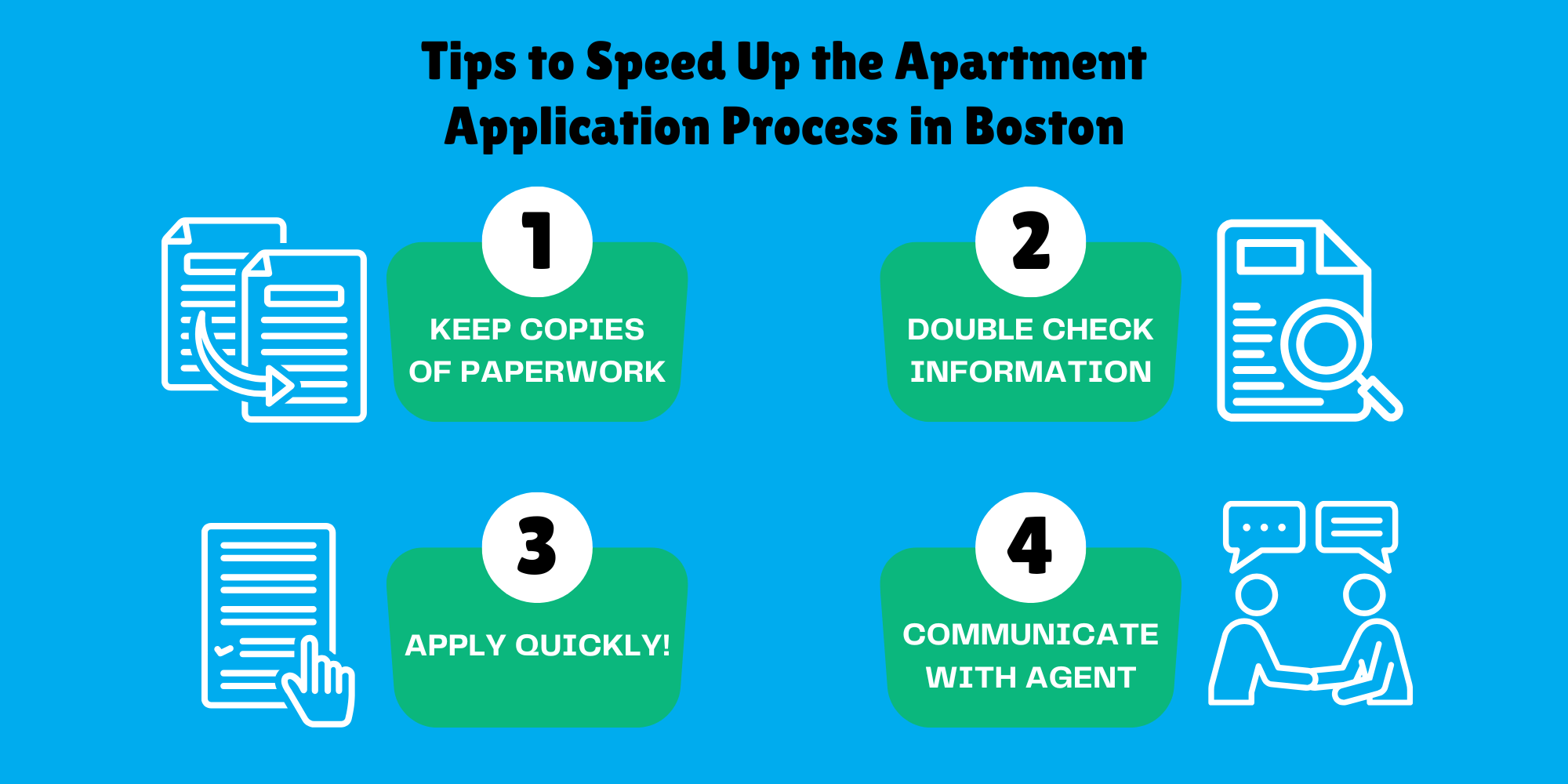
Tips to Speed Up the Apartment Application Process in Boston
- Keep digital and paper copies ready – PDFs of all documents for quick emailing.
- Double-check accuracy – Names, dates, and figures should match across documents.
- Apply quickly – In Boston’s market, hesitation can cost you the apartment.
- Communicate with your landlord or agent – Ask in advance if there are any unique requirements.

What If You Don’t Have All the Required Documents?
If you’re missing some documents, you still have options:
- Use a Co-Signer or Guarantor – A financially stable person who guarantees your lease.
- Pay a Larger Upfront Amount – Offer to pay additional move-in costs not required by landlord (up to first month's rent, last month's rent, security deposit and key as outlined on mass.gov)
- Provide Additional References – From employers or community leaders.
- Offer More Financial Proof – Such as savings or asset statements.

Renting in Boston as a Student or International Resident
Boston’s large student population and international community mean landlords are familiar with alternative documentation.
For Students
- Proof of enrollment from your university.
- Financial aid award letters.
- Bank statements showing sufficient funds.
For International Renters
- Passport and visa documents.
- Proof of legal U.S. residency.
- Bank statements from the home country (translated and converted to USD if needed).
Final Checklist – Documents to Rent a Boston Apartment
Before applying, prepare the following:
- Government-issued photo ID (driver’s license, passport, or state ID)
- Proof of income (pay stubs, employment letter, bank statements)
- Credit report and background check consent
- Rental history and landlord references
- Security deposit and initial rent payment proof
- Co-signer documents (if applicable)
- Renters insurance policy (if required)
Key Takeaways
Renting in Boston means competing in a fast-paced market. Landlords expect complete, accurate, and verifiable documentation before they’ll hand over the keys.
By preparing proof of identity, proof of income, credit information, rental history, and payment documents in advance, you’ll not only speed up the process but also increase your chances of securing the apartment you want.
Whether you’re a lifelong Massachusetts resident, a student starting classes, or moving from overseas, knowing exactly what documents you need to rent an apartment in Boston will help you navigate the process with confidence.
Looking for your dream Boston apartment? Spot Easy makes it simple. Browse rental listings from verified agents and find your perfect place today—no stress, no hassle, just Spot Easy.
If your situation is more complicated
The document list above is the standard case. These cover the situations that change it:
- How much do I need to earn? What Income Do You Need to Rent an Apartment in Boston?
- What if I have no credit score? Can You Rent in Boston Without a Credit Score?
- Will I need a cosigner? Do You Need a Cosigner for an Apartment? A Boston Renter's Guide