

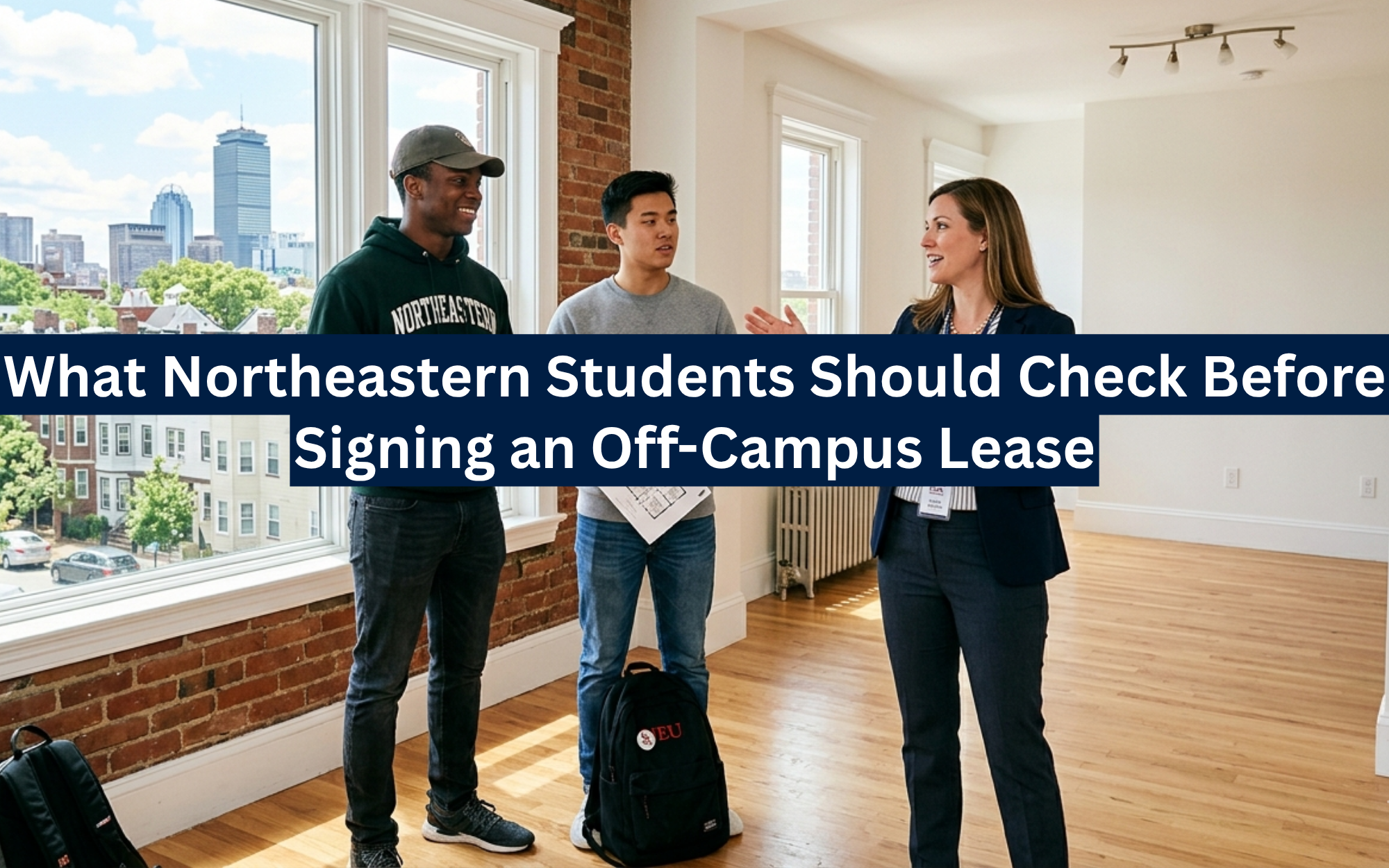
Finding off-campus housing in Boston can feel like a race. Apartments move quickly, landlords and brokers may push for fast decisions, and students often feel pressure to sign before they have fully reviewed the lease. But before you sign anything, it is important to slow down and check the details.
A lease is a legally binding contract. Once you sign, you may be responsible for rent, fees, and lease terms for months to come. For Northeastern students, that means you need to look at more than just the rent price or whether the apartment looks nice in photos. You also need to review upfront costs, lease clauses, safety issues, roommate rules, maintenance responsibilities, and possible rental scam red flags.
This guide breaks down exactly what Northeastern students should check before signing a Boston off-campus lease, so you can protect yourself, avoid expensive mistakes, and make a smarter housing decision.
Boston Off-Campus Leases Move Fast, but You Still Need to Read Everything
Boston’s rental market moves quickly, especially in neighborhoods popular with students. Many leases are tied to the September 1 move-in cycle, which means competition can be intense months in advance. That pressure can make students feel like they have to sign a lease immediately or lose the apartment.
Do not let speed replace caution.
Before signing a lease, remember that the document is not just a formality. It is a legal contract between you and the landlord or property manager. If the lease says you owe certain fees, follow certain rules, or accept certain conditions, those obligations can be enforced even if you did not fully understand them when you signed.
That is why lease review matters. A good apartment is not only about location or price. It is about whether the lease terms are fair, clear, and realistic for your situation as a student tenant in Boston.
See the Apartment in Person Before You Sign the Lease
One of the most important things students should do before signing a Boston off-campus lease is to see the apartment in person. Pictures can be outdated, staged, or incomplete. A virtual tour may not show the issues that matter most when you actually live there.
When you visit the apartment, check the overall condition carefully. Open and close windows. Test door locks. Turn on faucets and showers to check water pressure. Look for signs of leaks, mold, pests, damaged flooring, broken appliances, or bad ventilation. Make sure the heat appears functional and ask how maintenance requests are handled.
Also look for safety basics, including smoke detectors and carbon monoxide detectors. If the apartment is poorly maintained before you sign, that can be a warning sign about what dealing with the landlord or property management company may be like after move-in.
Take photos and notes during the tour. If the landlord promises repairs, cleaning, repainting, or other improvements before move-in, get everything in writing. Verbal promises are not enough. If it matters to you, it should appear in the lease, in an addendum, or in written communication you save.
Check the Basic Lease Details First

Before getting into the complicated legal language, start with the basics. Read the lease carefully and confirm that the core information is correct.
Make sure the lease includes the correct property address, apartment or unit number, lease start date, lease end date, monthly rent amount, and names of all tenants. If you are signing with roommates, confirm that every roommate listed is correct and that you understand whether you are jointly responsible for the full rent.
Check whether the lease is a standard Boston lease or whether it includes extra addenda from the landlord or property manager. Addenda can change important parts of the agreement, including maintenance rules, subletting, fees, or move-out expectations. Do not skim them. Many students focus only on the first few pages and overlook the extra terms attached at the end.
Also confirm whether the apartment is being leased “as is” or whether the landlord has agreed to make certain repairs or upgrades before move-in. That language matters more than many students realize.
Understand the Full Upfront Cost Before Paying Anything
A lease is not just about monthly rent. In Boston, upfront costs can be substantial, and students should understand every charge before they commit.
Common upfront costs may include first month’s rent, last month’s rent, a security deposit, and a broker fee. In many cases, that means you could be asked to pay the equivalent of up to four months of rent before moving in.
That total can catch students off guard.
Before signing or submitting payment, ask for a clear breakdown of every charge. Confirm what each payment is for and whether any part is refundable. A security deposit is different from last month’s rent. A broker fee is different from an application deposit. Do not assume they all work the same way.
You should also ask when each payment is due, what payment methods are accepted, and whether you will receive receipts. Save proof of every payment you make. If the landlord, broker, or property manager seems vague about the fee structure, that is a red flag.
Know What the Security Deposit Covers
The security deposit is one of the most misunderstood parts of signing a lease. Students should ask what the deposit covers, under what conditions deductions can be made, and how the return process works at the end of the lease.
It is also smart to document the apartment’s condition at move-in. If there is existing damage, dirt, broken furniture, scratches, stains, or appliance issues, photograph them and report them in writing right away. That record can help protect your deposit later.
A move-in condition checklist is one of the easiest ways to avoid disputes when you move out.
Review the Lease Terms That Matter Most
Many students make the mistake of reading only the rent section. But the most important parts of a Boston lease are often buried in the clauses and addenda.
Pay close attention to the lease terms related to maintenance, repairs, utilities, notice requirements, and fees. Ask yourself what happens if something breaks, if a roommate leaves, if you want to sublet, or if you need to move out early.
You should also check for any wording that shifts too much responsibility onto the tenant. The more specific the lease is, the easier it is to understand your obligations.
If a section feels confusing, pause and review it before signing. A rushed signature can turn a small misunderstanding into a very expensive problem.
Watch for Risky Clauses in the Lease Contract
Some lease clauses deserve extra attention because they can create major issues later.
One is the “as is” clause. This may mean the apartment will be delivered in its current condition, even if that condition is not ideal. If you are counting on repairs, cleaning, or improvements before move-in, do not rely on assumptions. Make sure the lease or addendum clearly states what the landlord will do.
Another clause to review carefully is landlord access. The lease should explain when and how the landlord can enter the apartment. Students should understand the notice expectations and whether the language seems reasonable.
Early termination language is also important. If you study abroad, transfer, graduate early, or face a personal emergency, ending a lease can be difficult. Check whether the lease explains buyout options, replacement tenant rules, or penalties.
Subletting and assignment rules matter too. Many Northeastern students rely on sublets during co-op, summer travel, or temporary moves. If the lease restricts subletting or requires landlord approval, you need to know that before signing.
Finally, check for clauses related to negligence, damages, cleaning, move-out fees, and written notice. Small terms can lead to major costs later.
Confirm Which Utilities and Services Are Included
Never assume utilities are included. Ask exactly what the rent covers.
Some Boston apartments include heat and hot water, while others require tenants to pay for gas, electricity, internet, or other utilities separately. In older buildings, heating costs can be significant during the winter, so this question can affect your real monthly housing cost more than students expect.
You should also ask who is responsible for snow removal, trash, laundry access, pest extermination, and common-area maintenance. These may sound like secondary details, but they affect daily life and should be understood before move-in.
A cheaper apartment is not always cheaper if you end up paying high utility bills and extra service costs every month.
Ask About Maintenance and Repairs
Before signing a Boston off-campus lease, find out who handles maintenance and how repair requests work.
Ask whether the property is managed by an individual landlord or a professional property management company. Find out how emergency repairs are reported, how quickly routine repairs are usually addressed, and whether there is a designated maintenance contact.
You should also ask what happens if an appliance fails, the heat stops working, or there is a pest issue. A lease should not leave you guessing about who is responsible for fixing problems.
If the property looks poorly maintained during the tour, or if the landlord gives vague answers about repairs, take that as a warning sign.
Be Careful With Roommate and Occupancy Rules
If you are signing with roommates, you need to understand both the legal and practical side of sharing the apartment.
In Boston, occupancy rules can matter. Students should verify that the number of tenants allowed in the apartment is legal and consistent with local rules. Do not assume a landlord can lease a space to any number of people just because everyone is willing to split the rent.
You should also talk with roommates about rent splits, utilities, cleaning, guests, noise, quiet hours, and what happens if someone wants to leave early. Even if the lease does not cover every roommate issue, a separate roommate agreement can prevent conflict later.
Many student lease problems are not caused by the apartment itself. They are caused by mismatched expectations between roommates.
Check the Neighborhood, Not Just the Apartment

A lease decision should include the neighborhood, not only the unit.
Think about your commute to Northeastern, access to public transportation, grocery stores, safety, noise levels, and how the area feels at night. Visit at different times if possible. A street that seems quiet in the afternoon may be very different in the evening or on weekends.
You should also consider move-in logistics. Boston’s student-heavy neighborhoods can become chaotic around September 1. Parking, elevators, street access, and loading can all affect your move.
A great apartment in the wrong location may still become a bad housing choice.
Learn the Red Flags for Rental Scams
Rental scams are a real risk, especially when students are under pressure to find housing quickly.
Be cautious if someone refuses to show the apartment, pushes for immediate payment, asks for unusual payment methods, or gives inconsistent information about the property. Be skeptical of listings that seem far cheaper than the rest of the Boston rental market without a clear explanation.
It is also smart to verify who actually owns or manages the property. If the person asking you to sign or pay cannot clearly prove their relationship to the apartment, do not move forward until you confirm it.
Most importantly, get everything in writing. If the landlord promises repairs, flexible terms, included utilities, furniture, or changes to the lease, make sure those promises appear in a written document you can save.
Use Northeastern Resources Before Signing a Lease
Northeastern students have an advantage that many renters do not: access to university-specific off-campus housing resources.
Before signing a lease, check whether Northeastern’s Off Campus Engagement and Support resources can help you review the situation. Use available lease checklists, workshops, apartment fairs, and educational materials to better understand the Boston rental market and common lease issues.
Even if the university is not acting as your lawyer or landlord, these resources can help you ask smarter questions and avoid obvious mistakes. For first-time renters, that guidance can make a major difference.
Students should use every reputable resource available before committing to a lease contract that may last a full year.
Consider a Lease Review Process
A smart lease review process can help you catch issues before they become obligations.
Start by reading the full lease yourself from beginning to end. Highlight anything unclear. Then compare the document against a lease checklist. Review rent, deposits, fees, move-in terms, maintenance responsibilities, subletting rules, landlord access, and early termination language.
You can also use trusted tools to help interpret confusing sections, but do not rely on shortcuts alone. Technology can support understanding, but you should still read carefully and ask questions when needed.
The goal is not to become a lawyer. The goal is to understand what you are agreeing to before your signature makes it binding.
What to Do Right After Signing
Once you sign the lease, keep organized records.
Save a copy of the signed lease contract, all addenda, payment receipts, and important written communications. Store them somewhere easy to access. If you paid a broker fee, security deposit, or last month’s rent, make sure you have proof.
Before move-in, confirm the date, key pickup instructions, and any promised repairs or cleaning. Consider renter’s insurance as well. It can help protect your belongings and may be required or recommended in some situations.
Signing the lease is not the end of the process. It is the start of your responsibilities as a tenant.
A Boston Off-Campus Lease Checklist for Northeastern Students
Before you sign, make sure you can answer yes to these questions:
Have you seen the apartment in person?
Have you checked for damage, pests, leaks, and safety issues?
Do you understand the full rent and all upfront costs?
Do you know what the security deposit covers?
Have you read every page of the lease and every addendum?
Do you understand the rules for subletting, landlord access, maintenance, and early termination?
Have all promises been put in writing?
Do you know which utilities are included?
Do you understand roommate responsibilities and occupancy limits?
Have you checked the neighborhood and commute?
Have you looked for scam red flags?
Have you saved copies of all documents and receipts?
If the answer to any of these is no, pause before signing.
Final Thoughts
For Northeastern students, signing a Boston off-campus lease is a major financial and legal decision. The apartment may look perfect at first glance, but the real question is whether the lease terms, fees, building condition, and landlord expectations make sense for you.
The best way to protect yourself is to treat the process like a checklist, not a rush. See the apartment in person. Read the lease contract carefully. Understand the security deposit, broker fee, and other upfront costs. Review subletting, maintenance, landlord access, utilities, and early termination terms. Watch for rental scams, and get everything in writing.
A little more caution before you sign can save you from a year of stress after you move in.