

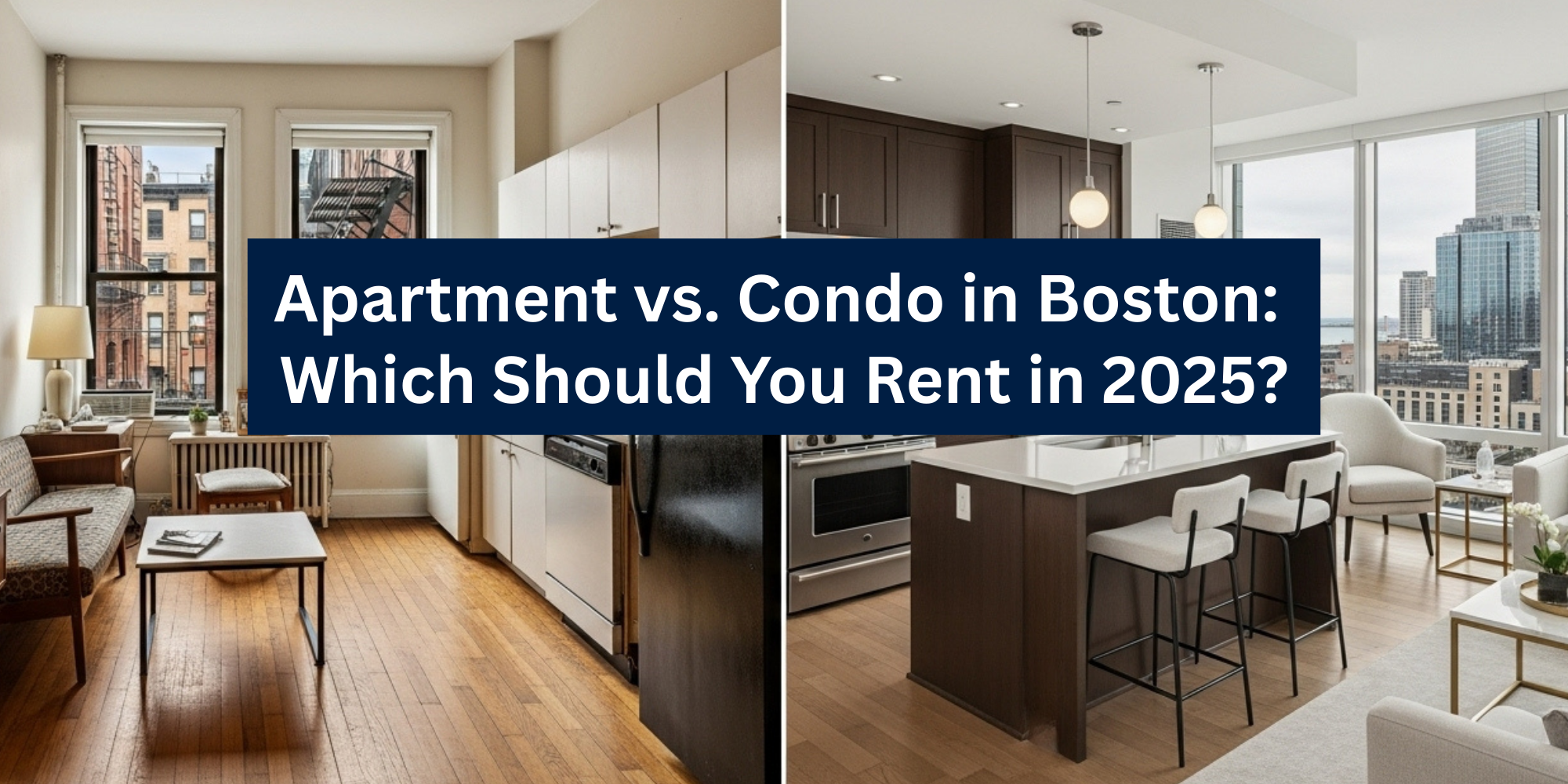
Deciding between apartment rentals and condo rentals in Boston isn’t just a matter of taste—it directly affects your cost, lease flexibility, maintenance responsibilities, privacy, and everyday experience with property management. This in-depth guide breaks down ownership vs lease dynamics, amenities, and neighborhood considerations so you can make an informed choice that fits your lifestyle and budget.
What Counts as an “Apartment” vs a “Condo” in Boston?

Apartments (Property-Manager Owned & Operated)
- Ownership model: A single company or landlord owns the entire building.
- Management style: Professionally managed with a leasing office, superintendent / on-call staff, and standardized lease terms.
- Maintenance: Centralized requests; reduced maintenance hassle (you submit a ticket, the building handles the rest).
- Utilities/fees: Some apartment rentals include heat/hot water or offer bundled building amenities; fees are usually transparent and standardized.
- Availability: Typically easier to find year-round; consistent inventory across neighborhoods.
- Best for: Renters who want leasing convenience, predictable processes, and flexible lease options.

Condos (Individually Owned Units)
- Ownership model: Each unit is owned by a condo owner (unit owner) who may lease the unit privately.
- Management style: The building is overseen by a condo association (HOA) for common areas and shared amenities; your landlord is the individual owner (a one-to-one landlord relationship).
- Maintenance: The owner handles in-unit repairs; the association covers building systems and shared areas. Response time and approach can vary by owner.
- Utilities/fees: Expect possible HOA fees (often baked into rent, but ask); rules may govern pets, move-ins, and renovations.
- Availability: Inventory depends on individual owners listing their homes as rentals; options can feel unique but sporadic.
- Best for: Renters who value privacy, personalized space, and upscale features—and don’t mind owner-specific rules.
Quick Comparison: Apartments vs. Condos for Boston Renters
Cost & Affordability: Where the Dollars Go
When renting in Boston and comparing affordability, look beyond headline rent to build an apples-to-apples budget. Be aware of what's typically included in apartment rent:
- Base Rent
- Apartments: Pricing is standardized and frequently updated by property managers.
- Condos: Pricing can reflect owner preference, recent renovations, view/floor, or market timing—sometimes more expensive, occasionally a deal.
- HOA Fees (Condos)
- Some owners include them in rent; others may pass certain costs through. Always clarify. HOA fees help maintain common areas, shared amenities, and building systems.
- Utilities & Inclusions
- Apartments may include heat/hot water, trash, or amenity access.
- Condos vary by owner; some include additional utilities as a perk.
- Move-In/Move-Out Costs
- Condos: Association may require scheduled moves, elevator reservations, and fees.
- Apartments: Standardized deposits and fees; fewer building-level surprises.
- Parking Facilities
- Both building types may offer garage spaces or nearby lots, often at additional monthly cost. Confirm whether parking is bundled or separate.
- Insurance
- Renters insurance is typically required in both scenarios; cost is modest but should be budgeted.
Bottom line: Budgeting choice depends on more than rent. Ask owners and managers for a written list of monthly fees, utilities, amenities, and any HOA fees before you decide.
Amenities & Upscale Features: What You Actually Get
Apartment Amenities (Predictable & Plentiful)
- Gym / fitness center, package rooms, bike storage, co-working lounges
- Concierge service in larger buildings
- Rooftop decks, club rooms, pet spas (in premium properties)
- Benefit: Consistency and reduced maintenance hassle—the building maintains everything.
Condo Features (Personalized & Polished)
- Granite countertops, hardwood floors, designer lighting, upgraded appliances
- Boutique rooftop terrace, smaller fitness rooms, curated common spaces
- Benefit: Personalized space and often attractive fixtures that feel more residential than commercial.
If building amenities (gym, concierge, roof deck) top your priority list, you’ll find them in both ecosystems, but apartments tend to deliver them in a more standardized way.
If you’re chasing unique charm or higher-end finishes, condo rentals often win on upscale features. Be aware of the hidden costs and risks of condo rentals
Maintenance & Repairs: Who’s Responsible?
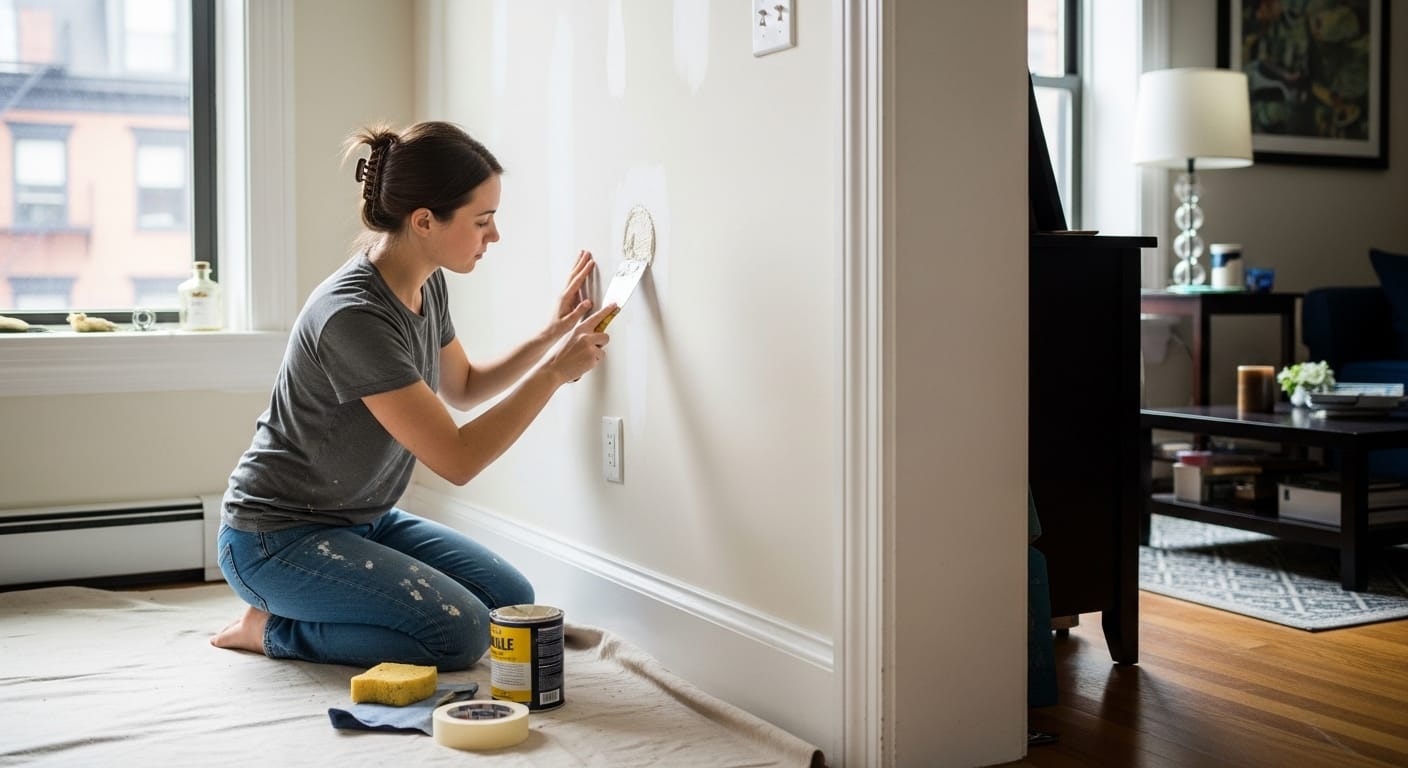
- Apartments: The landlord responsibility is straightforward—submit a request, and the on-site or third-party team handles it. Turnaround times are predictable.
- Condos: You’ll contact your condo owner (unit owner) for in-unit issues. The condo association manages building-wide systems. Experiences vary: responsive owners can be fantastic; hands-off owners can be frustrating.
Privacy, Noise, and Day-to-Day Living
- Condos can feel more private, with fewer neighbors and a quiet environment, especially in smaller, owner-occupied buildings.
- Apartments may be busier with more turnover, but better soundproofing and modern construction in newer buildings often narrow the gap.
If privacy and a calmer vibe matter, condo buildings—especially smaller associations—can be appealing.
If you prefer the energy and convenience of a bigger community, apartments shine.
Lease Terms & Negotiation Power
- Apartments: Lease terms tend to be standardized (12 months most common). Shorter terms may carry premiums. Negotiation exists, but managers are guided by occupancy targets and pricing software.
- Condos: Flexible lease possibilities depend on the owner (e.g., 10- or 15-month terms). You might negotiate on rent, start date, small improvements, or included furnishings more easily with a single decision-maker.
Neighborhood Patterns: Where Condos and Apartments Cluster
While every neighborhood has both, certain patterns emerge:
- Condo-Heavy (more privately owned units): Back Bay, Beacon Hill, Seaport (luxury towers), South End, parts of Downtown/Waterfront. Expect upscale features, boutique buildings, and central location trade-offs.
- Apartment-Heavy (institutional buildings & larger complexes): Allston, Brighton, Fenway, Mission Hill, parts of Dorchester and East Boston. Expect more leasing convenience, consistent amenities, and availability.
- Mixed Stock: South Boston, Jamaica Plain, Somerville border areas (note: outside Boston proper but often in the search set).
Your lifestyle fit and commute will influence which cluster makes sense—central location vs. more space and less affordable vs. more affordable trade-offs.
Who Should Pick What?
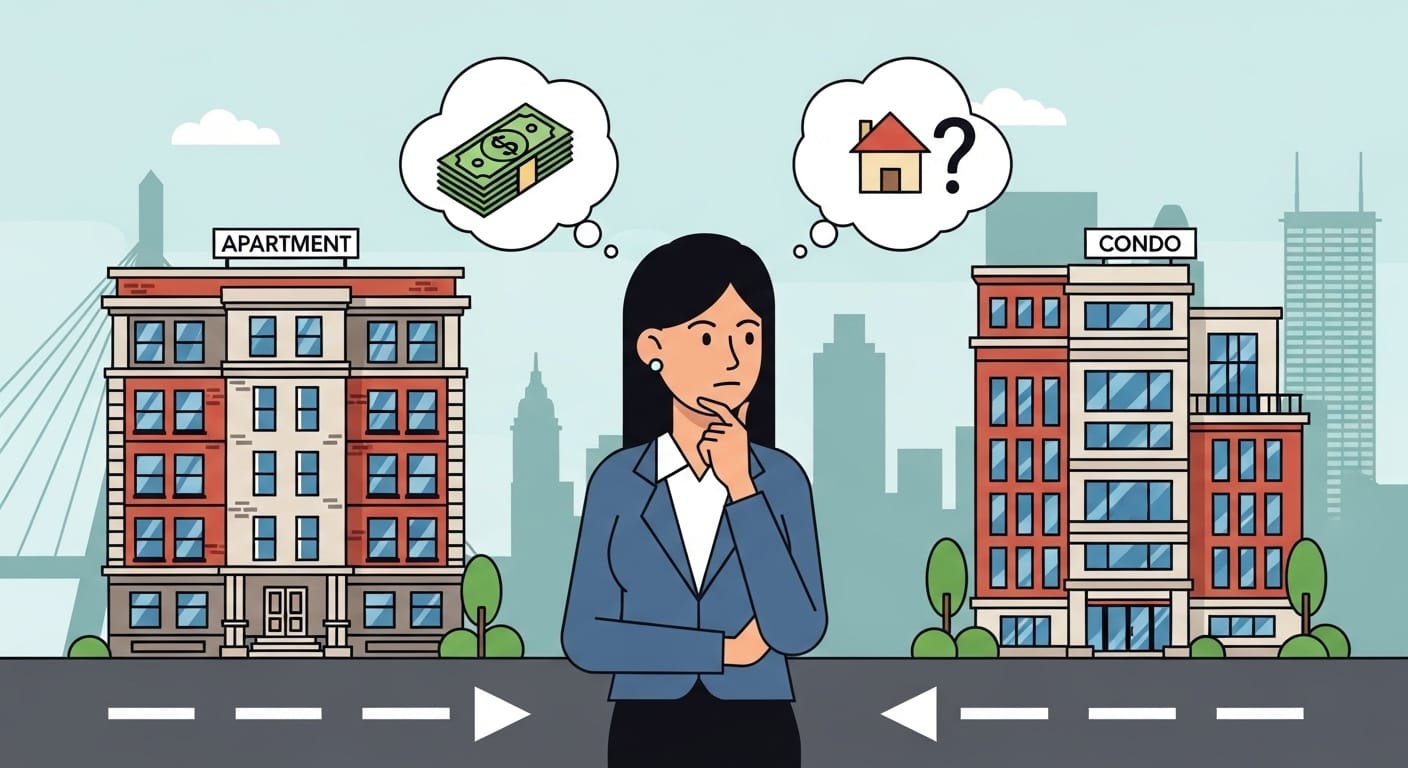
Choose an Apartment if you want:
- A streamlined process with property management and on-site support
- Leasing convenience and predictable maintenance
- Standardized building amenities and uniform rules
- Better odds of finding a unit on your exact timeline
Choose a Condo if you want:
- A more private, residential feel with fewer neighbors
- Personalized space with higher-end or unique finishes
- Potential for owner flexibility on lease terms or inclusions
- A direct relationship with your one-to-one landlord
Step-by-Step: How to Compare Rentals (Without Guesswork)
- List Non-Negotiables
- Examples: in-unit laundry, pet policy, parking, access to gym / fitness center, rooftop terrace, concierge service, noise level, commute time.
- Build a Total Monthly Cost Sheet
- Base rent + utilities + HOA fees (condo) + parking + pet fees + amenity fees + move-in/move-out fees (condo) = true monthly cost.
- Review Management & Maintenance
- Ask apartments for service SLAs and app/portal details.
- Ask condo owners about their repair process, handyman list, and average response time.
- Study the Lease Terms
- Renewal terms, subletting, guest policies, and early termination clauses.
- Condos may include condo association rules—read them.
- Inspect Finishes & Systems
- Condos: check for granite countertops, hardwood floors, appliance age.
- Apartments: check ventilation, window quality, and shared spaces (package room, elevators).
- Evaluate Noise & Privacy
- Visit at different times. Speak to neighbors if possible.
- Gauge Neighborhood Fit
- Transit access, grocery proximity, local parks, nightlife—matches your routine.
- Negotiate Thoughtfully
- Apartments: Ask about rent incentives, free months, or parking discounts depending on availability.
- Condos: Negotiate finishes/furnishings, start dates, included utilities, or small rent reductions.
Frequently Asked Questions (Boston-Specific)
What’s the difference between an apartment and a condo in Boston?
An apartment is in a building owned and operated by a single company with professional property management. A condo is individually owned and part of a condo association; you lease from the unit owner.
Which is cheaper to rent: apartment or condo?
It depends. Condos can be more expensive when they offer premium finishes and upscale features. Apartments can be pricier in new, amenity-rich towers. Compare the total monthly fees (utilities, parking, HOA fees, amenities) to determine affordability.
Are condos better maintained than apartments?
Not inherently. Apartments offer reduced maintenance hassle with a clear service pipeline. Condos rely on your owner’s responsiveness and the association’s building maintenance—excellent in many buildings, variable in others.
Who is responsible for repairs in a condo rental?
Usually the condo owner handles in-unit repairs, while the condo association handles building systems. Clarify the process and timelines in your lease.
Are there more fees in a condo rental?
You may encounter HOA fees and move-in/out charges or elevator reservations. Many owners include HOA dues in rent—always confirm.
Is renting a condo more private?
Often, yes. Smaller buildings and fewer neighbors can create a quiet environment. Larger condo towers vary.
Can I negotiate condo rent like I can with apartments?
Yes—and sometimes more easily. With a single decision-maker, you can negotiate lease terms, minor improvements, or included utilities. Apartments can negotiate too, but within management guidelines.
How does building management differ?
Apartments: property manager owned with an on-site or centralized team. Condos: condo association + one-to-one landlord dynamic.
Which neighborhoods have more condos or apartments?
Condo-heavy areas include Back Bay, Beacon Hill, Seaport, South End. Apartment-heavy areas include Allston/Brighton, Fenway, Mission Hill, parts of East Boston and Dorchester.
Sample Checklists You Can Use
Pre-Tour Questions (Ask by Email/Text)
- What utilities are included? Any HOA fees?
- What are the building’s common areas and shared amenities?
- How are repairs handled (response time, process, contacts)?
- Are there move-in fees or elevator reservations?
- What parking options exist, and what do they cost?
- Can you accommodate a flexible lease length?
- Any condo association rules I should know?
During the Tour
- Test water pressure, appliances, windows, and HVAC.
- Inspect hallways/elevators for cleanliness (maintenance signal).
- Check cell reception and package room setup.
- Assess noise from street and adjoining units.
Post-Tour Comparison
- Rate each unit on privacy, location, amenities, cost, management style, and overall lifestyle fit.
- Calculate the true monthly cost for each to finalize your budgeting choice.
Example Decision Profiles
Profile A — “Convenience First”
- Wants a central location, on-site support, and strong amenities.
- Prefers predictable costs, app-based maintenance, and a standard lease.
- Pick: Apartment in a professionally managed building.
Profile B — “Quiet & Upscale Finishes”
- Wants personalized space with hardwood floors, granite countertops, and boutique feel.
- Willing to review condo association rules and coordinate with an owner.
- Pick: Condo rental with good association reputation.
Profile C — “Flexible Lease & Negotiation”
- Needs a non-standard term, specific start date, or furnished options.
- Comfortable negotiating directly with an owner.
- Pick: Condo where the unit owner is open to custom terms.
How to Avoid Common Pitfalls
- Assume nothing about fees. Ask for a line-item breakdown (rent, utilities, HOA fees, parking, storage, amenities, move-in/out).
- Read the rules. If renting a condo, request the latest condo association rules that affect tenants (pets, renovations, move-ins).
- Verify maintenance routes. For condos, clarify who fixes what and within what timeframe. For apartments, confirm the work order process.
- Document move-in condition. Photo/video every room and shared fixtures.
- Confirm subletting/guest policies. Boston’s rental market is rule-heavy; align your plans with the lease.
Putting It All Together: A Simple Framework
- Define Priorities: Privacy vs. convenience; amenities vs. space; central location vs. larger floor plans.
- Compare Ownership Models: Property management consistency (apartments) vs. one-to-one landlord flexibility (condos).
- Calculate the Full Cost: Include every monthly and one-time fee; consider financial feasibility.
- Evaluate Fit: Visit multiple units, gather documentation, and pressure-test your daily routine (commute, groceries, gym).
- Decide Confidently: Your decision depends on personal preferences and budget. Choose the option that offers the best lifestyle fit at a sustainable cost.
Final Verdict
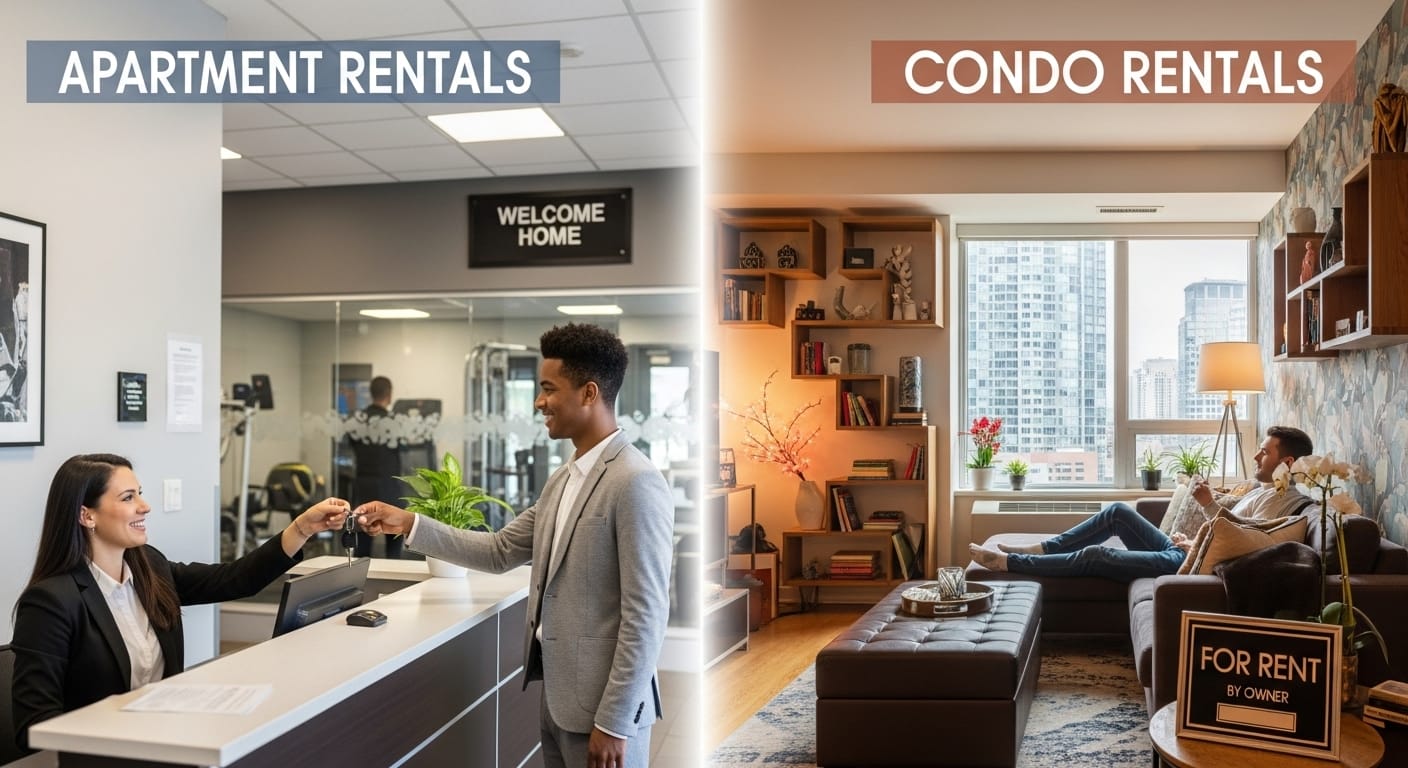
There’s no universal winner in the apartment vs condo Boston debate—each path suits different renters:
- Pick an apartment rental if you want leasing convenience, predictable maintenance, and consistent building amenities with minimal friction.
- Choose a condo rental if you want a personalized space, higher-end finishes, and a more private, quiet environment, and you’re comfortable with owner- and condo association-specific rules.
Boston offers both—often on the same block. Use the checklists and comparison framework above to turn the decision from overwhelming to obvious.
With a clear view of ownership vs lease, amenities, maintenance, and full cost, you’ll land on the option that fits your life—not just your lease.