










Median rent in Boston
July 2026. Active listings on Spot Easy, each posted by verified agents.
| Size | Median | Middle 50% |
|---|---|---|
| studio | $2,270 | $2,025 – $2,500 |
| 1-bedroom | $2,700 | $2,395 – $3,100 |
| 2-bedroom | $3,300 | $2,825 – $3,950 |
| 3-bedroom | $3,798 | $3,300 – $4,600 |
| 4+ bedroom | $4,995 | $4,100 – $6,000 |
About Boston
Boston is built as a set of distinct neighborhoods rather than one continuous grid, so when you search Boston apartments for rent, the neighborhood matters far more than the city name does. A one-bedroom runs a $2,380 median asking rent in Allston and $3,405 in Chinatown as of July 2026 — a spread of more than a thousand dollars for the same bedroom count — against a $2,700 median citywide.
The MBTA's Red, Orange, Blue and Green lines all converge downtown, with the Silver Line running to the Seaport and commuter rail leaving from North Station and South Station. Because the network is radial rather than a grid, a listing's walking distance to a station is usually the single biggest practical difference between two otherwise similar apartments, and it is worth filtering on before price.
The brownstone blocks of Back Bay and the South End sit beside the downtown core. Allston and Brighton run west along the Green Line and hold both the deepest inventory in the city and its lowest one-bedroom medians. South Boston and East Boston face the harbor, Fenway and Jamaica Plain sit along the Green and Orange lines, and Dorchester spreads south with the largest share of three-family housing.
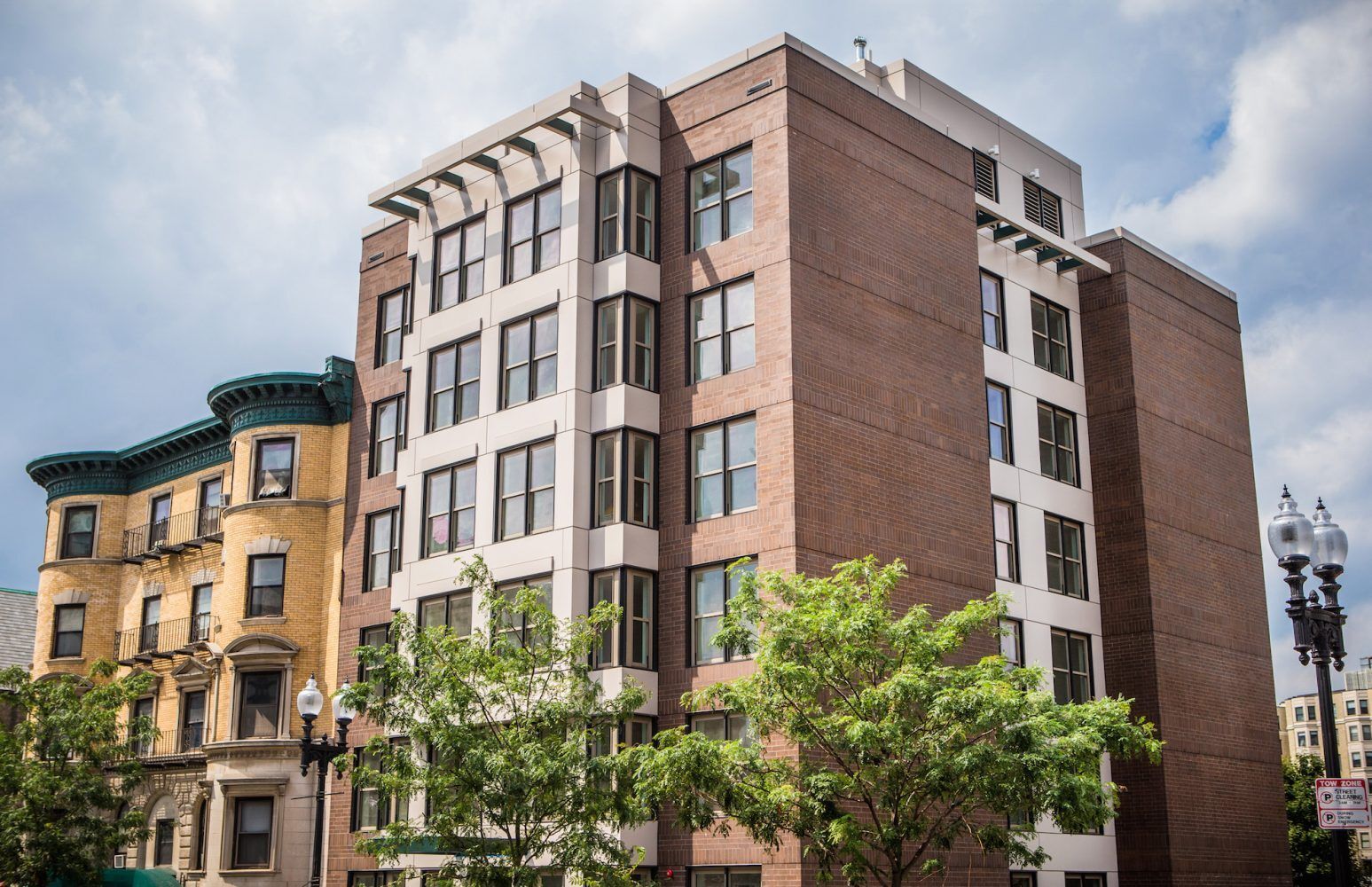
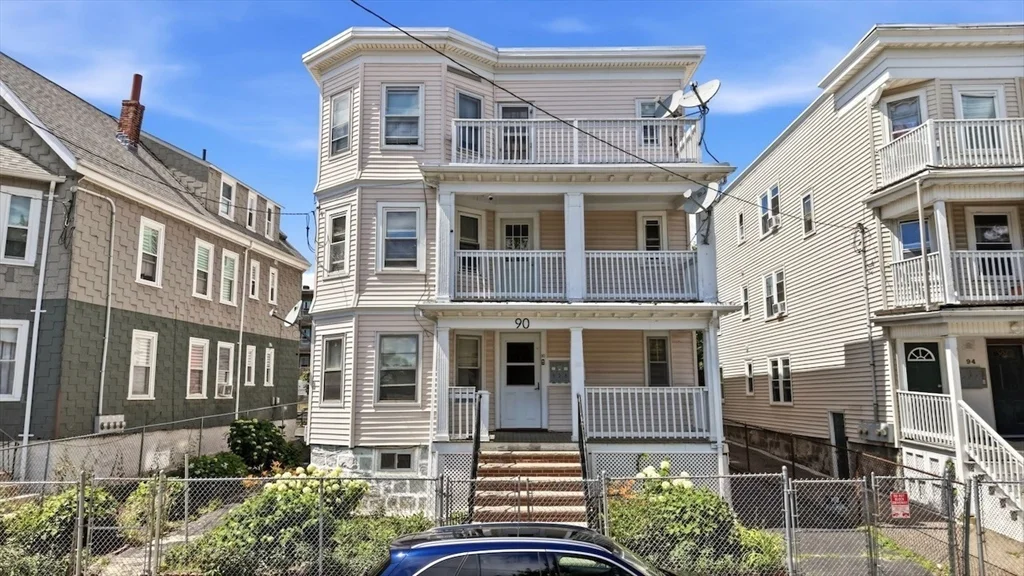
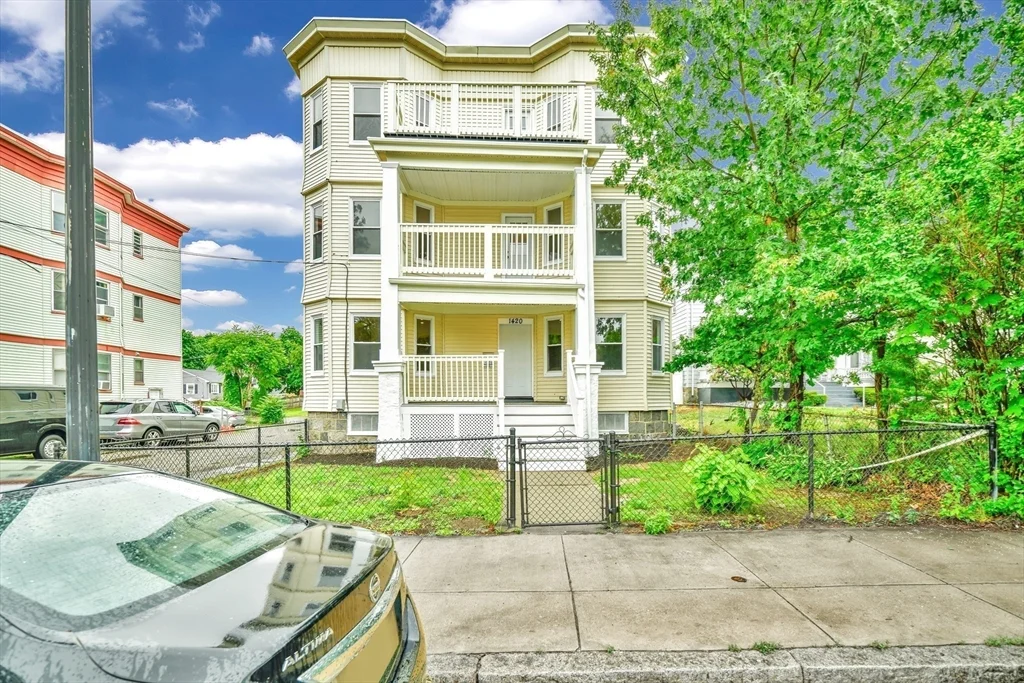
Three-family houses and small four-to-nine-unit buildings together account for roughly half of Boston's residential properties, which is why so many Boston apartments are a full floor of a wood-frame house rather than a unit in a managed building. Only a few hundred buildings in the city have 50 units or more, and those cluster downtown, in Back Bay and along the waterfront. Which of the two you are looking at changes the elevator, laundry, parking and outdoor-space picture completely.
Most of the market turns over on September 1, so inventory is widest from April through July and thinnest in late winter. Searching early in that window gives the widest choice; searching outside it means fewer listings but less competition and more room to negotiate.
Spot Easy lists Boston apartments from verified agents, with real-time availability, filters for bedroom count, bathrooms, pets, parking, laundry, elevator access and no-broker-fee listings, and photos or 3D tours on most units. Median asking rents by bedroom count, with percentiles, are published monthly in the Spot Easy Rent Index. We cover how to avoid broker fees in Boston and what is included in Boston apartment rent in more depth.
FAQ about Boston Apartments for Rent
What is a broker fee, and who pays it in Boston?
A broker fee is what a licensed agent charges for leasing services: showing units, handling the application and paperwork, and coordinating the signing. It is separate from your rent and your security deposit. Massachusetts changed how it works on August 1, 2025. An agent can now only be paid by the party they represent, so an agent working for the landlord is paid by the landlord rather than by you. That rule restricted the older arrangement where a renter paid a fee to an agent who was also collecting a commission from the landlord. Massachusetts separately bars landlords from charging renters a finder's fee of their own. If a listing quotes you a fee, ask who hired the agent before you pay anything.
Are there no-fee apartments in Boston?
Yes. You can filter your search to no-fee listings in one click, and every agent is verified before they can post. Fee terms are set listing by listing rather than by neighborhood or by building, which is why the filter is more reliable than any rule of thumb about where no-fee apartments cluster. What is available changes month to month with the market, so it is worth re-running the filter rather than working from a fixed picture.
How much is a Boston broker fee?
Where a tenant-paid fee still applies, one month's rent is the most common amount, though half-month, three-quarter and quarter-month arrangements all appear. At the $2,700 median asking rent for a Boston one-bedroom, a full month's fee is a $2,700 charge on top of first month, last month and a security deposit. That is the difference between roughly $8,100 and $10,800 due at signing for the same apartment. Because the fee scales with rent, it is largest exactly where rent is already highest: about $2,380 in Allston against about $3,405 in Chinatown.
What is the difference between no fee, half fee and reduced fee?
They describe how much of the agent's commission, if any, lands on you. No fee means you pay nothing toward it. A half fee is 50% of one month's rent, and reduced fee covers the other partial arrangements, most often 75% or 25% of a month. On a $2,700 one-bedroom that works out to $0, $1,350, $2,025 and $675 respectively. The distinction matters more than it looks, because a listing advertised as reduced is still a four-figure cost across most of Boston. Spot Easy shows fee status on the listing card itself, so you can compare what two apartments actually cost rather than just comparing their rents.
Do no-fee apartments rent for more?
Sometimes, and it is worth checking rather than assuming either way. When a landlord pays the agent instead of the renter, that cost can be built back into the monthly rent, so a no-fee unit is not automatically the cheaper one across a full lease. Compare total first-year cost rather than the monthly figure: twelve months of rent plus any fee. A $2,750 no-fee apartment costs $33,000 over a year, while a $2,700 apartment carrying a one-month fee costs $35,100. The higher rent is the better deal by $2,100. Run that arithmetic before ruling out either option.
How much do I need up front for a no-fee apartment in Boston?
Typically first month, last month and a security deposit. Massachusetts caps a security deposit at one month's rent, so at the $2,700 median for a Boston one-bedroom that is about $8,100 due at signing. Removing a one-month broker fee takes roughly $2,700 off that total. Your deposit has to be held in a separate interest-bearing account at a Massachusetts bank, and you are owed a receipt within 30 days naming the bank and the account. Ask for that receipt rather than waiting for it to arrive. Some owner-held units ask for less than the full first, last and deposit, so it is worth asking.
Which Boston apartments are most likely to be no fee?
Fee terms are set per listing, so no neighborhood is reliably fee-free. The stronger pattern is building type. Larger managed buildings with in-house leasing staff, most common downtown, in Back Bay and the Seaport District, lease without a tenant-paid fee more often than owner-held three-deckers do, because their leasing staff are salaried rather than commission-paid. That said, most of Boston's rental stock is a floor of a wood-frame house rather than a unit in a managed building, and plenty of those list no fee too. Filter rather than guess.
How do I find no-broker-fee apartments on Spot Easy?
Apply the no-broker-fee filter, which restricts results to listings an agent has marked as carrying no tenant-paid fee. Combine it with your bedroom count and neighborhood, then save the search and set an alert. Well-priced no-fee units during the April to July peak often go within days of posting, so an alert does more for you than checking manually. Every listing here comes from an agent we verify before they can post, which is why fee status is stated on the listing rather than left for you to discover on a tour.
When are no-fee apartments easiest to find?
Boston's rental market turns over on September 1, so the widest inventory, and the widest choice of no-fee units, runs from April through July. By August what is left is thin and moves quickly. Searching from November through February gives you far fewer listings but noticeably less competition on each, and more willingness to negotiate on a unit that has been sitting. Fee terms are among the more negotiable items outside the peak, so if a listing you like carries a fee in January, it is worth asking.
What should I check before assuming a listing has no fee?
Confirm it in writing before you tour, not after. If a listing does not state its fee terms, treat them as unconfirmed and ask the agent directly. Watch for a fee that has been renamed: an administrative, application, placement or processing charge can function as a broker fee under another label, and Massachusetts requires mandatory fees to be disclosed clearly rather than buried in fine print. Ask who hired the agent, ask for the total due at signing, and get both in an email. If something looks wrong after you have already paid, our guide to reporting an illegal broker fee walks through the steps.