

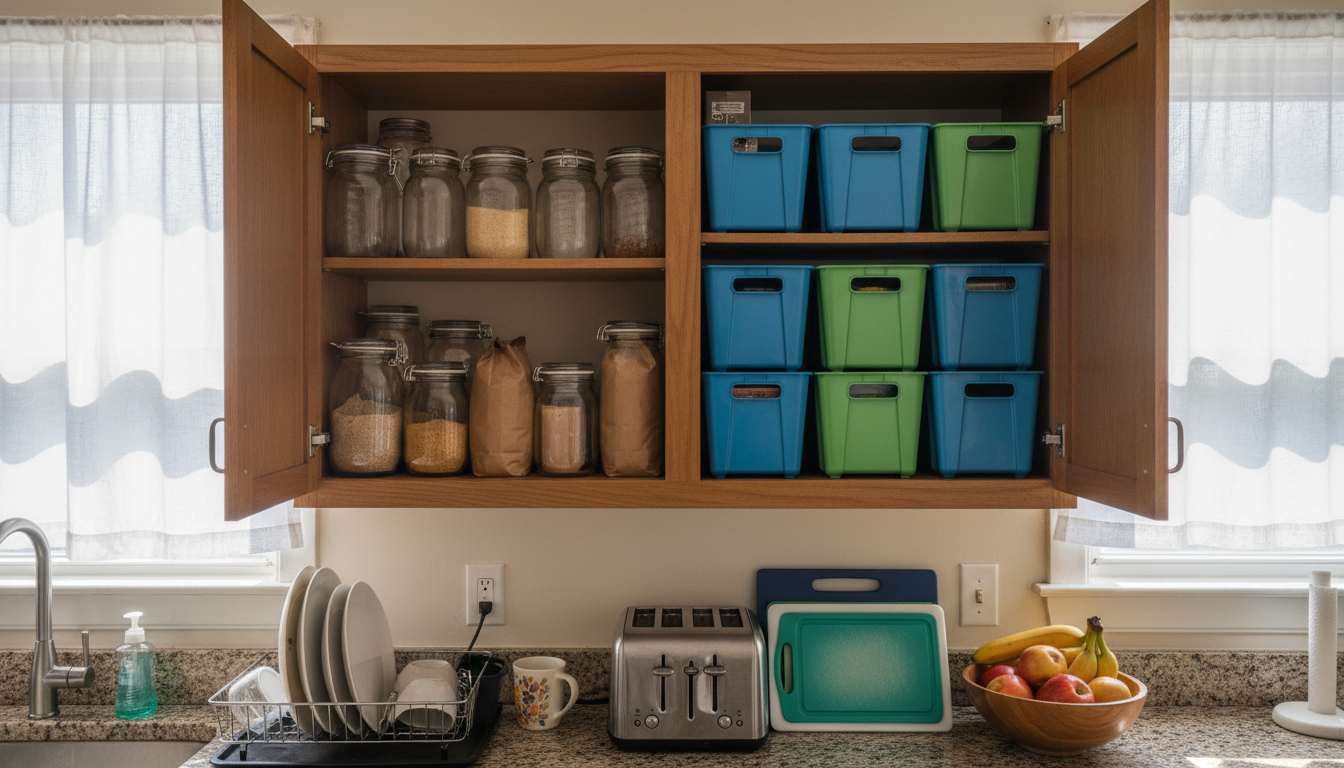
Boston roommate listings have a field for rent, a field for the move-in date, and usually a line about pets. There is no field for I cannot get sick from this kitchen.
So people improvise. Scroll r/bostonhousing in the spring and you'll find households doing exactly that: a Medford apartment looking for a third roommate, explaining that two of the existing housemates have celiac and "would love not to worry about gluten cross-contamination in the kitchen." They're not being fussy. They're filtering the entire Boston roommate market on a medical constraint, because a shared kitchen is the one room where somebody else's habits can genuinely make you ill.
If that's your situation (celiac, a severe food allergy, or a kitchen that needs to stay kosher or halal), this guide is about the part nobody writes about. There's plenty of good material on kitchen safety once you're living somewhere. There's almost nothing on how you find a compatible household in a brutal rental market, what to ask before you agree, and what to write down before a joint lease ties you to strangers for a year.
First, the reassuring part: a shared kitchen can work
The fear a lot of people carry into the search is that they need their own place, and in Boston that's an expensive conclusion to jump to.
You very likely don't. The National Celiac Association is direct about it: "it is not required to have a completely gluten-free kitchen." What's required is a set of specific, learnable precautions: dedicated equipment for the things that trap residue, sensible storage, and roommates who take it seriously.
That last part is the one this article is about, because it's the part you control at the search stage and can't fix afterward. You can buy a second toaster any time. You cannot retrofit a housemate who thinks you're exaggerating.
One thing this article will not do is tell you what your kitchen protocol should be. That's a medical question, and it belongs to your care team and to the organizations that specialize in it, not to a rental blog. For the actual precautions, go to the people who know:
- The National Celiac Association — practical shared-kitchen guidance for celiac households.
- FAACT (Food Allergy & Anaphylaxis Connection Team) — specifically written for adults in shared living spaces, which most allergy content isn't.
- Gluten Intolerance Group — including guidance built for shared and communal kitchens.
- The Celiac Center at Beth Israel Deaconess Medical Center — a Boston celiac center whose CeliacNow program is a patient-education resource, if you want something local.
Read them first. Then come back and use the rest of this to find a household where the protocol will actually be honored.
Where to look, and how to say it
The good news is that the constraint that feels like a liability is also a filter, and filters work in both directions.
Look for households already doing it. The Medford listing above is the pattern worth searching for: an existing household with the same constraint, looking for someone who shares it. These come up on r/bostonhousing, on university housing boards, and in neighborhood groups. A household that's already gluten-free is the lowest-friction outcome available to you: nobody needs convincing.
Say it in the listing, and say it as a requirement. If you're posting or replying, put it near the top and phrase it as a fact about the household rather than a hope. "I have celiac — the kitchen needs to be gluten-free" reads as a condition. "I'd prefer if we could keep things gluten-free, if that's okay" invites negotiation you don't actually want to have. You are not asking a favor; you're describing the arrangement.
Treat a household that asks good questions back as a strong signal. Someone who responds with "what would that mean day to day for me?" is doing the thing you need them to do for the next twelve months.
And be realistic about the timeline. Boston's rental year is built around September 1, and the good matches go early. A constraint that narrows your pool means you need more lead time than the average renter, not less. Start earlier than feels necessary.
The conversation to have before you agree

Everything written for college students assumes this conversation happens after you're assigned to live together. You're in a better position: you can have it while you can still walk away.
Questions worth asking:
- Have you lived with someone with a food allergy or celiac before?
- How do you cook — mostly from scratch, mostly takeout, a lot of baking?
- How would you feel about dedicated equipment that doesn't get shared?
- What happens when you have people over, or a partner staying regularly?
- If you made a mistake with something of mine, would you tell me?
That last one matters more than it looks. Every organization above stresses the same thing: mistakes happen, and the dangerous ones are the mistakes nobody mentions. You are trying to find out whether this person will say "I used your colander, sorry" — or quietly put it back.
Answers that should give you pause:
- Any version of "how bad can it really be?" or a joke about a little bit not hurting.
- Enthusiastic agreement with no follow-up questions at all. Someone who's understood the ask usually has one.
- Reluctance about dedicated equipment on the grounds that it's excessive.
- Vagueness about guests. Guests are where a careful household most often slips.
The difference you're listening for is between "sure, no problem" and someone who has actually pictured their Tuesday evening. Both sound agreeable. Only one has thought about it.
What to put in writing before you sign
Get the kitchen terms into your roommate agreement, the document that sits alongside the lease and sets out how the household runs. Not because you expect trouble, but because a written term is a shared memory, and it makes an awkward conversation in month four a matter of consulting a document instead of relitigating what everyone thought they agreed to.
Worth specifying:
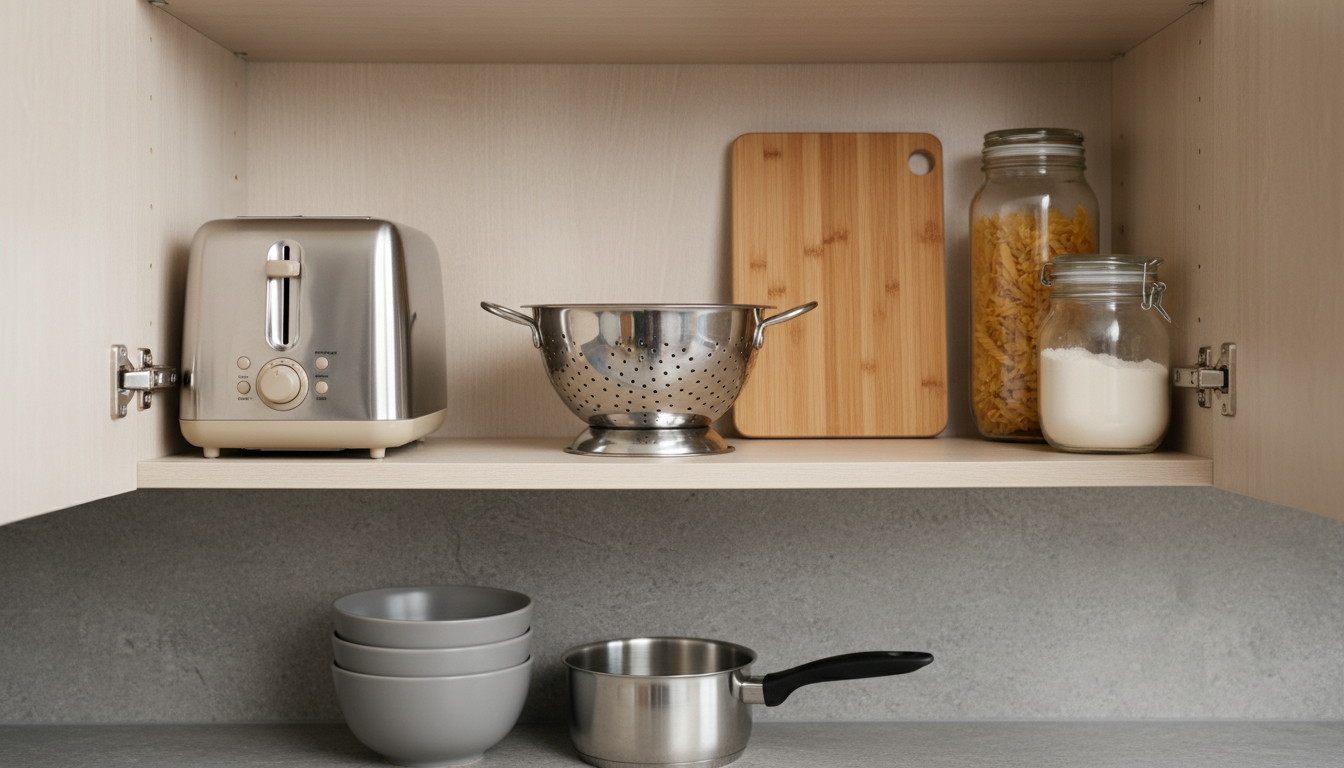
- Which equipment is dedicated and not shared. The organizations above are consistent that porous, crevice-holding items are the ones that need their own version: toasters, strainers and colanders, wooden utensils, scratched non-stick pans, cutting boards, and even a separate dish sponge.
- Storage. Which shelf, cabinet and fridge space is protected. The standard guidance is a dedicated, labeled shelf, with safe food stored above rather than below the food that could contaminate it.
- Condiments. Separate jars for anything a knife goes into twice: butter, jam, peanut butter, mayonnaise. Double-dipping is the single most common way a safe kitchen stops being safe.
- Cleaning. Who wipes counters, and when; how shared pans and utensils are washed between uses.
- Guests and parties. What happens when other people cook in the kitchen, the situation your housemates control and you don't.
- Emergency information. If you carry epinephrine, your housemates should know where it is and how to use it, and should know your emergency plan. FAACT treats this as a baseline, not an extra.
- What happens if terms aren't honored. Even a soft answer, something like "we talk about it, and repeated problems mean someone looks for a new arrangement," is better than silence.
Keep the agreement in the household's language, not in medical language. It's a set of house rules that happens to have a medical reason behind it.
The joint-lease reality
Here's the part that separates this from every dorm guide: on most Boston apartment shares you're co-tenants on a joint lease, and, as our guide to vetting a Boston roommate lays out, that's much harder to exit than a roommate assignment once problems start. That's exactly why the screening conversation above matters more than it feels like it should: your leverage is almost entirely before you sign, not after.
Beyond gluten: allergies, kosher and halal kitchens
The structure of this problem is the same whatever's driving it, a kitchen you share but don't fully control, and so is the solution.
Severe and anaphylactic allergies raise the stakes on the emergency-planning piece specifically. FAACT's guidance for adults sharing a home is worth reading in full, and its framing of what to look for in a housemate is hard to improve on: choose someone who will respect your allergies and advocate to keep you safe. If your allergen will be in the home at all, that's a specific thing to agree on — where it's kept, how it's contained and labeled, and whether you get notice before it's cooked.
A kosher or halal kitchen involves different rules, but the same negotiation: which equipment is dedicated, what may be stored where, what may be cooked in shared pans, and what happens when guests bring food in. Whether your standard requires full separation of equipment or something more flexible is a question for your own religious authority — but whatever the answer, it belongs in the written terms before you sign, in exactly the same way.
Where to get real answers
Two categories of question in this article deliberately don't have answers in it, because getting them wrong would matter:
- Anything medical. What precautions your situation actually requires (how strict, which equipment, what level of exposure is a real risk for you) is a question for your doctor, your dietitian, or the organizations listed above. Nothing here is a substitute.
- Anything legal. Whether and how you can screen or advertise on this basis, whether a severe allergy might trigger any obligation on a landlord's part, and exactly how joint-lease liability works in your situation are legal questions that depend on specifics. Wording a listing is worth a moment's thought in particular, since religious requirements sit close to protected characteristics in a way dietary preferences don't. For free, Massachusetts-specific guidance, start with Mass Legal Help, or talk to a tenant-rights attorney or a local housing organization about your circumstances.
FAQ
Do I need a completely gluten-free kitchen if I have celiac? Not necessarily. The National Celiac Association states plainly that a fully gluten-free kitchen is not required — what's required is specific precautions, including dedicated versions of items that trap residue. Confirm what your own situation needs with your care team.
How do I find a roommate in Boston who'll take this seriously? Search for households already living this way — existing gluten-free or allergy-aware apartments looking for someone to join are the lowest-friction match. State the requirement plainly and early in listings and replies, and start your search earlier than a typical renter, since the constraint narrows your pool.
What should I ask a potential roommate before agreeing? Whether they've lived with someone with celiac or an allergy before, how they cook, how they'd feel about dedicated equipment, what happens when guests come over, and, most importantly, whether they'd tell you if they made a mistake.
What kitchen equipment usually needs to be separate? Guidance from celiac and allergy organizations consistently points to porous or crevice-holding items: toasters, colanders and strainers, wooden utensils, scratched non-stick pans, cutting boards, and dish sponges. Check the specifics with the organizations linked above.
Should the kitchen rules go in the roommate agreement? Yes. Put dedicated equipment, storage, condiments, cleaning, guests, emergency information, and what happens if terms aren't followed in writing before you sign. It converts a difficult later conversation into a matter of checking what was agreed.
Is it okay to say in a listing that I need a gluten-free household? People do state it routinely, and being clear serves everyone. Where the requirement is religious rather than dietary, wording sits closer to protected characteristics, so it's worth checking your phrasing with Mass Legal Help or a housing attorney rather than guessing.
What if my roommate stops respecting the arrangement after we move in? Your options on a joint lease are limited and can be expensive (see our guide to vetting a Boston roommate for how that plays out), which is exactly why the screening conversation and written terms above carry so much weight.
This article is informational and isn't legal or medical advice. For kitchen-safety precautions, consult your care team or the celiac and allergy organizations linked above; for legal questions about leases, screening, or accommodations, consult Mass Legal Help or a tenant-rights attorney about your specific situation.