

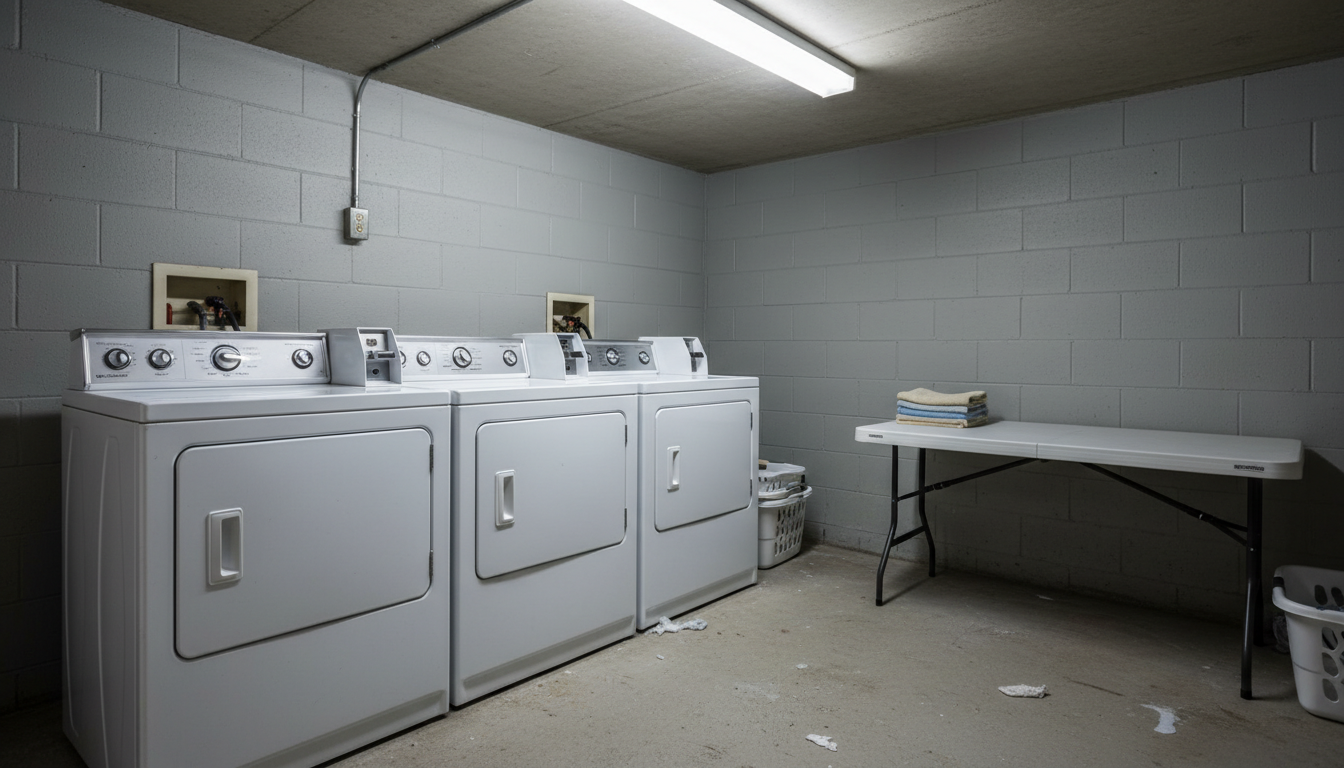
You go to do a load, and the price in the basement has quietly jumped — $9 to wash, another $4.50 to dry, for one small load in a machine shared by twenty people. The natural reaction, and the one Boston renters post about constantly, is some version of: is this even legal?
The honest answer is: mostly yes, but with three real limits that a lot of renters don't know about. In-building laundry is treated as an optional amenity in Massachusetts, not a service your landlord is required to provide, which gives them a lot of room on pricing. But that room isn't unlimited. Here's what a landlord can and can't do, and what your actual options are when the price stops making sense.
The short answer: laundry is an optional amenity
Massachusetts doesn't give tenants an absolute right to a washer and dryer. A landlord isn't required to provide laundry at all. So if they do provide it, the law generally treats it as an optional amenity, similar to parking, a pool, or a fitness room. Under Massachusetts's amenity-fee rules, a landlord can charge separately for optional amenities like these as long as the tenant genuinely has the option to decline them. You're not forced to use the coin-op machines, so charging per load is allowed.
And there's no specific price cap. Massachusetts doesn't set a maximum on what a landlord (or the third-party laundry vendor they contract with) can charge per load. The only real constraint on the price itself is that it be reasonable and disclosed — which is a low bar, and part of why a $13.50-a-load price can be legal even when it feels like the machines are being priced to say "just don't do laundry here."
The three real limits on what a landlord can do
The "mostly yes" comes with genuine limits worth knowing, because this is where renters have actual footing.
It has to be disclosed, and mid-lease changes are murkier
An optional amenity fee has to be disclosed, not sprung on you. As of a 2025 update to Massachusetts's rules on rental fees (940 CMR 38.00), landlords have to identify optional fees and provide clear instructions on how to avoid them. You're entitled to know what the charge is and that you can opt out. A charge buried nowhere in your lease or disclosures is on shakier ground than one you agreed to up front.
Changing the terms mid-lease is the genuinely murky part. If your lease said laundry was included, or set a price, a landlord raising or introducing a charge partway through your lease term is contestable — it depends on your specific lease language. If that's your situation, it's worth a quick check with Mass Legal Help rather than just accepting the change.
They have to maintain the machines
If a landlord provides appliances, they're responsible for keeping them working. Under the Massachusetts State Sanitary Code (105 CMR 410), landlords must maintain and repair the appliances they've installed. A landlord can charge you to use the machines, but they can't collect those fees and then leave a broken washer unfixed for weeks. Maintenance is their obligation, not an optional courtesy.
For a shared laundry room, they can't bill you for the room's utilities
This is the limit most renters don't know about. When laundry is in a common area (a shared basement laundry room, for instance), the landlord is responsible for the utility costs of that common space. Massachusetts law bars a landlord from making tenants pay for utilities that serve shared areas: a landlord cannot require you to cover heating or hot-water costs where the tanks are shared with other apartments or serve common areas like basements, shared laundry areas, or hallways (Gary Allen Law). In other words, the landlord can charge you per load to use the machines, but they can't also pass the shared laundry room's water-heating and electricity bills onto you on top of that.
What's not regulated, and why the price can feel absurd
The thing that makes coin-op laundry so frustrating is real: the per-load price itself is essentially unregulated. There's no rule saying $9 to wash is too much, the way there are hard rules about security deposits or heat. Landlords often outsource the machines to a third-party laundry vendor, and the pricing gets set to cover the vendor's cut, maintenance, and the landlord's own margin — which is how you end up with prices that feel less like "the cost of laundry" and more like a nudge to take your laundry elsewhere.
So the frustration is valid, but the lever isn't usually "this is illegal." It's knowing the limits above, and knowing your alternatives.
Your real options if the price is out of control
When the in-building price stops making sense, Boston renters generally land on one of a few moves, and the math often favors leaving the coin-op machines behind entirely.
A portable or compact washer
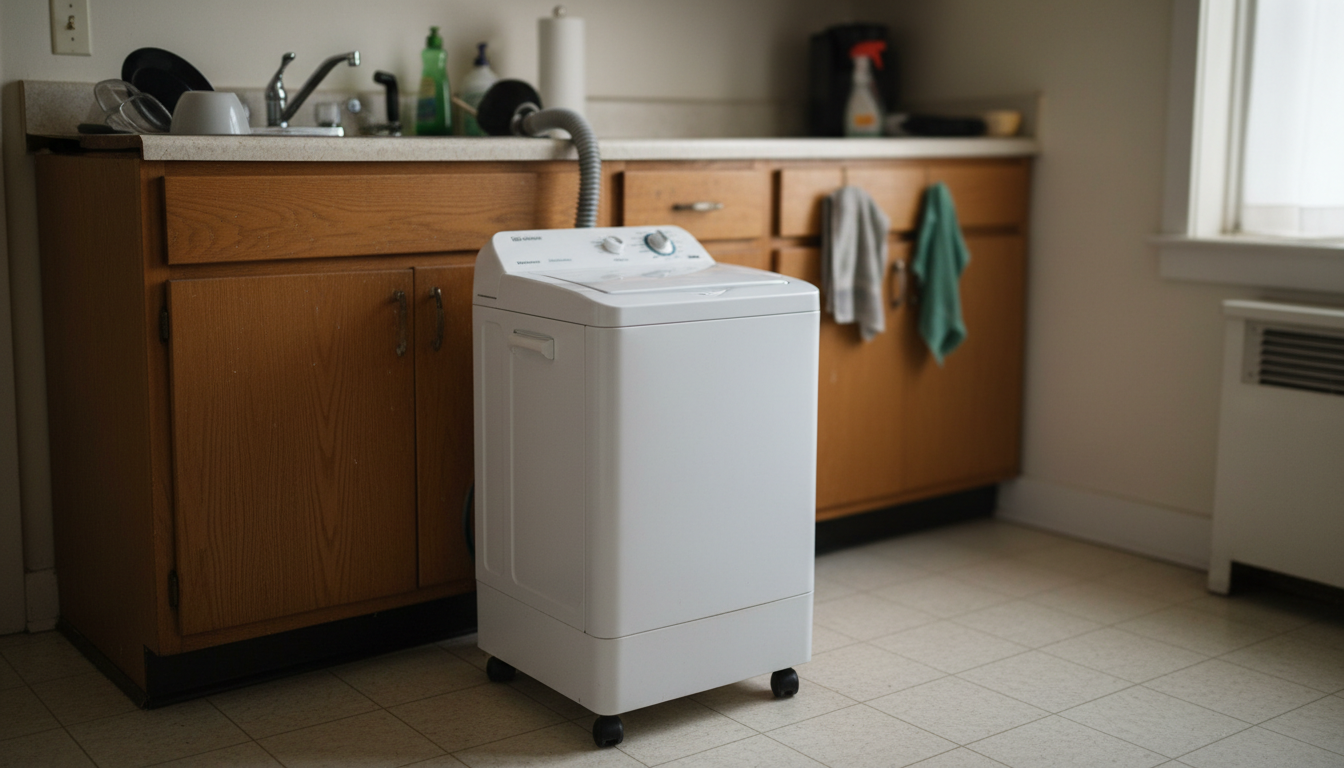
This is the option that surprises people with how well it pencils out. A portable, apartment-friendly washer that connects to a kitchen sink runs a few hundred dollars, and a compact ventless dryer (no vent hose required) is similar. One Boston renter did the math out loud: about $450 for a portable washer-and-dryer set, which over four years in the same apartment works out to roughly $9 a month — less than a single week of expensive coin-op loads, even accounting for the added electricity. If you're staying put for a year or more and your lease allows it, buying your own is often the cheapest path by a wide margin. (Check your lease first: some prohibit tenant-installed machines, which a landlord is allowed to do to protect the property.)
Wash-and-fold vs. the laundromat
If buying a machine isn't an option, compare the two outside alternatives honestly. A laundromat typically runs around $10 for a wash-and-dry load, plus your time and the walk. A wash-and-fold service is more convenient but pricier, often up to about $2 per pound, which can run $50 or more a month before tip for a regular load schedule. Depending on how much you do laundry and how much you value the time, one usually clearly beats paying premium coin-op prices in the building.
Negotiating, and checking laundry terms before you sign
If a price hike is recent and egregious, it's at least worth raising with your landlord or management, especially if the machines are also poorly maintained (which, remember, is their responsibility). And for your next place: add laundry to the list of things you check before signing. Ask what in-building laundry costs, whether it's coin-op or card, whether prices have changed recently, and whether in-unit machines or hookups are allowed. It's a small question that saves a recurring annoyance.
FAQ
Can a landlord charge for laundry in Massachusetts? Yes. Laundry is treated as an optional amenity in Massachusetts. A landlord isn't required to provide it, so if they do, they can generally charge for it, and there's no specific cap on the per-load price.
Is there a limit on how much they can charge per load? Not a specific dollar cap. The price only has to be reasonable and disclosed. The bigger limits are that they must maintain the machines and, for a shared laundry room, must cover the room's own utility costs.
My lease said laundry was included and now they're charging. Is that allowed? That's the murkier situation. A mid-lease change to terms your lease already set is contestable and depends on your specific lease language — worth checking with Mass Legal Help before you just accept it.
Does my landlord have to fix a broken washer I pay to use? Yes. Under the Massachusetts State Sanitary Code, landlords must maintain and repair the appliances they've installed. Charging for the machines doesn't relieve them of that duty.
Can my landlord make me pay the electric bill for a shared laundry room? No. Massachusetts law bars landlords from charging tenants for utilities that serve common areas, including shared laundry rooms. Those utility costs are the landlord's responsibility.
Is buying my own washer worth it? Often, yes, if you're staying a year or more and your lease allows it. A portable washer-and-dryer set runs a few hundred dollars and can work out to under $10 a month over a few years — well below premium coin-op prices. Check your lease first, since landlords can prohibit tenant-installed machines.
This article is informational and isn't legal advice.