


If fire, flooding or a condemnation order has put you out of your apartment, there are three separate questions in front of you and they have different answers. Renters insurance covers your belongings and says nothing at all about your tenancy. Whether you still owe rent for a period you can't occupy the unit is a different question. And whether your lease actually ends usually turns on a clause inside your own lease rather than a general rule.
This page is about the tenancy: the rent, the lease, and the money you've already handed over.
The first day
Short and concrete, because you're probably skimming.
- Call the Office of Housing Stability at 617-635-4200. This is precisely what they exist for. They handle housing crises caused by fire, natural disaster, eviction and condemnation, and they can refer you to an attorney. If you need shelter tonight, the Red Cross responds to residential fires.
- Tell your landlord in writing that you've been displaced, and give the date. A text or email is fine. What matters is that a dated record exists from day one, because a lot of what follows depends on when things happened.
- Photograph whatever you can, and keep every receipt from the moment it happened: hotel, meals, replacement clothing, transport. Some of that may be recoverable and none of it is if you can't evidence it.
- Find out who declared the unit unlivable. A condemnation or a red tag comes from Inspectional Services or your local board of health, and that determination is a document you can ask for. It's different from a landlord simply telling you not to come back.
The five questions, and where each is decided
| The question | Short answer | Where it's actually decided |
|---|---|---|
| Do I still owe rent? | Not necessarily, for a period you can't occupy the unit | The warranty of habitability and the remedies below; get advice before acting |
| Does my lease end? | Usually not automatically | A casualty or destruction clause in your own lease |
| Can I get my deposit back? | It's still your money | The security deposit statute — see what a landlord can ask for |
| Can they lock me out? | Not without a valid court order | M.G.L. c.186 §15F — see below |
| Who pays for a hotel? | Generally your insurance, not the landlord | Your policy's loss-of-use coverage — see why you need renters insurance |
Do you still owe rent?
Not necessarily. Massachusetts implies a warranty of habitability, the legal requirement that a landlord keep a rented unit fit to live in, into every residential tenancy, and a lease cannot waive it; any clause attempting to is void. You are paying for a habitable dwelling, and if you can't occupy it, the basis for paying full rent is not intact.
Turning that principle into action is where it gets genuinely risky, and this is the part to be careful about.
Massachusetts gives tenants two relevant remedies, and both are real:
Rent withholding, under M.G.L. c.239 §8A. A tenant who has made a written request for repairs, where the landlord has failed to make them, may withhold rent. The mechanism matters: it functions as a defense in an eviction case, which is to say the way it usually gets tested is when the landlord takes you to court.
Repair and deduct, under M.G.L. c.111 §127L. A tenant may use rent money to get certain repairs made, and may not withhold more than four months' rent in any twelve-month period for that purpose.
Both require written notice. Both have preconditions. And both are how tenants who were substantively in the right end up losing, because the procedure was wrong. The standing guidance from tenant-law sources is to use them sparingly and only after getting advice from someone who does housing law.
So this page is not going to tell you to stop paying rent. What it will tell you is that you probably shouldn't be paying full rent for a unit you can't enter, that there are established routes to that outcome, and that the routes have rules. Call the Office of Housing Stability or MassLegalHelp before you act, not after. It's free, and this is the exact situation it's for.
They can't just tell you not to come back
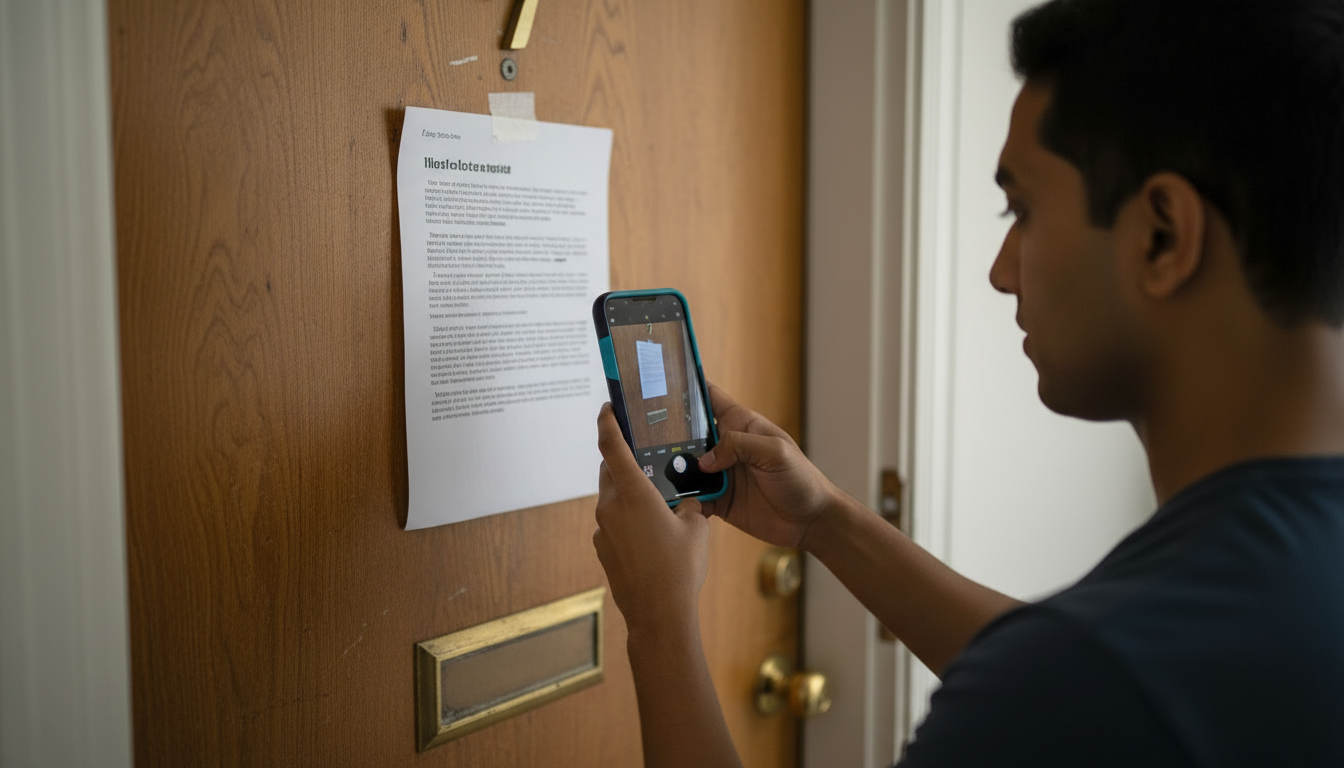
Under M.G.L. c.186 §15F, a lease term saying that nothing the landlord does or fails to do amounts to a constructive eviction is void.
And where a tenant is removed from the premises or excluded from them by the landlord or their agent, except pursuant to a valid court order, the tenant may recover possession or terminate the rental agreement — and in either case recover three months' rent or three times the damages sustained, plus the cost of suit including reasonable attorney's fees.
There's an important distinction between a public authority condemning a building and a landlord unilaterally excluding a tenant, and which one applies decides what happens next.
A public authority condemning a building is not your landlord excluding you. If Inspectional Services has red-tagged the property, nobody can be in it, and that isn't a landlord's decision or a violation of your rights. It's a safety determination.
A landlord deciding you're out is a different matter. Changing the locks, refusing to let you retrieve belongings from a habitable portion, or simply announcing the tenancy is over is not how a tenancy ends in Massachusetts. Only a court can order you out, through the summary process procedure.
If you're being told to stay away and you're not sure which of those two you're facing, ask who made the determination and ask to see it. That single question usually resolves it.
Does the lease end?

Usually not automatically. Here is the honest answer, and it's less satisfying than the internet suggests.
There is a lot of confident writing online, much of it published by companies that buy fire-damaged property, asserting that a Massachusetts lease terminates automatically when the premises are destroyed, and citing a statute for it. When we checked the statute they cite, it turned out to be the rent-withholding provision, which does not say that. We're not going to repeat a rule we couldn't verify.
What is generally true is that most residential leases contain a casualty or destruction clause, and that clause is what governs. It typically sets out what happens if the premises are damaged or destroyed: whether the landlord must repair, within what period, whether rent abates in the meantime, and whether either party can terminate.
So the practical step is to find that clause in your lease and read it. Then take it to someone. If the clause looks one-sided, our guide to lease clauses that aren't enforceable in Massachusetts covers which kinds of terms the law voids regardless of what you signed, including any attempt to waive habitability.
What you should not do is assume the lease has ended and act on that assumption. If it hasn't, you may still have obligations under it. If it has, and you need somewhere to live quickly, that is the point to start a search of Boston apartments.
Your deposit and last month's rent

This gets forgotten in the disruption, and it's real money.
If you paid a security deposit, it is still yours. It was required to be held in a separate interest-bearing account, protected from the landlord's creditors, and the statutory rules about its return didn't stop applying because the building burned. The same goes for last month's rent if you paid it. You paid for a month of tenancy in advance.
Ask for both in writing, and keep the request. If the landlord is unresponsive or the entity is in disarray, that's a question for the Attorney General's consumer division or legal aid rather than something to let go. Who handles which landlord problem covers where deposit complaints go and what happens to them.
Insurance covers your things, not your tenancy
Worth stating plainly because insurance coverage and tenancy status get conflated constantly.
Renters insurance covers your belongings and, depending on your policy, additional living expenses while you're displaced. That's the loss-of-use coverage that may pay for a hotel. It's the reason having a policy matters, and we've covered that in why you need renters insurance and renters insurance in Cambridge.
What it does not do is answer whether you owe rent, whether your lease continues, or whether your deposit comes back. Those run on the tenancy, and your insurer has no part in them. Pursue both tracks, separately.
Where this stops being general advice
This page describes what several Massachusetts statutes say. It cannot assess your situation, and the questions that matter most here are the ones that depend on your lease and your facts:
- Whether your lease ends, which turns on the casualty clause and the extent of the damage.
- Whether and how to withhold rent, or whether abatement applies to your period. Getting this wrong is costly.
- Whether a landlord's conduct amounted to constructive eviction (being effectively forced out without a formal court eviction) or an unlawful exclusion.
- How to recover a deposit from a landlord whose building no longer exists.
Free help exists and this is the moment to use it: the Office of Housing Stability at 617-635-4200, MassLegalHelp, and Greater Boston Legal Services.
Frequently asked questions
Do I have to pay rent if my apartment is uninhabitable? You should generally not be paying full rent for a period you can't occupy the unit, but the routes to that outcome have procedural requirements. Get advice before withholding anything.
Does my lease automatically end if the building burns down? Not as a general rule we can state. Most leases contain a casualty or destruction clause, and that's what governs. Find it and take it to someone.
Can my landlord change the locks after a fire? Not lawfully as a way of ending your tenancy. Removal or exclusion except under a valid court order carries significant statutory consequences. A public authority condemning the building is a different situation.
Who decides an apartment is unlivable? Inspectional Services or your local board of health, enforcing the State Sanitary Code. Ask to see the determination.
Do I get my security deposit back? It's still your money and the statutory rules still apply. Ask in writing, and escalate to the Attorney General's consumer division if you get nowhere.
Will my landlord pay for a hotel? Generally not, absent an agreement. Temporary accommodation is usually covered by your own policy's loss-of-use provision, if you have one.
What if I didn't have renters insurance? Your tenancy rights are unaffected: deposit, rent and lease questions run on the lease and the statutes, not on whether you were insured.
Who should I call first? The Office of Housing Stability, at 617-635-4200. Fire, disaster and condemnation are explicitly what they handle, and they can refer you to a lawyer.
How we sourced this
Rent withholding is governed by M.G.L. c.239 §8A, which requires a written repair request and operates as a defense in summary process. Repair and deduct sits in M.G.L. c.111 §127L, with the four-months-in-twelve limit. MassLegalHelp covers both and advises using them only with legal guidance, which is why this article names them rather than walking through them.
The protections around removal and constructive eviction come from M.G.L. c.186 §15F. Security deposit rules come from M.G.L. c.186 §15B. The scope of the Office of Housing Stability and of Inspectional Services comes from the City of Boston.
On what we left out: several pages assert that a Massachusetts lease terminates automatically when premises are destroyed, citing c.239 §8A. That statute governs rent withholding, not destruction, so we haven't repeated the claim. If you find a source stating it, check the section it cites.
This article is informational and isn't legal advice.