


You get a text saying the plumber is coming tomorrow morning, and you are not sure whether that is enough warning or whether you are allowed to say no.
For repairs, there is a real answer with a real citation: 48 hours. Emergencies are different and require no notice at all. That number gets quoted constantly in Massachusetts renter discussions, usually attached to the wrong situation, so it is worth seeing where it actually comes from and what it actually covers.
What the 48-hour rule actually says
It is not in the landlord-tenant statute. It is in the State Sanitary Code, at 105 CMR 410.003(E).
"Every occupant of a residence, upon reasonable notice and if possible by appointment, shall give the owner thereof, or the owner's representative, access to the residence for the purpose of effecting compliance with the provisions of 105 CMR 410.000. Access shall be at a reasonable time and shall include, but not be limited to, any cooperation required for repairs, alterations, pest elimination, and service of utilities. An owner shall provide at least 48 hours notice to the occupant, except for emergency repairs for which no notice is required."
Four things follow from that, and most pages that quote the number miss at least two:
1. 48 hours is a real, citable notice period, not guidance or custom.
2. Emergency repairs require no notice, and the regulation says so directly.
3. The scope is code compliance: repairs, alterations, pest elimination, and service of utilities.
4. The occupant has to give access. This provision is an obligation on you as much as a protection.
That last point is the one tenant-rights summaries tend to leave out, and it changes how the rule should be read. It is a two-way arrangement: the landlord owes you warning, and you owe them cooperation at a reasonable time.
Notice also what the provision is for. It exists so that owners can meet their obligations under the housing code. It is not a general-purpose landlord entry rule, and it is not the answer to every situation where someone wants to come into your apartment.
Which rule applies to which visit
Most of the confusion on this topic comes from applying one rule to every kind of visit. There are several, and they do not agree with each other.
| Reason for the visit | Notice owed | Where it comes from |
|---|---|---|
| Repairs and code-compliance work | 48 hours | 105 CMR 410.003(E) |
| Emergency repairs | None | 105 CMR 410.003(E), stated expressly |
| Showing the unit to a buyer or prospective tenant | No statutory period | M.G.L. c. 186, § 15B(1)(a) permits a lease to allow it but names no notice period |
| Routine inspection | Depends | § 15B(1)(a) permits a lease to allow entry to inspect; 410.003(E) governs access for code compliance |
The third row is where nearly every article goes wrong. There is a widely repeated claim that Massachusetts requires 24 hours' notice before a showing, and it is not in the statute. We covered that separately in our guide to what happens when your landlord is selling the building, which is the right place for it. The short version is that the 48-hour figure and the 24-hour figure come from completely different places, and only one of them is a regulation.
If your landlord is coming to fix something, 410.003(E) is your rule. If they are coming to show the place to a buyer, it is not.
The reason this matters practically, rather than just as a point of accuracy, is that the two rules point in opposite directions. For repairs you have a specific number you can hold someone to, and it is written down. For showings you have whatever your lease says, and if your lease is silent you are in a conversation rather than a rule. People who assume both situations work the same way tend to be surprised in whichever direction is worse for them.
It is also worth knowing which category a visit falls into before you respond to it. A landlord saying "I need to come by tomorrow" is not, on its own, enough information to tell you which rule applies.
Emergencies, and why they're different
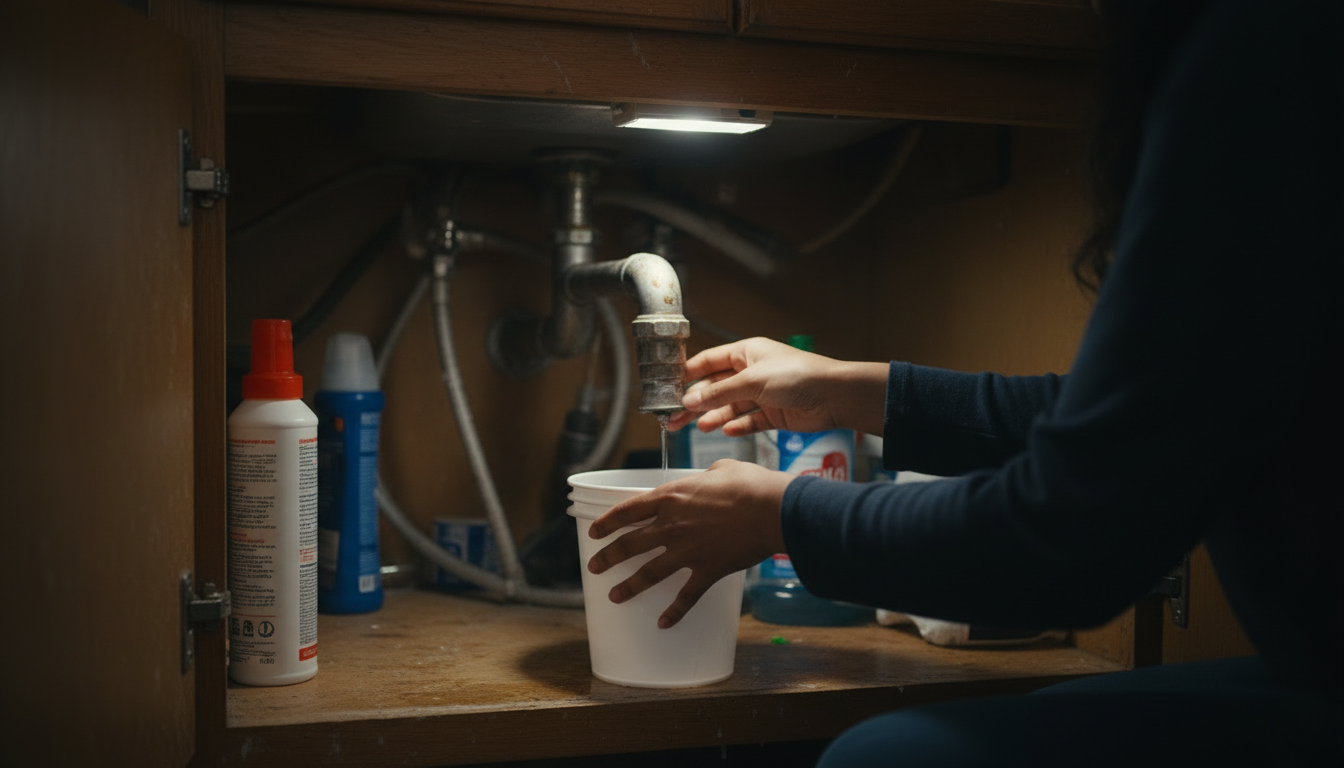
The regulation carves out emergency repairs entirely. No notice is required.
That is a sensible rule rather than a loophole. A burst pipe at two in the morning does not wait 48 hours, and a landlord who had to give notice before dealing with one would be unable to protect either the building or you.
What the regulation does not do is define what counts as an emergency. It simply does not say, and that omission is deliberate enough that no article should fill it in. A flooding bathroom and a slow-dripping tap are obviously on different sides of the line, but plenty of real situations sit closer to the middle, and where a specific repair falls is the kind of question a board of health inspector or a legal aid advocate can answer for your actual circumstances.
If you think the emergency exception is being used to avoid giving notice for ordinary work, that is a legitimate concern to raise, and it is a pattern question rather than a single-visit question.
Do you actually have to let them in?

Largely, yes, and this is the part worth being straight about.
The same provision that gives you 48 hours says every occupant "shall give the owner thereof, or the owner's representative, access." It is written as a duty. The qualifiers are that access has to be at a reasonable time, on reasonable notice, and by appointment where possible, but those shape how access happens rather than whether it does.
There is a practical logic to it. Your landlord is required to keep the apartment up to code, and they cannot do that from outside. A tenant who refuses all access is, in effect, preventing repairs they may later want to complain about. Pest treatment is the clearest example, and it is named in the regulation because piecemeal treatment doesn't work. Our guide to what to check for pests and who pays goes into how that plays out in practice.
The useful question is what a reasonable accommodation looks like. If the proposed time genuinely does not work, saying so and offering an alternative is an ordinary conversation and is well within what the regulation contemplates. Refusing outright is a different act with different consequences, and it is not something to do on the strength of an article.
If your lease has its own entry clause, it is worth reading it alongside this, since a lease can permit entry that the code does not address. Our section-by-section lease guide walks through what each part of a Boston lease is doing, which is the right way to read that clause in context.
If your landlord enters without notice

Start with the boring option, because it works more often than people expect. Say something, in writing, and be specific about what happened and when. A lot of short-notice entry is a landlord being disorganized rather than deliberate, and a written record is useful whether or not it stops there.
If it continues, the code route is your local board of health or inspectional services department, which enforces 105 CMR 410.000 and can inspect and issue orders. That is the same route as any other code issue, and our guide on who to call about a landlord problem in Boston sets out the order to try things in.
Where entry becomes a pattern rather than an incident, the recourse is the same as it is for unwanted showings. Quiet enjoyment, at M.G.L. c. 186, § 14, is the route through which a tenant whose use of their home has been seriously interfered with pursues damages. Separately, 940 CMR 3.17(6)(e) makes it an unfair and deceptive practice for an owner to enter for any purpose outside a short list, and inspection and repairs are on that list. We go further into the pattern question in our guide to landlord entry during a sale.
What this article will not tell you to do is change the locks, refuse all access, or withhold rent. Each of those creates a new problem on top of the one you have.
Where this stops being general advice
Whether a particular repair was an emergency. The regulation doesn't define the term, and the answer turns on the actual condition.
Whether you can refuse a specific entry, and what follows if you do. This depends on your lease, your tenancy, and what has happened so far.
Whether a pattern of entries breaches quiet enjoyment, and what a claim would be worth.
Whether a lease clause granting broader entry is enforceable. Some are, some aren't, and it isn't obvious from reading it.
For any of those, your local board of health or inspectional services department handles code enforcement, MassLegalHelp is a good free starting point, Greater Boston Legal Services advises income-eligible tenants, and the Attorney General's consumer line takes complaints about landlord conduct.
Frequently asked questions
How much notice does a landlord have to give before repairs in Massachusetts? At least 48 hours, under 105 CMR 410.003(E), for work done to comply with the State Sanitary Code. Emergency repairs require no notice.
Is the 48-hour rule actually law? Yes. It's in the State Sanitary Code at 105 CMR 410.003(E). That's what makes it different from the widely repeated 24-hour figure for showings, which isn't in any statute.
Does the 48-hour rule apply to showing my apartment to buyers? No. It covers repairs, alterations, pest elimination, and service of utilities. Showings are governed by your lease under M.G.L. c. 186, § 15B(1)(a), which names no notice period.
Can my landlord enter without notice for an emergency? Yes. The regulation expressly requires no notice for emergency repairs.
What counts as an emergency? The regulation doesn't define it. Some situations are obvious and some aren't, so if it matters in your case, your board of health or a legal aid advocate is the place to ask.
Do I have to let my landlord in for repairs? Generally yes. The same provision says the occupant "shall give the owner... access" at a reasonable time. If the proposed time doesn't work, offering an alternative is reasonable and normal.
What if my landlord keeps showing up without notice? Raise it in writing first. If it continues, your local board of health enforces the code, and a sustained pattern may raise a quiet enjoyment issue under M.G.L. c. 186, § 14.
Can I change the locks? This article isn't recommending that. It tends to create a new problem alongside the one you already have, and it's worth getting advice before rather than after.
Sources, and when this was current
- 105 CMR 410.003(E), State Sanitary Code, minimum standards of fitness for human habitation. Quoted verbatim above and read directly for this article.
- M.G.L. c. 186, § 15B. Lease entry provisions.
- M.G.L. c. 186, § 14. Quiet enjoyment.
- 940 CMR 3.17. Attorney General's landlord-tenant regulations.
Current as of September 2026.
This article is informational and isn't legal advice. Whether a specific repair was an emergency, and whether you can refuse a particular entry, depend on your lease and your circumstances, so confirm with your local board of health, MassLegalHelp, or a tenant-rights attorney.