


Many Boston apartments are in older buildings, and the bedrooms in them are rarely the same size. One has two windows and a closet you can walk into. One is the converted back room with a radiator and no door to the hallway.
Splitting the rent evenly across bedrooms of different sizes quietly moves money from whoever got the small room to whoever got the big one, every month for a year. The split is usually agreed in ten seconds, before anyone has really seen the rooms.
Here are three ways to split rent between roommates more fairly, in increasing order of effort: by square footage, by room features, and by bidding.
Why an even split usually is not a fair one
An even split is usually not fair because Boston bedrooms rarely have the same value. If you listed each bedroom separately, would they rent for the same amount? In most Boston apartments the answer is obviously no.
Dividing by three leaves that difference in place and puts it on one person. Because it is never discussed, it tends to become the thing that gets brought up during an unrelated argument eleven months later.
Settling the rent split takes about twenty minutes and a tape measure.
Method 1: split by square footage
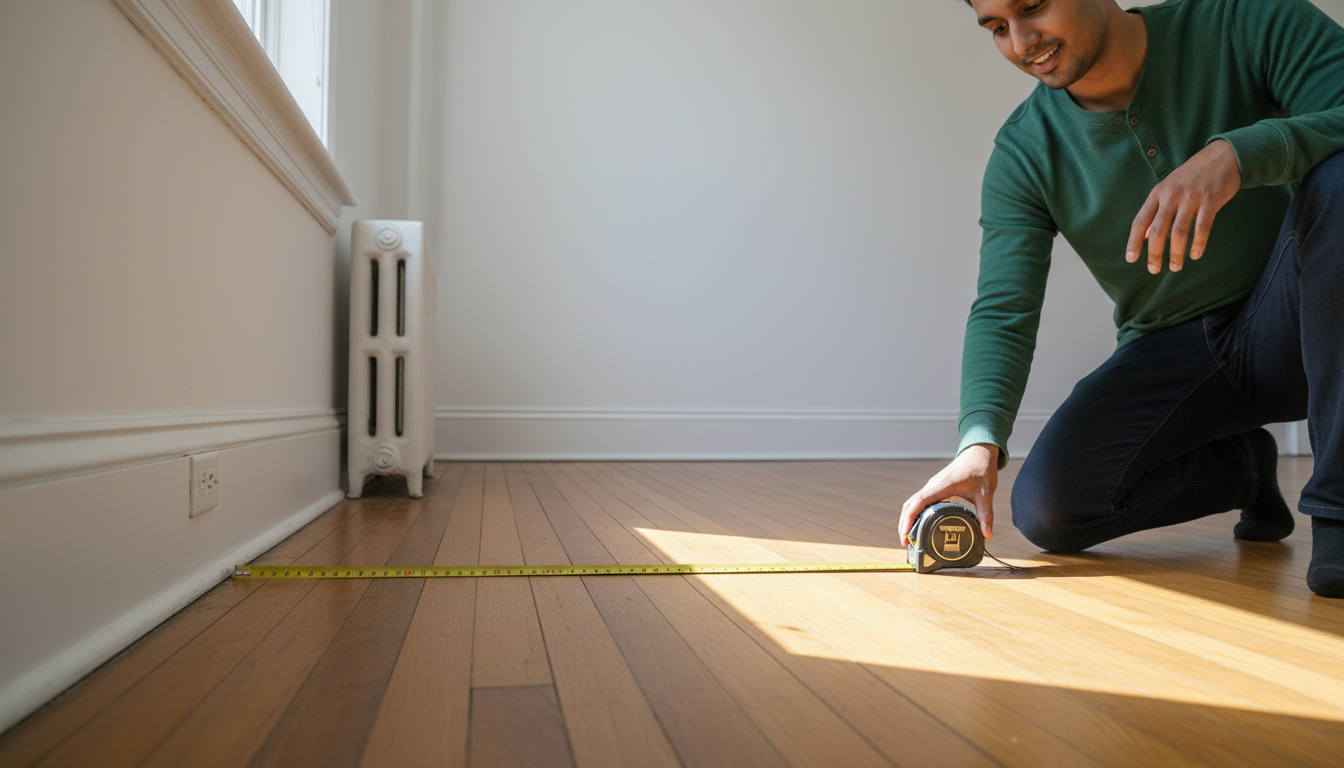
Splitting by square footage means each person pays the share of the rent that matches their bedroom's share of the total bedroom area. It is a common starting point. Shared space stays out of the calculation. The steps:
- Measure each bedroom.
- Add the bedroom areas together to get the total.
- Divide each room's area by the total to get that room's percentage.
- Apply each percentage to the rent.
Say three bedrooms measure 150, 120 and 100 square feet. That is 370 square feet of bedroom in total.
| Room | Square feet | Share of total | Percentage of rent |
|---|---|---|---|
| Large | 150 | 150 ÷ 370 | 40.5% |
| Middle | 120 | 120 ÷ 370 | 32.4% |
| Small | 100 | 100 ÷ 370 | 27.0% |
Apply those percentages to whatever your rent is and you have a split. Round so the three shares add to exactly 100%, since the rounded figures here come to 99.9%.
Compare that to an even split, where everyone pays 33.3%. The large room goes from 33.3% to 40.5%, and the small room drops from 33.3% to 27.0%. On a year's rent that gap is not trivial, and it is mostly the amount the person in the small room was paying toward someone else's extra space.
You do not need to be precise to the inch. Length times width, rounded to the nearest foot, is enough.
Method 2: adjust for what the room actually has
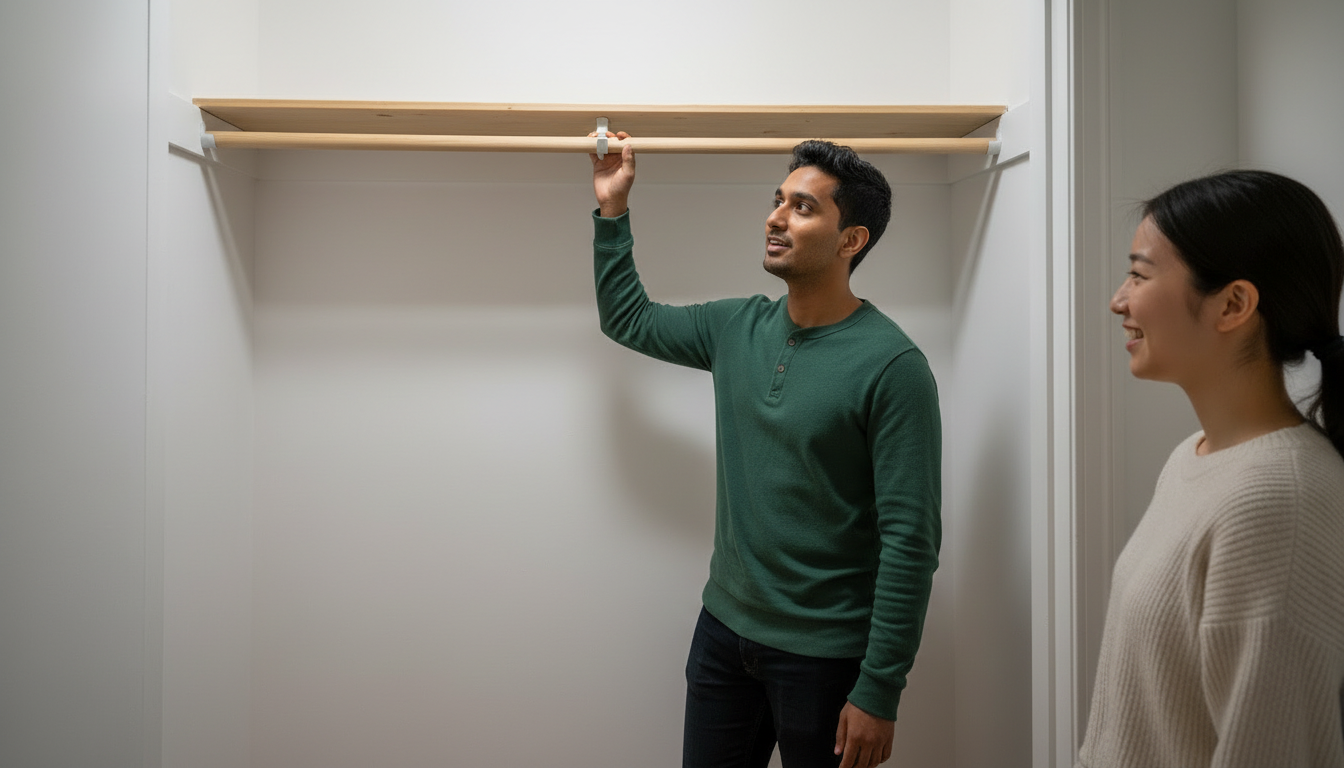
Adjusting for room features means starting from the square-footage percentages and changing each room's share for things that square footage misses but that change what a room is worth to live in.
- A private or attached bathroom. Often one of the biggest premiums, and often worth more than a few square feet of floor.
- Closet space, especially in older Boston buildings where some bedrooms have none at all.
- Windows and light. A basement-level room with one small window is a different product from a second-floor corner room.
- Noise. Street-facing on a bus route versus facing a back courtyard.
- Access. A room you walk through to reach another room is worth less, and a room off a shared living space is worth less than one on a hallway.
Start from the square-footage percentages and agree on an adjustment among you. Do not look for a standard number for what a private bathroom is worth, because there is not one. Agree on a figure you all accept, apply it, and move on.
Method 3: let people bid
Bidding settles it when two people both want the same room, or when nobody can agree on the adjustments.
Each person privately writes down what they would pay for each bedroom, with their three numbers adding up to the full rent. Reveal them together. Assign the rooms so each person gets one and the combined winning bids come out as high as possible.
Those winning bids add up to at least the rent. Split any extra equally and subtract each person's share from what they pay for their room.
It feels mechanical, but it settles a deadlock with numbers, and nobody has to concede on a personal basis.
Split on the room, not on the person
Base the rent split on the rooms themselves, not on income, ability to pay, or who is living in them.
Every adjustment above is a property of the room: its size, its bathroom, its closet, its windows, its noise. Those are the only things that belong in the calculation.
We would not split rent by income or ability to pay. Some rent-split calculators offer it as an option. It turns a housing arrangement into an ongoing comparison of each other's finances, and it tends not to survive anyone's circumstances changing.
Likewise, keep out who is home more, who has a partner staying over, who cooks, and who travels for work. Those are guest-policy and shared-cost questions, and they belong in a separate conversation about those specific things rather than baked into the rent forever.
How should roommates split utilities?
Keep utilities separate from the rent split, and divide them their own way, usually evenly across people.
Rent is tied to the rooms, but utilities are tied to the household, so the rent split does not set the utility split. Decide whose name goes on each account, and agree on how and when everyone settles up.
Check what your rent already covers first, because it varies more than people expect. Our guide to what is typically included in Boston apartment rent covers the usual arrangements.
Write it down before you sign
Agree on the rent split before everyone signs the lease, not after you have moved in and discovered which room gets the morning sun.
Two reasons. Everyone still has leverage before signing, because anyone can still walk. And whatever you agree on is easier to record while you are already doing paperwork.
Write the split down with the date, in a short roommate agreement that everyone signs. Settle the deposit at the same time, including who buys out whom if someone leaves early. How that buyout usually works is covered in replacing a roommate mid-lease.
Room-by-room differences are easier to judge when you can see photos and a floor plan, so ask for room dimensions before you tour. If you are still choosing between apartments, you can search Boston apartments by area on Spot Easy, where every agent is verified before listings go live.
The split itself does not change your lease. Under a standard shared lease each tenant is typically liable for the whole rent regardless of what you agreed on among yourselves, which is covered in applying for a Boston apartment with roommates.
FAQ
Is splitting rent evenly ever right? Yes, when the bedrooms are genuinely comparable in size, light, noise and storage. That is less common in Boston's older buildings than people assume, so check rather than default to it.
How much extra should the room with a private bathroom pay? There is no standard figure, and anyone quoting one is guessing. Start from the square-footage split and agree on an adjustment you all accept.
What if someone refuses to discuss it? Use the bidding method. It settles the question without anyone having to argue that they personally deserve the better room.