

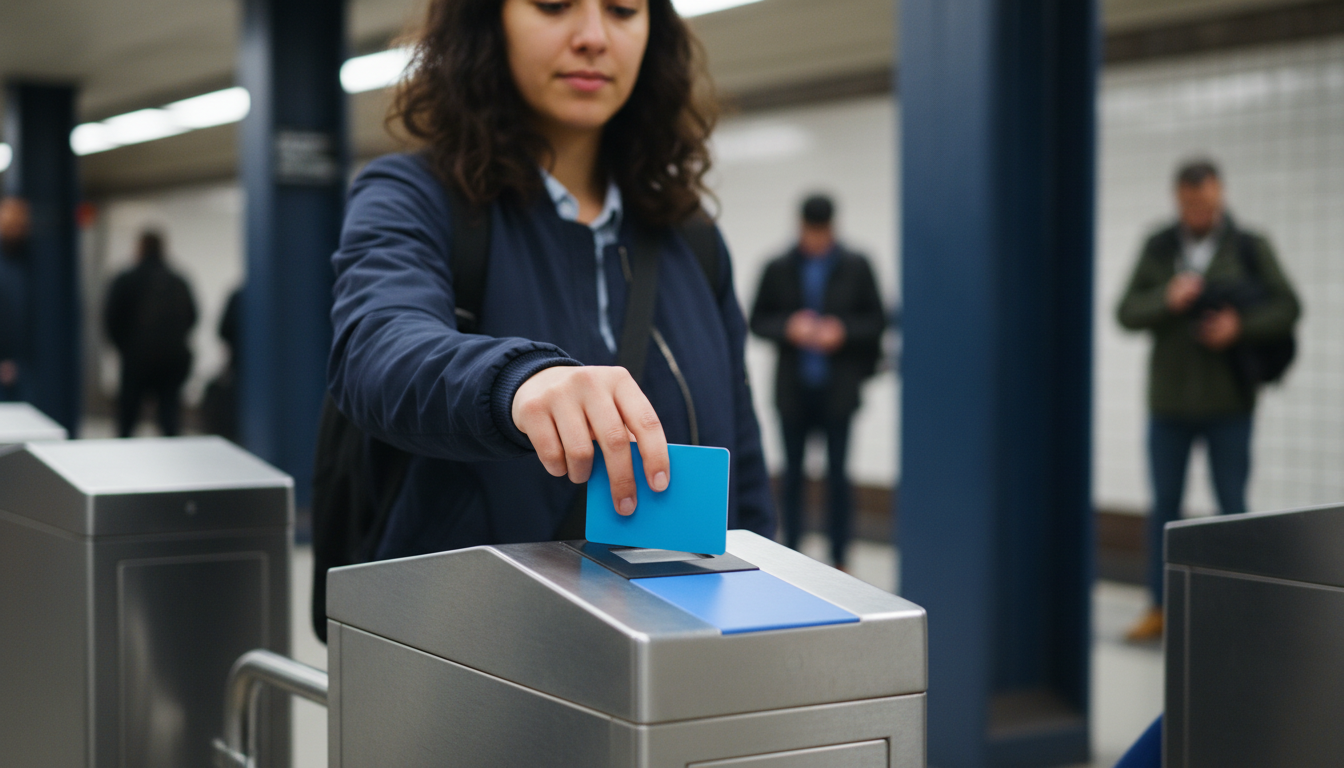
A CharlieCard is the reusable plastic MBTA fare card you tap to get through the fare gates in Boston, and getting one is easier and cheaper than most new arrivals expect. Blank cards are free at the Charlie Service Center, some city halls and libraries, Boys and Girls Clubs and various retail stores, and fare vending machines in subway stations sell them loaded with value.
Before you decide to just tap your phone instead, know that tapping a bank card and carrying a CharlieCard are not interchangeable on the MBTA, and the difference costs real money if you ride every day.
Where can you get a CharlieCard in Boston?
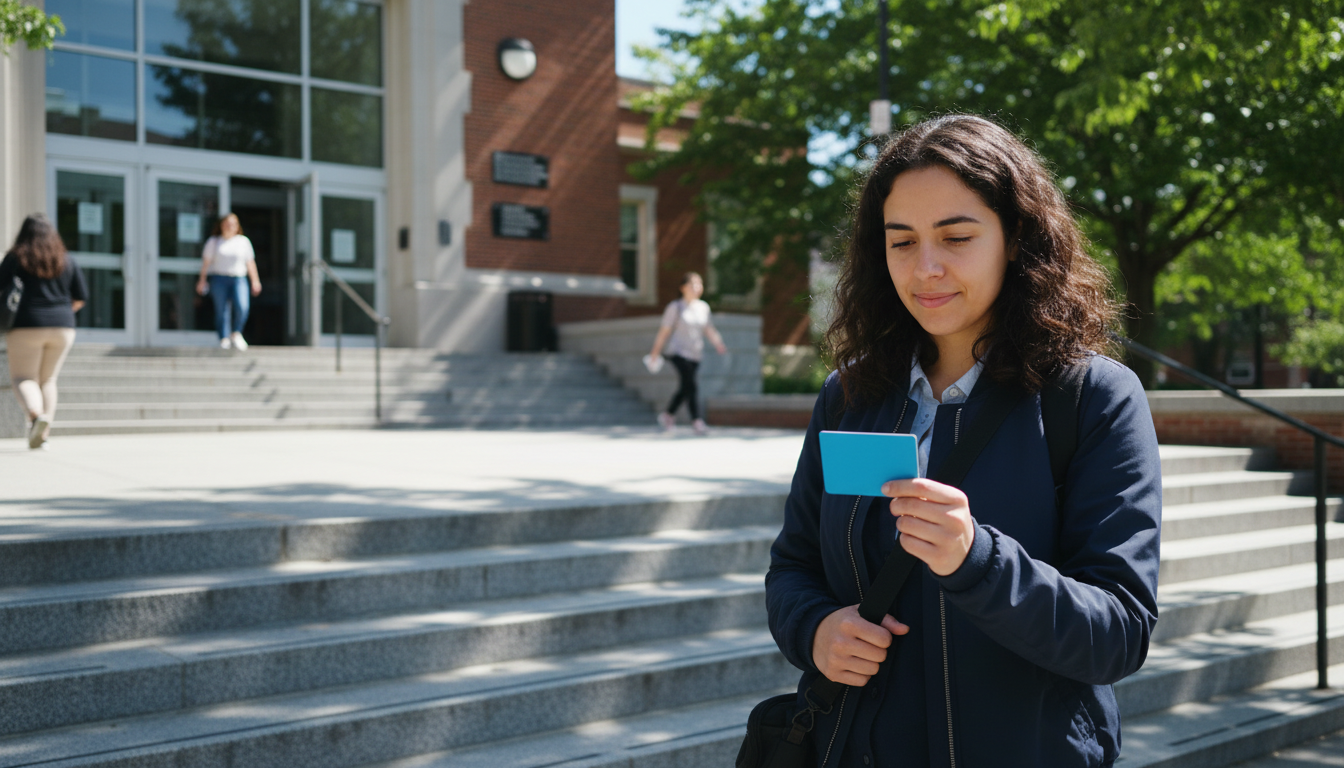
The straightforward route to a CharlieCard is an MBTA fare vending machine. Those sit in subway stations, and you can buy a card and load value onto it in the same transaction. MBTA staff at most subway stations and at select bus stations can also hand you one.
Free blank cards, with no value on them, are available at:
- The Charlie Service Center at 296 Washington Street
- Some city halls and libraries
- Boys and Girls Clubs
- Various retail stores
Two things to know about the vending machine route. Not every machine issues cards, and the exceptions are the ones outside the normal subway network, including the machines at Fenway Park and Worcester Union Station. And free blank cards carry no value, so you still need to load value or a pass before the card does anything.
The current rundown of locations and what each one offers is on the MBTA's own CharlieCard page.
How much does it cost to ride the MBTA?
A standard MBTA subway ride costs $2.40 one way, a local bus ride costs $1.70, and a monthly LinkPass costs $90.00. Commuter Rail, one way, runs from $2.40 at the low end up to $13.25 depending on zone.
Reduced fares for riders who qualify are a lot lower: $1.10 for the subway and $30.00 for the monthly LinkPass.
CharlieCard, CharlieTicket or contactless: which should you use?
There are three ways to pay the MBTA, and they are not equivalent. A CharlieCard is the right choice for regular riders, contactless suits occasional trips, and a CharlieTicket is the paper option.
| Option | What it is | Monthly pass | The catch |
|---|---|---|---|
| CharlieCard | Reusable plastic card, managed online, balance protection if registered | Yes, a monthly LinkPass | Not valid on the Commuter Rail or the ferry, except the Fairmount Line |
| CharlieTicket | Tappable paper version, activated when you buy it | Yes, a monthly LinkPass | Limited transfers or none on cash value, no online management, and stored value expires 18 months after purchase |
| Contactless (bank card, phone or watch) | Tap directly on the subway, bus, Silver Line, Mattapan Line and ferry | No, not compatible with daily, weekly or monthly passes | You pay per ride, every ride, and it does not work on the Commuter Rail |
A CharlieCard is the reusable plastic card. You can manage it online, it has balance protection if you register it, and it holds a monthly LinkPass. It is the card built for regular subway and bus riders.
A CharlieTicket is the tappable paper version. It gets activated when you buy it, and if you load it with cash value it gives you limited transfers or none at all. There is no online management. Stored value on a CharlieTicket expires 18 months after purchase.
Contactless payment means tapping a bank card, phone or watch directly. It works on the subway, bus, Silver Line, Mattapan Line and ferry. It is convenient for occasional trips.
Contactless payment is not compatible with daily, weekly or monthly passes, and that is the MBTA's own position rather than our reading of it. So if you tap your phone, you pay for each trip with no pass, though free transfers within the two-hour window still apply. Someone commuting five days a week who taps a phone instead of carrying a monthly LinkPass pays a fare on every trip.
Contactless also does not work on the Commuter Rail at all.
Where is a CharlieCard not valid?
A CharlieCard is not valid on the MBTA Commuter Rail or the ferry. The single exception is the Fairmount Line, which accepts it.
That exception matters if you are apartment hunting, because the Fairmount Line runs through Dorchester, Roxbury and Hyde Park at subway fares rather than Commuter Rail fares. We wrote up why the Fairmount Line is worth knowing about for renters looking at those neighborhoods.
The ferry is the mirror image. Contactless works there, your CharlieCard does not. If you are weighing an East Boston place partly on the boat, the ferry's costs and its seasonal gaps are worth reading first, and check the current East Boston schedule before you count on it.
Who qualifies for reduced MBTA fares?
Riders 65 and over, income-eligible riders aged 18 to 64, people with disabilities, Medicare cardholders, some students and children 11 and under qualify for reduced or free MBTA fares. Reduced fares are the same price regardless of which qualifying card you hold:
| Fare | Regular | Reduced |
|---|---|---|
| Subway, one way | $2.40 | $1.10 |
| Local bus, one way | $1.70 | $0.85 |
| Monthly LinkPass | $90.00 | $30.00 |
A reduced 7-Day LinkPass is $10.00.
Who qualifies:
- Riders 65 and over, with a Senior CharlieCard. Riders 75 and over who do not drive can ride free with a Car-Free Seniors CharlieCard and an RMV-issued Mass ID
- Riders aged 18 to 64 enrolled in an approved state assistance program, through the income-eligible program
- People with disabilities and Medicare cardholders, through a Transportation Access Pass
- Some middle and high school students in the Student Pass Program, with an S-Card or M7 Card
- Children 11 and under ride free
For income-eligible riders, a monthly pass at $30 instead of $90 saves $720 a year. You can apply online, and the Mobility Center at 1000 Massachusetts Avenue will help you apply in person. The reduced fares page has the eligibility detail.
Should you buy the monthly pass?
Not automatically. The MBTA monthly LinkPass is $90 and a subway ride is $2.40, so it only starts paying for itself somewhere past 37 rides in a month. A standard five-day commute is roughly 40 rides, which clears the line but not by much, and a couple of weeks working from home puts you back under it.
We worked through the math, including what tips it either way, in is an MBTA pass worth it.
If transit is part of why you are picking a place, check planned shutdowns before signing a lease.
If you are getting set up in a new place
Getting a CharlieCard is a quick errand, so do it in your first week instead of putting it off.
Since some libraries hand out free blank CharlieCards, one trip can cover two errands. A physical Boston Public Library card is free and also gets you museum passes worth having.
You can also browse Boston apartments by neighborhood if transit access is one of the things you are weighing.
The short version
- Free blank CharlieCards at the Charlie Service Center at 296 Washington Street, some city halls and libraries, Boys and Girls Clubs and some retail stores
- Fare vending machines in subway stations sell them loaded, though a few machines do not issue cards
- Subway $2.40, local bus $1.70, monthly LinkPass $90
- Contactless payment cannot hold a monthly pass and does not work on the Commuter Rail
- A CharlieCard is not valid on Commuter Rail or ferry, except the Fairmount Line
- Reduced fares cut the monthly pass to $30 for those who qualify, including income-eligible riders aged 18 to 64
A note on checking before you rely on it
Fares, card locations and eligibility rules above come from the MBTA's own pages, linked throughout, and were current when this was written. Fares get adjusted and the reduced fare programs get expanded, so check the MBTA's pages for anything you are budgeting around.