

Most Boston renters sort transit into two boxes. The T, which is what you use, and the commuter rail, which is what you use if you live out past the city and are willing to pay for it.
For one line, that second assumption is wrong. Seven of the Fairmount Line's eight stations sit in Zone 1A, and a Zone 1A fare is not close to a subway fare. It is the same number.
You can also tap a CharlieCard to ride it, which most people assume is impossible on commuter rail.
It costs exactly what the subway costs
The Fairmount Line's fare matches the subway's at every price point.
| Subway | Commuter Rail Zone 1A | Commuter Rail Zone 1 | |
|---|---|---|---|
| One-way | $2.40 | $2.40 | $6.50 |
| Reduced one-way | $1.10 | $1.10 | $3.25 |
| Monthly pass | $90.00 (LinkPass) | $90.00 | $214.00 |
Fares checked against mbta.com on September 14, 2026. They do change, so confirm before you rely on them.
The middle column is the Fairmount Line for seven of its eight stations. The right-hand column is what most people picture when they hear "commuter rail," and it is roughly two and a half times as much.
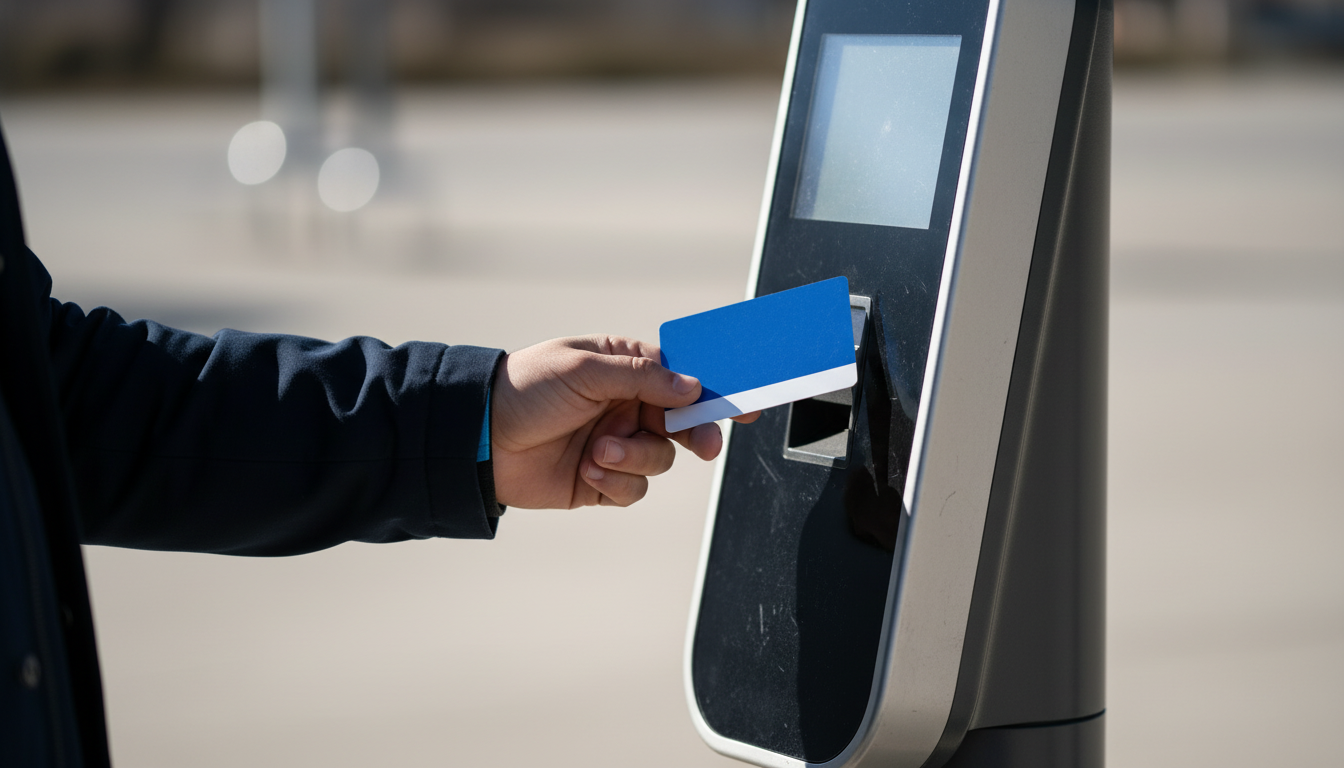
Payment works the way you would expect from the subway too. The MBTA's own guidance is direct about it: "You can use your CharlieCard to pay for travel within Fairmount Line Zone 1A. Tap your CharlieCard at the fare validators on the platform." No paper ticket, no conductor fumbling, no app required.
That combination, subway fare and subway payment on a commuter rail line, is uncommon among the MBTA's commuter rail lines and is not widely known.
Where it actually goes
The Fairmount Line runs from South Station out through the southern part of the city, with stops at Newmarket, Uphams Corner, Four Corners/Geneva, Talbot Avenue, Morton Street, Blue Hill Avenue, Fairmount and Readville.
That routing is the interesting part. It cuts through Roxbury, Dorchester, Mattapan and Hyde Park, which is territory the Red Line's Ashmont branch does not reach and the Orange Line only clips. If you have looked at apartments in western Dorchester and concluded the commute was awkward, you may have been reasoning from an incomplete map.
From Uphams Corner into South Station is thirteen minutes, on every scheduled trip. That is a genuinely short ride into the Financial District, and it is competitive with or better than the equivalent trip on rapid transit from a similar distance out.
The line runs seven days a week.
Two things about the stations themselves are worth knowing before you go and look. They are commuter rail platforms rather than subway stations, which in practice means they are open to the weather, generally quieter, and often have a single entrance rather than several. Some sit a little below or above street level in a cutting or on an embankment, so the walk from the street to the platform can be longer than a map suggests.
None of that is a problem, but it is a different experience from walking down into a subway station, and it is the sort of thing better discovered on a visit than on your first Monday morning. If you are seriously considering a place near one of these stops, go and stand on the platform once before you decide.
The catch, and it's a real one
The fare is identical to the subway's. The schedule isn't, and that's the catch.
The subway runs on a headway. You turn up and a train comes along in a few minutes, and you never really think about it.
Commuter rail runs on a timetable. You turn up for a specific train, and if you miss it the next one is a genuine wait rather than a minor annoyance. Evening and weekend service on any commuter line is thinner than rapid transit.
So the fare tells you what a trip costs. It does not tell you how the line fits your life. Before you sign a lease on the strength of a Fairmount stop, pull up the actual schedule for that station and check it against the hours you actually travel, including the evening you would come home late and the weekend you would go out.
For some people the timetable is fine, because their hours are regular. For others it is the whole problem.
We have deliberately not printed a schedule here. Commuter rail timetables change with every service pick, and an article carrying one would be wrong within months. The MBTA's own page for the line is the only version worth trusting.
It is worth checking service changes generally before signing anywhere, not only on this line. Our guide to what renters should check about MBTA shutdowns before signing covers how to find out whether your line is about to be disrupted.
The Zone 1A boundary is a cliff
Look at that fare table again, specifically the gap between the middle and right columns.
Zone 1A is $2.40 and $90 a month. Zone 1, the very next band out, is $6.50 and $214 a month. That is not a gradient, it is a step, and it is a large one. Over a year of commuting the difference between the two monthly passes is close to $1,500.
The practical consequence is that which zone a station is in matters much more than how far out it looks on a map. Two stations a short distance apart can sit on opposite sides of that line, and the cheaper one is not always the one closer to downtown.
The Fairmount Line has its own example at the end of the route. Readville is the one stop on the line outside Zone 1A, and it is not Zone 1 either. Readville is Zone 2, at $7.00 one-way and $232.00 a month. One stop separates it from Fairmount station, where the monthly pass is $90.00.
So if you are weighing a place on the strength of its commuter rail stop, check the zone specifically rather than assuming from distance. It takes a moment on the MBTA site and it is worth doing before you fall in love with an apartment.
What this means when you're comparing listings
The practical takeaway: a Fairmount Line stop is worth the same search weight as a subway stop, on price.
If you have been filtering your search by proximity to the Red, Orange, Green or Blue lines, you have been excluding a corridor that has rail service at the same price, with the same payment method, and in some cases a shorter ride downtown than the rapid transit option you were considering.
That does not automatically make those listings better. The frequency question above is real and it may rule the line out for you entirely. But it should change what you look at rather than being invisible, which is roughly where it sits for most renters right now.
Western Dorchester is the clearest example, and we have covered the neighborhood in more depth in our guide to living in Dorchester, including how the Fairmount Line fits alongside the Red Line and the Mattapan trolley. You can also browse Dorchester apartments on Spot Easy and check each one against the stops above.
It is also worth knowing, if you are comparing across the city, that the Mattapan Trolley runs on the ordinary subway fare too. Boston's transit pricing has more Zone 1A-style pockets than its reputation suggests.
Where this stops being general advice
Actual departure times, frequency and weekend service. Deliberately not covered here. Check the MBTA's page for your specific station and your specific hours, because this is the fact that decides whether the line works for you.
Whether a specific address is genuinely walkable to a stop. Map distance and walking reality differ, particularly where a rail line or a main road sits between you and the platform.
Current fares. Checked September 14, 2026. They change.
For all three, mbta.com is the source.
Frequently asked questions
How much does the Fairmount Line cost? Seven of its eight stations are in Zone 1A, which is $2.40 one-way, $1.10 reduced, and $90.00 for a monthly pass. That's the same as the subway at every price point. Checked September 14, 2026.
Can I use a CharlieCard on the Fairmount Line? Yes, within Zone 1A. The MBTA says to tap your CharlieCard at the fare validators on the platform.
Is the commuter rail really the same price as the subway? In Zone 1A, yes, exactly. Beyond that it rises sharply. Zone 1, the next band out, is $6.50 one-way and $214 a month.
What stations are on the Fairmount Line? Newmarket, Uphams Corner, Four Corners/Geneva, Talbot Avenue, Morton Street, Blue Hill Avenue, Fairmount and Readville, running into South Station.
How long does it take to get downtown? Thirteen minutes from Uphams Corner to South Station, on every scheduled trip. Check the MBTA for your specific station.
Does the Fairmount Line run on weekends? It runs seven days a week, but weekend service on any commuter line is thinner than the subway. Check the schedule for the hours you'd actually travel.
Is it as good as the subway? On price and payment, it matches. On frequency it doesn't, because it runs to a timetable rather than a headway. That's the trade, and whether it works depends on how regular your hours are.
Which neighborhoods does it serve? It runs through Roxbury, Dorchester, Mattapan and Hyde Park into the Financial District at South Station.
Sources, and when this was current
- Commuter rail fares and fare zones, MBTA. Zone 1A and Zone 1 pricing, and CharlieCard use on the Fairmount Line.
- Subway fares, MBTA. One-way, reduced and LinkPass pricing.
- MBTA Fairmount Line station list and service days.
All fares checked September 14, 2026. MBTA fares and schedules change, so confirm both before relying on them.