

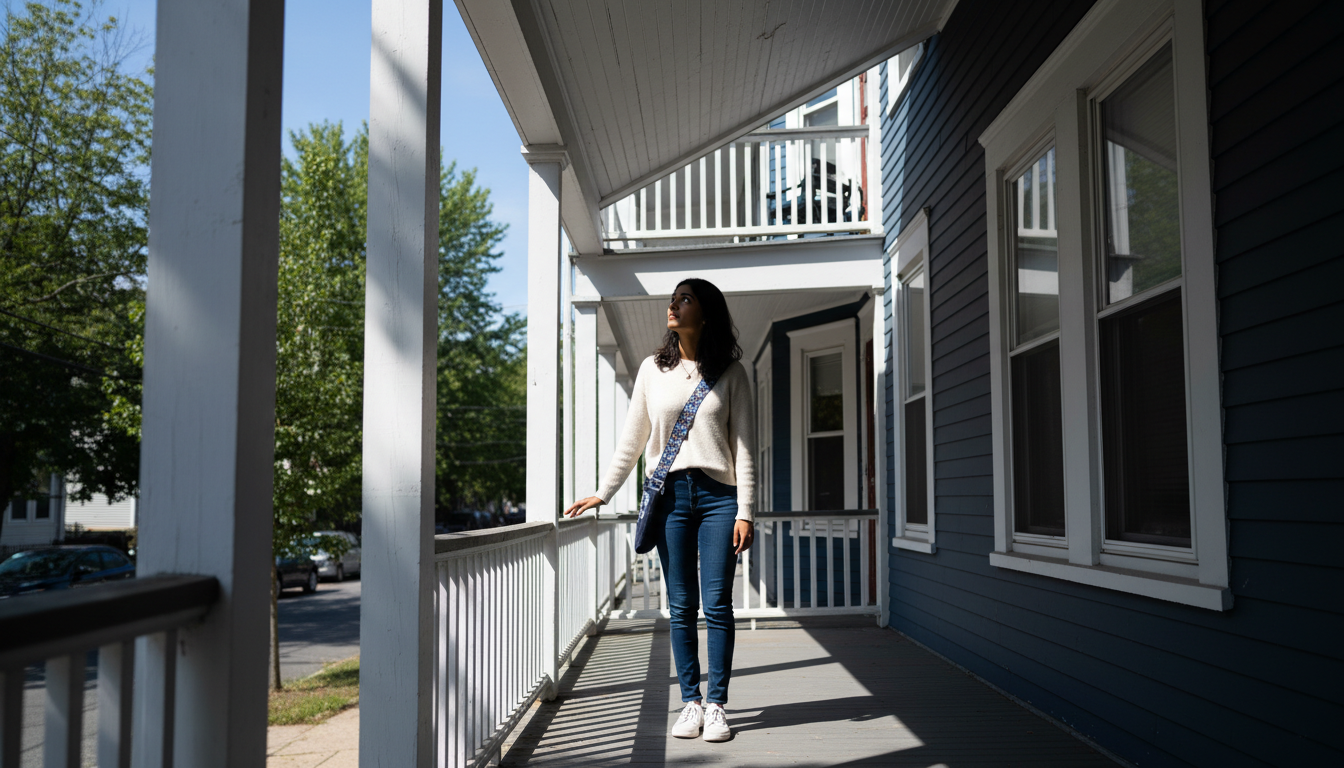
Dorchester is the largest neighborhood in Boston and about 61% of its occupied homes are rented. Put those two facts together and you get one of the largest concentrations of rental housing in the city, which is not how Dorchester usually gets written about.
It is also big enough that the name on a listing tells you very little. Savin Hill and Lower Mills are both Dorchester and they are a long way apart in stock, in station, and in what your morning looks like. The first useful thing to work out is which part you are actually looking at.
The second is how you would get downtown, and that turns out to be the most interesting thing about the neighborhood.
Which part of Dorchester?
Dorchester breaks into distinct sub-areas, each with its own housing stock and nearest station, covered in the table below. Boston neighborhoods have no official boundaries, and Dorchester's internal divisions are informal and locally contested; what follows is how the names are commonly used, not a line on a map.
| Area | What the stock is like | Nearest station | Closest to |
|---|---|---|---|
| Savin Hill | Three-deckers and some single-family, denser near the Avenue | Savin Hill (Red Line) | JFK/UMass, the beach, the expressway |
| Fields Corner | Densely packed three-deckers, Victorians on the surrounding streets | Fields Corner (Red Line) | Dorchester Avenue shops and services |
| Ashmont / Ashmont Hill | Large Victorians on the Hill, three-deckers and multi-family around the square | Ashmont (Red Line, trolley) | Peabody Square, the Mattapan trolley |
| Lower Mills | Lower density, more single and two-family, some mill conversions | Ashmont, then bus | The Neponset River, Milton line |
| Uphams Corner | Older multi-family and three-deckers, walkable commercial spine | Uphams Corner (Fairmount Line) | South Bay, the Fairmount Line |
| Neponset / Port Norfolk | Quieter, more single and two-family, waterfront edges | Butler or Ashmont, then bus | The Neponset River, Quincy line |
There is no rent column in that table on purpose. We do not publish Boston rent figures we have not sourced ourselves, and a single Dorchester average would flatten exactly the range the table exists to show.
The practical use of this is at the listing stage. If an ad says Dorchester and gives you nothing else, ask for the cross street or the nearest station before you spend an evening on it. It is a genuinely large place, and a twenty-minute difference in commute is normal between two listings carrying the same neighborhood name.
Worth knowing too that a lot of Dorchester addresses are described by their nearest square rather than by a formal area name. Peabody Square, Codman Square, Adams Village, Grove Hall and Meeting House Hill all function as local reference points, and a listing may use one of those instead of anything on the table above. They are commercial crossroads rather than administrative districts, so treat them as an approximate location marker and then check the actual street.
The other thing a map will not show you is the topography. Several of these areas are named hills and they are actually hills. Jones Hill, Popes Hill, Savin Hill and Ashmont Hill all involve a real climb from the flat, which matters if you are carrying groceries from a station at the bottom of one. It is worth walking the route from the apartment to the stop you would actually use, at the time of day you would actually use it, rather than trusting a walking time.
Three different ways to ride downtown
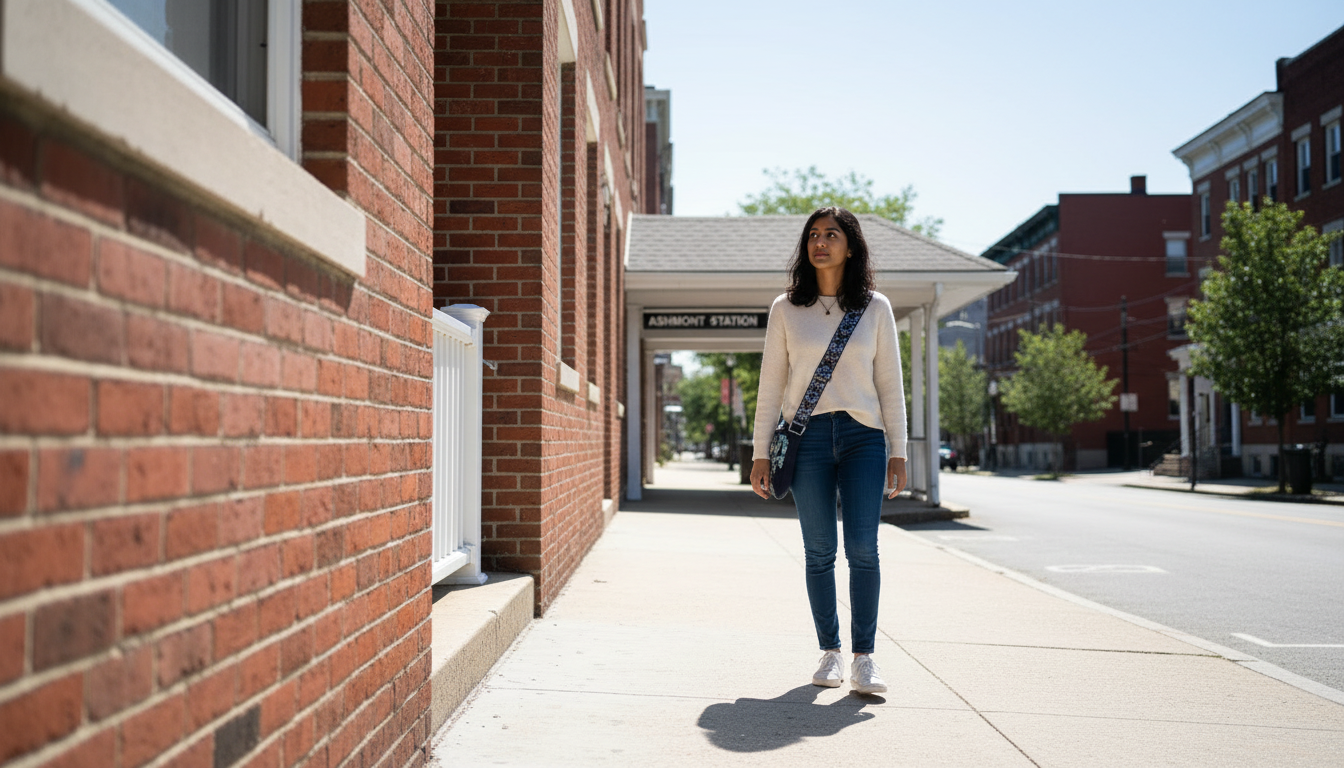
This is the part that gets left out of almost every guide, including the transit-focused ones.
1. The Red Line, Ashmont branch. JFK/UMass, Savin Hill, Fields Corner, Shawmut and Ashmont. This is the one everybody knows, and it is the spine of the neighborhood's eastern side.
2. The Ashmont-Mattapan High-Speed Line. The trolley that continues from Ashmont through Cedar Grove and Butler toward Mattapan. It is a short line and it is easy to miss on a map, but it puts several residential pockets one transfer from the Red Line.
3. The Fairmount Line. Commuter rail, with stops at Newmarket, Uphams Corner, Four Corners/Geneva, Talbot Avenue, Morton Street and Blue Hill Avenue. It runs through the western side of Dorchester, which the Red Line does not reach.
Most transit advice for renters treats Dorchester as "the Ashmont branch." That is a third of the picture.
The Fairmount Line in particular changes the arithmetic for the western half of the neighborhood, and it is priced very differently from what people assume commuter rail costs. We have written that up separately in our guide to the Fairmount Line for Boston renters, because it deserves more than a paragraph and it affects several neighborhoods rather than just this one.
If you are weighing Dorchester partly on the basis of keeping a car, our roundup of the easiest Boston neighborhoods for car owners has a Dorchester section, and it is one of the more car-tolerant parts of the city.
What the housing stock is like
Dorchester is a three-decker neighborhood. That single fact explains most of what you will find on a tour.
Three-deckers were built as three stacked family-sized floors, which means the apartments inside them are laid out as homes rather than as units. Two and three bedroom apartments are ordinary here in a way they simply are not in Fenway or Back Bay, where the stock skews studio and one-bedroom. Over the past 30 days, 55% of Dorchester listings on Spot Easy had three or more bedrooms. In Fenway the figure was 9%, and in Back Bay 7%. If you need space, or you are looking with two other people, this is a structural advantage rather than a matter of luck. Our Fenway guide covers the opposite end of that spectrum if you want the contrast.
Alongside the three-deckers there are Victorians, some of them large, particularly on Ashmont Hill and on the streets around Fields Corner. Many have been divided into apartments. Lower Mills and Neponset run to lower density, with more single and two-family housing.
What this means in practice is that you are more likely to be renting from a small landlord or a local management company than from a leasing office, and that the building is probably old. Neither of those is a problem on its own. Both change what you should ask about.
It also means the range within a single street can be wide. Two three-deckers built the same year, twenty feet apart, can be in completely different condition depending on whether one was gut-renovated in the last decade and the other has had a coat of paint. In managed stock you can reason from the building to the unit. Here you cannot, and the tour is doing more work than the listing description is.
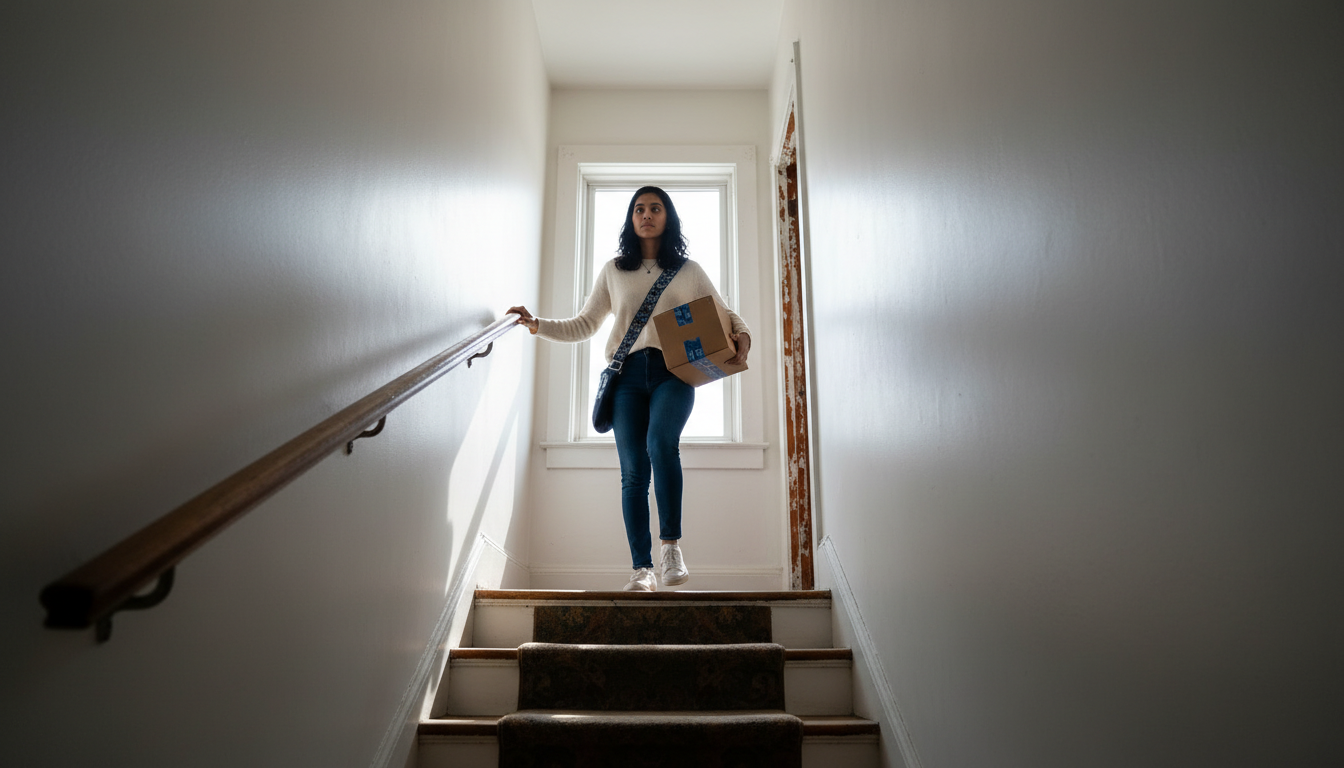
A related point that catches people used to newer buildings: a lot of these units are on the second or third floor of a walk-up with no elevator, and the staircases are narrow and turn. That is fine day to day and it is a genuine problem on moving day, particularly for anything large. Measure before you commit to a sofa, and factor the stairs into what movers will quote you.
One more piece of Dorchester-specific context. Because so much of the stock is two and three family houses, owner-occupancy is common, which means your landlord may live in the building. That tends to mean faster attention to a broken boiler and closer proximity to whatever noise you make. Worth knowing which arrangement you are walking into, and it is a reasonable thing to ask on a tour.
What does it cost to rent in Dorchester?
Here is where Dorchester rent sits, and what moves it.
Average asking rent in Dorchester, as of August 2026, against the Greater Boston average for the same size:
| Apartment size | Dorchester | Greater Boston | Difference |
|---|---|---|---|
| 1 bedroom | $2,544 | $2,863 | $319 below |
| 2 bedroom | $3,014 | $3,533 | $519 below |
| 3 bedroom | $3,340 | $4,085 | $745 below |
| 4+ bedroom | $3,937 | $5,109 | $1,172 below |
Source: Spot Easy's Dorchester rent index, built from our own listings and updated monthly. Dorchester sits below the Greater Boston average at every size, and the gap widens as the apartment gets bigger, which is the family-sized three-decker stock showing up in the numbers.
The structural things matter as much as the headline:
Heat, and who pays for it. Older stock frequently does not include it, and in a Boston winter that is a real monthly difference. Our guide to what's included in Boston apartment rent covers what to ask and what Massachusetts requires regardless of what the lease says.
Laundry. In-building in some three-deckers, in a basement in others, down the street in plenty.
Parking. More available here than in most of Boston, and often off-street, but confirm whether a space comes with the unit or is separately rented.
The lease calendar. Dorchester turns over on September 1 like the rest of the city, so inventory and competition arrive together.
If Dorchester is on your list, it is worth comparing on total move-in cost rather than headline rent. Spot Easy has a no-broker-fee filter, so you can search Dorchester apartments with the fee-charging listings taken out.
What to check before you sign

Most of this follows from the age of the stock rather than from anything specific to the neighborhood.
Ask what the heat runs on and who pays for it. This is the single biggest variable in an older building.
Ask where the laundry is, and whether it is in the unit, in the building, or not on the property.
Ask whether parking is included or separate, and whether it is deeded, assigned or first-come.
Look at the windows and the radiators. Old single-pane windows and an old boiler are the two things that turn a good headline rent into an expensive winter.
Ask who handles repairs and how fast. With a small landlord this is a person rather than a portal, which can be better or worse, and it is worth knowing which before you sign.
If you are still early enough to be comparing on credit or paperwork rather than on buildings, our guide to renting in Boston without a credit score covers that side of it properly.
Where this stops being general advice
What any specific building charges, includes, or requires. Heat, laundry and parking vary building to building here more than they do in managed stock, because most of these buildings were converted rather than purpose-built.
Whether a given address counts as Savin Hill, Jones Hill or Clam Point. The internal boundaries are informal and people disagree about them in good faith.
Current MBTA service levels on the Red Line, the trolley or the Fairmount Line. Check the MBTA rather than an article, particularly for weekend service.
For anything about a specific unit, the listing and the landlord are the source. For transit, the MBTA.
Frequently asked questions
Is Dorchester a good place to rent? It has one of the largest supplies of family-sized apartments in the city, three separate rail options downtown, and more parking than most neighborhoods. The tradeoff is older housing stock, which means heat, windows and laundry are worth checking carefully.
What are the neighborhoods within Dorchester? Commonly Savin Hill, Fields Corner, Ashmont and Ashmont Hill, Lower Mills, Uphams Corner, Codman Square, Adams Village, Neponset, Port Norfolk, Jones Hill and Meeting House Hill, among others. The divisions are informal.
Which Red Line stops are in Dorchester? JFK/UMass, Savin Hill, Fields Corner, Shawmut and Ashmont, on the Ashmont branch.
What is the Ashmont-Mattapan trolley? A short high-speed trolley line running from Ashmont through Cedar Grove and Butler toward Mattapan. It connects several residential pockets to the Red Line in one transfer.
Does the commuter rail serve Dorchester? Yes. The Fairmount Line stops at Newmarket, Uphams Corner, Four Corners/Geneva, Talbot Avenue, Morton Street and Blue Hill Avenue, serving the western side of the neighborhood that the Red Line doesn't reach.
Are there large apartments in Dorchester? More than almost anywhere else in Boston. The three-decker stock is built as family-sized floors, so two and three bedroom apartments are ordinary rather than scarce.
Is parking easier in Dorchester? Generally yes, compared with central Boston, and off-street parking is more common. Confirm whether a space is included in the rent or rented separately.
When should I start looking? Dorchester turns over on September 1 like the rest of Boston, so the most inventory and the most competition arrive in the same few weeks of late summer.
Sources, and when this was current
- MBTA Red Line Ashmont branch, Ashmont-Mattapan High-Speed Line and Fairmount Line station lists.
- City of Boston neighborhood planning materials, for sub-areas and the absence of official borders.
- Boston housing tenure data, for the renter-occupied share.
Checked September 14, 2026. Transit service and building details change, so confirm anything specific with the source before relying on it.