


The first useful thing to know about renting in Fenway is that "Fenway" is not one place. It covers Kenmore Square, Audubon Circle, the East and West Fens, and shades into Longwood at its southern edge, and those areas rent differently enough that the name on the listing tells you less than you'd think.
The second is that the choice that actually shapes your year there isn't the neighborhood at all. It's whether you end up in one of the new towers along Boylston Street or in an older brick or brownstone building a few blocks away. Those are two different products with two different cost structures, and the listing photos won't always make it obvious which one you're looking at.
Which Fenway are you actually looking at?
Fenway breaks into six working sub-areas: Kenmore Square, Audubon Circle, the West Fens, the East Fens, the Boylston Street corridor and the Longwood edge. Boston neighborhoods have no official boundaries, so every guide draws these lines a little differently — what follows is the working version most people use, not a legal one.
Broadly, Fenway sits with Brighton and Brookline's Longwood to the west, the Charles River to the north, Back Bay and the South End to the east, and Mission Hill to the south. The Muddy River runs through the middle of it.
| Area | What the stock is like | Nearest T | Closest to |
|---|---|---|---|
| Kenmore Square | A mix of older walk-ups above street-level retail and some newer builds. Busiest and loudest part of the neighborhood | Kenmore, a Green Line B/C/D junction | The ballpark, BU, Comm Ave |
| Audubon Circle | Largely residential, between Beacon Street and Commonwealth Avenue. Quieter, mostly older buildings | Kenmore or St Mary's Street | Brookline line, the Charles |
| West Fens | Older apartment blocks and brownstones, plus institutional buildings | Green Line E at Museum of Fine Arts; D at Fenway | Museums, the colleges, the Fens |
| East Fens | Denser older stock closer to Back Bay's edge | Green Line E at Prudential or Northeastern (Symphony closed until 2029) | Back Bay, Huntington Ave |
| Boylston Street corridor | The new towers. Purpose-built rental at scale | Fenway, Kenmore | Everything, at a price |
| Longwood edge | Institutional and medical, with residential mixed in | Green Line E at Longwood Medical Area | The hospitals |
There's no rent column in that table on purpose. We don't publish Boston rent figures we haven't sourced ourselves, and a single neighborhood average would flatten exactly the differences the table exists to show.
The distinction is worth taking seriously rather than treating as trivia, because it changes how you search. A listing described as Fenway might sit on a quiet residential block in Audubon Circle or directly above a bar on Kenmore Square, and those are not the same year of your life. If a listing gives you a cross street, look it up before you decide whether the commute or the noise is acceptable. If it doesn't give you one, that's worth asking about.
It also changes what you're comparing when you look at two listings side by side. Two apartments both labeled Fenway can differ more from each other than either differs from something in Back Bay or Mission Hill.
New tower or older building
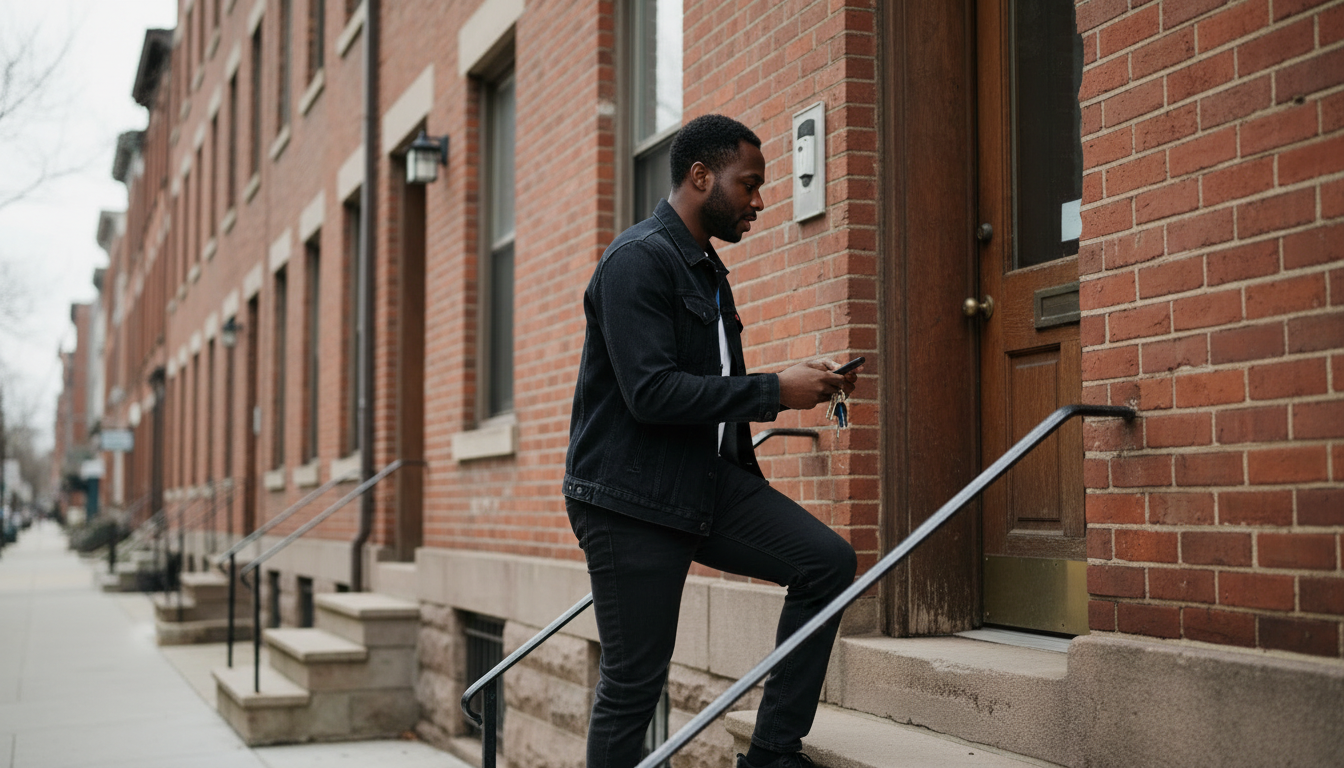
The real choice is tower versus older building, not Fenway versus Back Bay or one sub-area versus another.
The Boylston Street towers. Van Ness at 1325 Boylston opened in 2015 with 172 apartments across 13 stories. The Viridian at 1282 Boylston runs 18 stories and 342 units. Pierce Boston is 30 stories, with 240 rental units alongside its condos. These are professionally managed at scale: elevators, in-unit laundry, central air, amenity spaces, a leasing office, and often a lease-up concession when a building is filling.
The older stock. Brick walk-ups and the brownstones clustered around the Emerald Necklace, which is what the neighborhood was before the towers arrived. Expect radiators rather than central air, laundry in a basement or down the block, no elevator, and a smaller landlord or a local management company.
Neither is better. They fail differently. A tower's costs are predictable but come with amenity and utility line items; an older building's rent may look lower while heat, laundry and a summer without air conditioning quietly close the gap.
The practical advice is to work out which category a listing is in before you tour, because the questions worth asking are different. For a tower, ask what the amenity fee is, whether it's monthly or annual, and whether the concession applies to your lease term or just the first one. For an older building, ask what heat runs on, who pays for it, and where the laundry is.
Getting around
Fenway's transit case is unusually strong, and it's mostly the Green Line.
Kenmore is where the B, C and D branches meet, which means one walk gets you three different routes west and a straight run into downtown. The E branch is the other half of the picture, serving Museum of Fine Arts and Longwood Medical Area along Huntington Avenue. The Orange Line at Ruggles sits just off the southern edge, which matters more than people expect if you work downtown or need the commuter rail.
That density is the reason Fenway is genuinely walkable and the reason a car is optional here. For how the neighborhood compares across the city on foot, our neighborhood-by-neighborhood walkability guide has a Fenway-Kenmore section.
Two caveats on the transit story, because it isn't uniformly good. The Green Line is a light rail system running partly on street level, which means it is slower and more weather-affected than the Red or Orange Lines, and the branches west of Kenmore share track and bunch. If your commute is a long one, check the actual journey rather than the map. And the neighborhood is large enough on foot that "near the Green Line" covers everything from a two-minute walk to a fifteen-minute one, particularly in the Fens where the park itself lengthens the routes.
The flip side is that a lot of what you'd travel for is already here. The museums, the Emerald Necklace green space, the medical and academic corridor along Huntington, and the retail along Boylston are all within walking distance of most of the neighborhood, which is a real quality-of-life argument that doesn't show up in a commute time.
If you're at Northeastern and weighing Fenway against the alternatives, that's a more specific question than this guide answers well, and we've written it properly elsewhere: how far from Northeastern you can live off campus and which Boston neighborhoods have the best T access for NEU students.
What the calendar does to Fenway
The ballpark is next door, and for a large share of the warm months that changes how the streets work. If you're bringing a car, read that before you sign rather than after: we've covered Fenway parking for renters on event days in detail, including what a resident permit does and doesn't get you.
If you're not bringing a car, the calendar mostly means noise and crowds on a predictable schedule, concentrated near the park and along Lansdowne. How much that reaches you depends heavily on which Fenway sub-area you're in.
How much does it cost to live in Fenway?

Rather than repeat a neighborhood average from a listings site, here is what Fenway averaged by apartment size in August 2026, set against the Greater Boston average for the same size:
| Apartment size | Fenway average | vs Greater Boston |
|---|---|---|
| Studio | $2,303 | $58 below |
| 1 bedroom | $2,856 | $7 below |
| 2 bedrooms | $3,862 | $329 above |
| 3 bedrooms | $4,811 | $726 above |
Those figures come from our own Fenway rent index, which re-queries our listings every month, so check it for the current number. The pattern is the durable part: studios and one-bedrooms sit within a few dollars of the Greater Boston average, and the gap widens as you add bedrooms, which follows from a neighborhood built mostly of small units.
The structural things matter as much as the headline:
- Whether heat is included. In older buildings it often isn't, and in a Boston winter that's a real monthly difference. Our guide to what's included in Boston apartment rent covers what to check and what Massachusetts requires regardless of what the lease says.
- Amenity fees. Common in the towers, sometimes annual rather than monthly, and not always in the advertised rent.
- Laundry. In-unit in most new construction, in the basement or off-site in much of the older stock.
- Parking. Almost always separate, and in Fenway, scarce.
- The lease calendar. Fenway turns over heavily on September 1 like most of Boston, which means the most inventory and the most competition land in the same few weeks.
If Fenway is on your shortlist, it's worth comparing the towers and the walk-ups on total move-in cost rather than headline rent. Spot Easy lists Boston apartments with no broker fee on partner units and no admin fees in the fine print, so the number you're quoted is the one you pay.
Who Fenway suits, on inventory grounds
Taking this strictly as a question about housing and commutes rather than about people:
The stock skews small. Studios and one-bedrooms dominate, in both the towers and the older blocks. If you need three or four bedrooms, Fenway is a hard search and other neighborhoods will serve you better. Scanning Fenway apartments by bedroom count is the quickest way to see how thin that end gets.
It suits a no-car household. Three Green Line branches at Kenmore, the E along Huntington, and the Orange Line at Ruggles make this one of the easier parts of Boston to live in without driving. The inverse is also true: it's a difficult place to keep a car.
It suits short commutes to the institutions along the Huntington and Longwood corridor. Nine or so colleges, universities and hospitals sit in or against the neighborhood, which is why the stock is shaped the way it is and why the lease calendar is as compressed as it is.
It suits people who want to be able to walk to things. That's the genuine strength.
Where this stops being general advice
- What any specific building charges, includes, or requires. Amenity fees, heat, concessions and parking all vary building to building, and in the towers they vary by lease term too. The leasing office is the only reliable source.
- Whether a given address counts as Fenway, Kenmore or Audubon Circle. The boundaries genuinely are contested, and if it matters for a permit or a school zone, ask the city rather than a listing.
- What you can afford. That's a budget question and this is a neighborhood guide.
For the boundary question, the city publishes neighborhood maps, with the caveat that they're administrative rather than definitive. For anything about a specific unit, the listing and the management company are the source.
Frequently asked questions
Is Fenway a good place to rent? It's strong on transit and walkability and weak on parking and larger units. Whether that's a good trade depends on whether you're bringing a car and how many bedrooms you need.
What's the difference between Fenway and Kenmore? Kenmore Square is the busier, denser corner around the Green Line junction and the ballpark. The Fens areas to the south and west are more residential and generally quieter. They're usually marketed together as Fenway-Kenmore.
Does Fenway have official boundaries? No. Boston neighborhoods don't have official borders, and Fenway's are ambiguous and sometimes contested. Working boundaries put Brighton and Brookline west, the Charles north, Back Bay and the South End east, and Mission Hill south.
Are the new Boylston Street towers worth it over an older building? They're a different cost structure rather than a straight upgrade. Towers bundle in-unit laundry, central air and elevators, and add amenity fees. Older buildings often look cheaper until you account for heat and laundry.
Can you live in Fenway without a car? Yes, and it's arguably the neighborhood's main strength. Kenmore alone connects the Green Line B, C and D branches, with the E along Huntington and the Orange Line at Ruggles nearby.
Is parking difficult in Fenway? Yes. A resident permit is free and renters qualify, but it doesn't guarantee a space, and event days at the ballpark restrict streets for much of the warm season.
What size apartments does Fenway have? Mostly studios and one-bedrooms, in both the new towers and the older walk-ups. Large multi-bedroom units are scarce.
When should I start looking? Fenway turns over heavily on September 1, like most of Boston, so inventory and competition peak together in late summer.
Sources, and when this was current
- City of Boston neighborhood boundary and planning materials, for sub-areas and the absence of official borders.
- Development records for Van Ness (1325 Boylston), The Viridian (1282 Boylston) and Pierce Boston, for unit counts and heights.
- MBTA Green Line branch structure, for the Kenmore junction and the E branch.
Checked September 10, 2026. Buildings, fees and transit service change, so confirm anything specific with the source before you rely on it.