

With dozens of colleges and universities packed into Greater Boston, a huge share of the rental market is built around students: academic-year leases, by-the-room rentals, and buildings that turn over completely every September 1. If you're a working professional, a couple, or just someone who's done with the dorm-adjacent vibe, that can make apartment hunting genuinely frustrating: you keep landing in buildings where you're the only person not pulling an all-nighter.
The good news is that student saturation is pretty predictable once you know what drives it. It's not random, and it's not just about price. Here's how to find the parts of Boston and Cambridge that skew professional, and how to read a specific building before you sign so you don't end up surrounded by undergrads anyway.
First, why "just pick an expensive neighborhood" doesn't work
The intuitive move is to assume that pricier areas price students out. Sometimes that's true, but not reliably, and Beacon Hill is the classic trap. It's one of the most expensive neighborhoods in the city, and plenty of renters assume that keeps students away. In reality, Beacon Hill is full of students: it's a quick walk or T ride to several campuses, and students with family support or shared-by-the-room setups absorb the rents just fine. Beacon Hill has plenty of both students and young professionals packed into the same blocks.
What actually drives student saturation is two things: proximity to a campus and building type. A cheaper apartment far from any university will have fewer students than an expensive one three blocks from a college. So instead of filtering by price alone, filter by distance from the big student campuses and by how a building is set up (more on that below).
Boston and Cambridge neighborhoods that skew professional
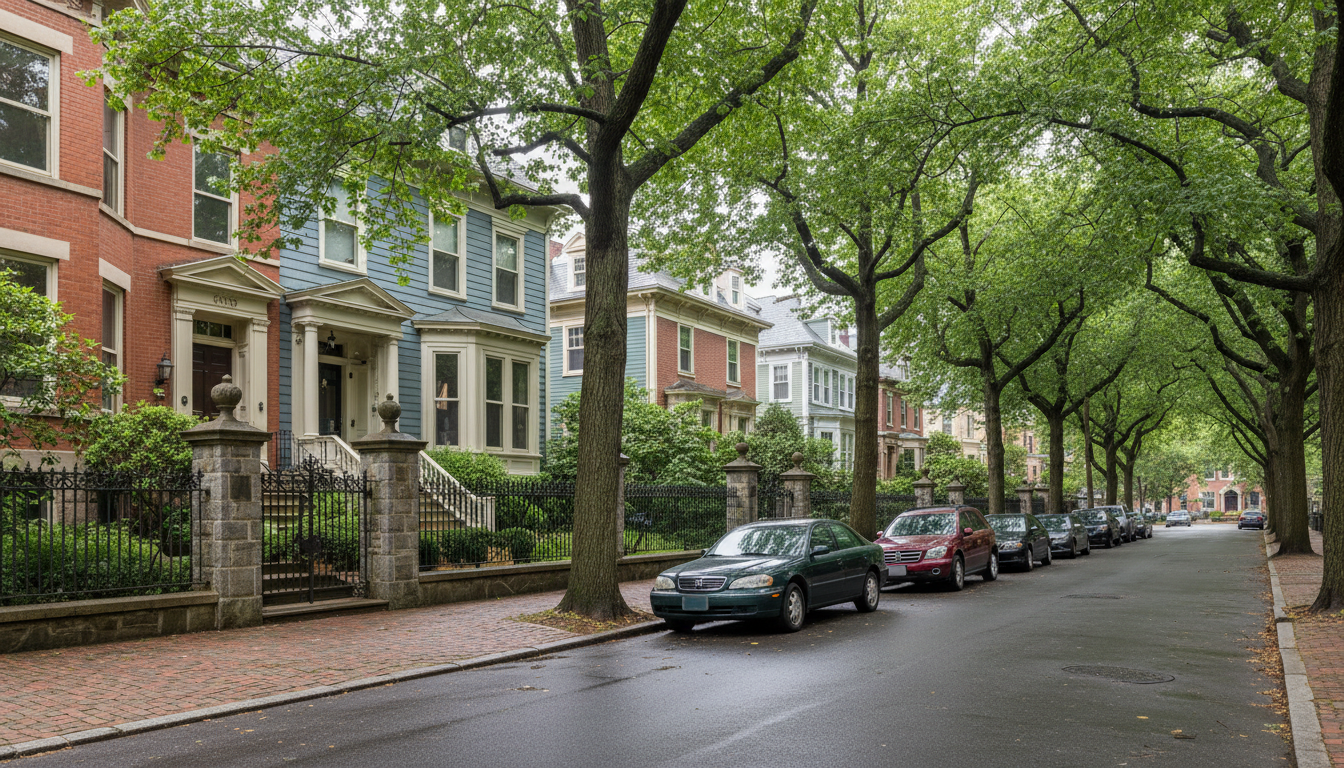
None of these are student-free. This is Boston. But they lean noticeably more toward professionals, couples, and families.
In the city
- Charlestown, separated from the campus core by the harbor, historically residential and professional/family-heavy.
- South End, dense, brownstone-lined, and expensive, and unlike Beacon Hill, not a hub for undergrad student housing.
- Jamaica Plain, a diverse, established neighborhood with a less frenetic, more community-oriented feel; students exist but don't dominate.
- West Roxbury and Roslindale, further out, more residential and family-oriented, with commuter-rail access.
In Cambridge and Somerville
- North Cambridge (Alewife toward Porter), family-oriented and residential, off the busiest student squares.
- Mid-Cambridge, historic homes and tree-lined streets with a distinctly residential feel despite being central.
- Inman Square, between Central and Somerville's Union Square, popular with professionals and young families, and off the main T lines that funnel students.
- Parts of Somerville away from the Tufts/Davis student cluster lean more mixed-professional.
Just outside the core
- Brookline and Newton are the classic "escape the student vibe" picks, leafier, more residential, more families and professionals. The trade-off is cost and, in Newton's case, a longer or more car-dependent commute.
- Commuter-rail towns (Medford, Malden, and further out) trade proximity for a calmer, less student-driven residential feel.
If you're narrowing to specific neighborhoods, Spot Easy lets you search Boston listings by neighborhood and by proximity to the T, so you can focus your hunt on the professional-leaning areas above without wading through every student-packed block near campus, and without a broker fee on partner units.
The neighborhoods where you should expect students (and why)
This isn't a knock on these areas. They're lively, well-located, and often more affordable. But if avoiding a student-heavy building is the goal, go in with eyes open around:
- Allston (especially "student ghetto" Allston near the BU/Harvard corridor)
- Fenway / Kenmore, ringed by universities
- Mission Hill, heavily Northeastern and medical/grad students
- Around Harvard Square and Central Square in Cambridge
- Parts of Brighton near the campus corridor
The common thread is simple: they're campus catchments. The closer you are to a major university, the more the surrounding buildings are organized around student tenancy.
How to read a specific building or listing for student saturation

This is the skill that actually protects you, because even in a professional-leaning neighborhood you can land in a student building. Watch for these signals in a listing or on a tour:
- A September 1 move-in with a September 1 end date. Leases that run exactly with the academic year (Sept–Aug) are built around students. A building full of Sept-1 turnover is a building full of students.
- By-the-room or "coliving" rentals. If the unit is rented per bedroom to individual tenants rather than as a whole apartment to one household, it's set up for students and young transients.
- Academic-year lease terms or a landlord who mentions "we usually rent to students."
- High turnover. If the landlord or current tenants mention people cycling through every year, that's the pattern.
- Proximity on a map. Pull up the address and check the walking distance to the nearest big campus. Under 15–20 minutes on foot to a major university, and you're in the catchment.
Just ask about the lease cycle
The fastest filter doesn't require asking who lives in a building at all: ask the landlord or agent about the lease-renewal cycle. A building where leases renew at varied times throughout the year, rather than clustering everyone around September 1, skews toward longer-term tenants. You can also ask general turnover questions, like how often units in the building change hands. A landlord who deals mostly in academic-year leases will usually be upfront about it once you ask.
The honest trade-offs
Choosing a professional-leaning area isn't free. The quieter, more residential neighborhoods tend to cost more (Brookline, Newton, South End, where current Spot Easy listings average around $4,300 versus roughly $3,400 in student-heavy Allston), sit further from downtown (West Roxbury, Roslindale, commuter-rail towns), or both. You may trade a livelier nightlife scene for a calmer street. For a lot of non-student renters that's exactly the point, but it's worth going in knowing the trade is real, not imaginary.
FAQ
What's the most reliable way to avoid a student-heavy building?
Check two things: distance to the nearest major campus (closer = more students) and lease structure (September-1 academic-year leases and by-the-room rentals signal student buildings). Price alone is not reliable.
Is Beacon Hill a good bet for avoiding students?
Not especially. Despite high rents, it's close to several campuses and has plenty of students. Expensive doesn't reliably mean student-free.
Which Boston neighborhoods are most student-dominated?
Allston, Fenway/Kenmore, Mission Hill, and the areas around Harvard and Central Squares are the heaviest campus catchments.
Can I just ask a landlord about tenant turnover?
Yes. Ask about the lease-renewal cycle rather than who specifically lives there. A building that renews on a staggered schedule, instead of clustering around September 1, skews toward longer-term tenants.
Are Brookline and Newton actually less student-heavy?
Generally yes. They're more residential and family/professional-oriented, but the trade-off is higher cost and, in Newton, a longer commute.
Do professional-leaning neighborhoods cost more?
Often, yes. The calmer, more residential areas tend to carry a premium or sit further out. The trade-off between student-vibe and cost/commute is real and worth weighing for your situation.