
If your family is traveling to Boston for a medical stay, whether it's a child's treatment, a long hospitalization, or ongoing appointments, one of the first hard problems is where you'll actually sleep. Boston is home to one of the densest hospital clusters in the world, especially in the Longwood Medical Area, where Boston Children's Hospital, Dana-Farber, and Brigham and Women's sit within a few blocks of each other, with Mass General a short ride away. Around all of it is one of the most expensive, competitive rental markets in the country.
The good news is that Boston has more housing built specifically for patient families than almost anywhere else — much of it free or heavily subsidized. The hard part is that these options fill up, the rules vary, and it's easy to miss them when you're overwhelmed. This guide maps the whole landscape, starting with the free and low-cost options and ending with paid ones, so you can line up the best fit for your situation. One honest note up front: availability is genuinely tight, so the earlier you start and the more doors you knock on, the better.
Start here: your hospital's social worker or case manager
Before you book anything, ask to speak with your hospital's social worker, case manager, or patient family services team. This is the single most useful step, and it's easy to overlook when you're focused on the medical side.
These teams do this every day. They know what's actually available right now, they can often flag your family for waitlists or hold a spot, and some of the housing options below require a hospital referral to even apply. They can also connect you to condition-specific resources — some hospitals and disease-specific charities run their own housing that isn't advertised publicly. Ask early, and keep asking; availability changes day to day, and being on their radar matters.
Free and low-cost housing built for patient families
Boston has several programs that exist specifically to house families during a medical stay. Each has its own eligibility rules, so it's worth checking more than one.
Hospitality Homes
Hospitality Homes is worth knowing about first because of one distinguishing feature: it's the only hospital-housing program in the Boston area open to all families, regardless of income, age, illness, or which hospital you're using. Founded in 1983, it places families and friends of patients in free-to-low-cost stays in volunteer host homes and other donated accommodations, with a suggested donation of about $25 a night. Because it isn't limited to pediatric patients or a single hospital, it's often the right fit when other programs' eligibility rules don't match your situation. You can learn more at hosp.org or by calling (888) 595-4678.
Boston Children's Hospital Patient Family Housing Program
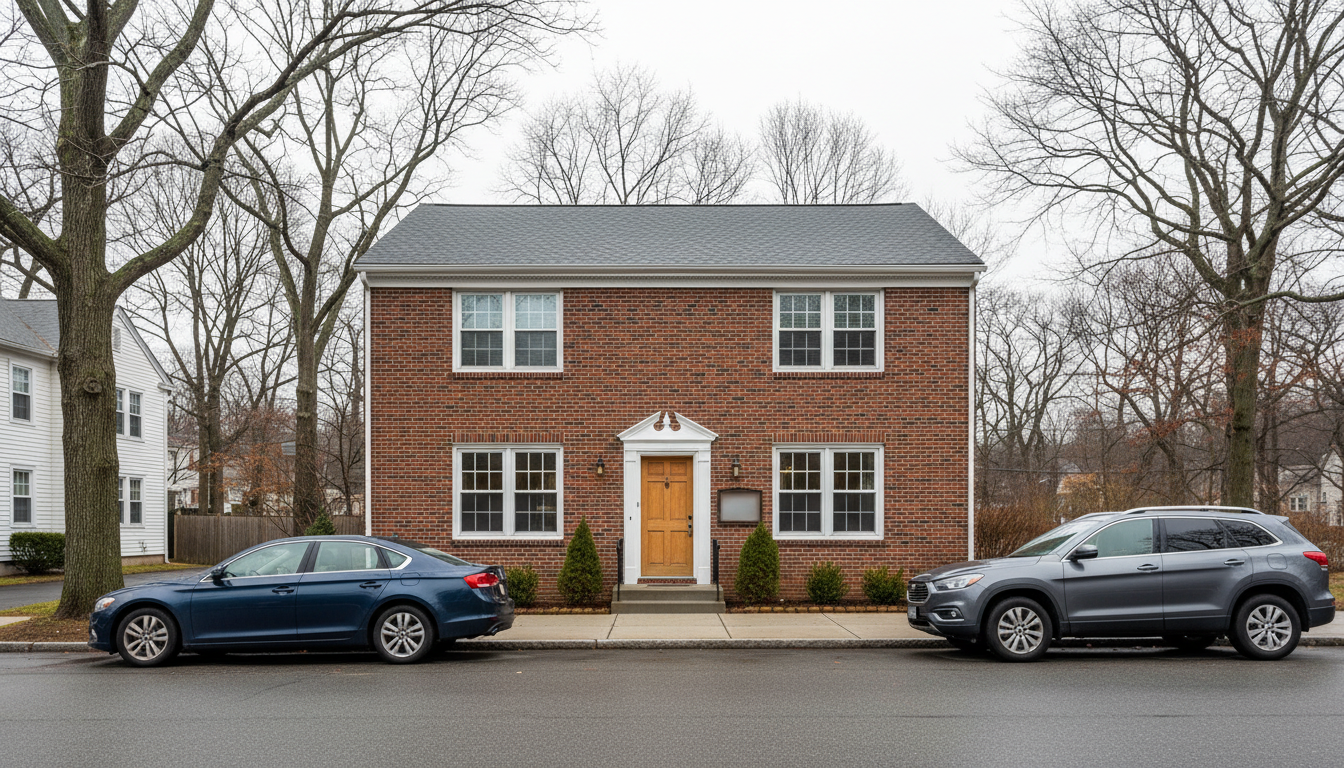
If your child is a patient at Boston Children's and your family lives more than 50 miles away, the hospital runs its own Patient Family Housing Program with two nearby locations:
- Yawkey Family Inn: $30 a night, at 241 Kent St. in Brookline, about 0.6 miles from the hospital. It offers individual bedrooms, a shared kitchen, and free laundry.
- The Bon: $75 a night, at 1260 Boylston St. in Boston, about 0.9 miles from the hospital. It offers private apartments with their own kitchen and bath, and an on-site gym.
Both have free internet and a free shuttle to the hospital (running weekday mornings through late evening). Applications are done online, and you can apply up to four months in advance — reservations are coordinated on weekdays, and staff typically get back to you within a few business days. You can reach the program at 617-919-3456.
Ronald McDonald House
Ronald McDonald House provides low-cost housing for families of children (patients under 21) receiving treatment at a Boston-area hospital, with a location at Boston Harbor. A defining part of the Ronald McDonald House philosophy is that they will never turn a family away because of an inability to pay, and they don't require a donation to stay. Eligibility generally depends on your child's age, where you're being treated, and how far you live from the House, so confirm the current criteria with the House or your hospital social worker.
The Boston House
The Boston House offers no-cost housing specifically for pediatric oncology patients (under 21) and their families who live more than 40 miles away. If your child is being treated for cancer, it's worth asking your care team about this one directly, along with other cancer-specific housing that some hospitals and charities provide.
When the free options are full — and they often are
Here's the reality a lot of families run into: you find these programs, and they're booked. That doesn't mean the door is closed.
- Get on the waitlist, and apply everywhere you qualify. Don't wait to hear back from one program before applying to the next. Apply to every option your family is eligible for, at the same time.
- Apply as early as you possibly can. Boston Children's housing takes applications up to four months out; that kind of lead time is a real advantage when you have it.
- Ask your social worker to flag you for cancellations. Spots open up when families' plans change. The staff who manage these programs, and your hospital's own team, are the people who hear about openings first.
- Widen your radius. If everything within walking distance is full, a program or rental a little farther out, paired with transit or the hospital shuttle, may work. More on that below.
- Tell your story in local community groups. Families who've been through this often suggest posting in Boston-area Facebook groups, neighborhood forums, or a hospital's own parent community, explaining your situation and what you need. It's not a guarantee, but sublets and spare rooms do surface this way from people who want to help, and it costs nothing to ask.
Paid short-term options, when you need them
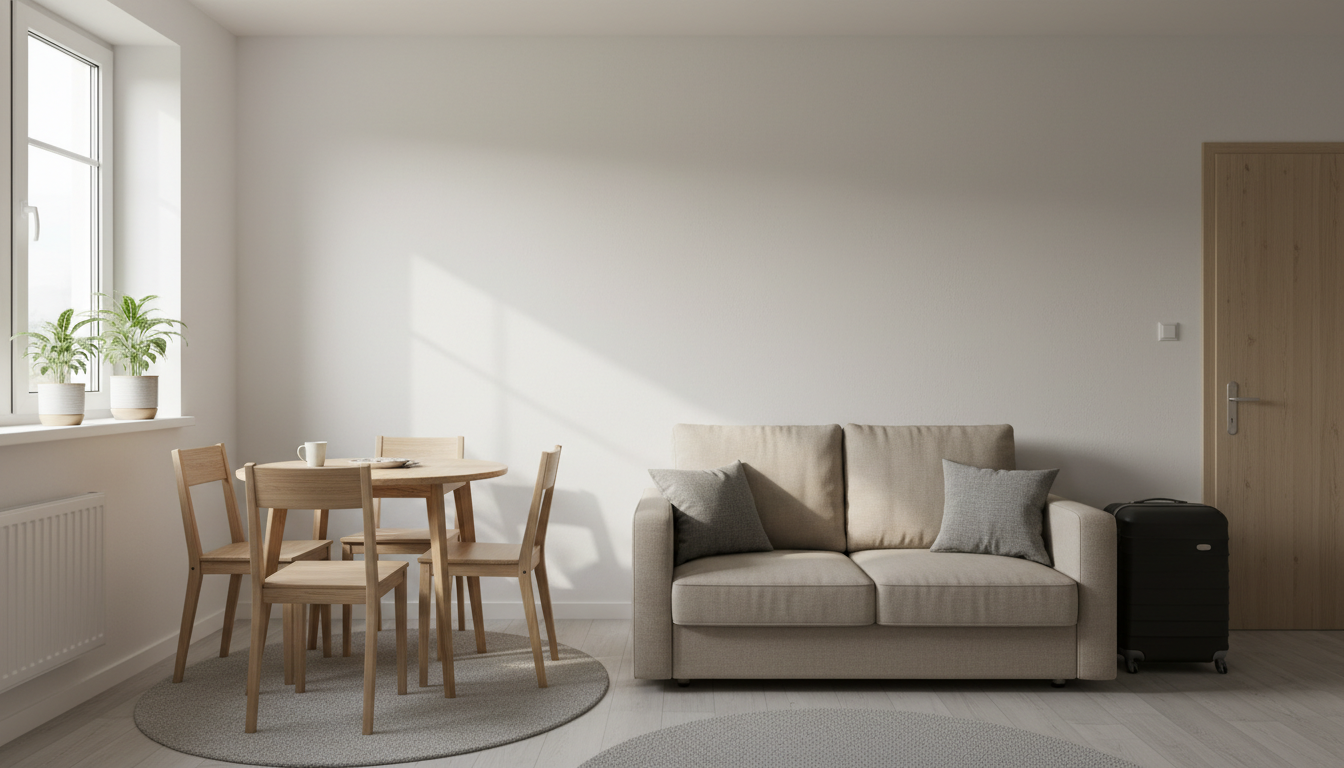
If the free and subsidized programs can't accommodate you in time, there's a paid layer to the landscape. It's more expensive, but more flexible on timing and availability.
First, a word on expectations, because it's kinder to be direct than encouraging here: the market immediately around the Longwood hospitals is one of the most expensive in the country, and local renters are blunt about what a modest budget will and won't do.
When one family searching this exact radius floated a budget of about $2,000 a month for a one-bedroom, the responses from people who live there were unanimous — as one put it, "$2000 is impossible for one bedroom anywhere near Childrens," with others saying the same is true even for a studio.
Another family who had just gone through the same search ended up in an extended-stay hotel for considerably more than they'd hoped to pay.
None of that means you're out of options — it means the free and subsidized programs above are worth pursuing hard, and that if you do end up in the paid market, you should plan to either stretch the budget or widen the search radius meaningfully.
- Furnished short-term rentals: apartments rented fully furnished on flexible terms, which spares you setting up a household for a stay of a few weeks or months.
- Corporate housing: furnished units aimed at temporary stays, often bookable by the month.
- Extended-stay hotels: hotels built for longer stays, usually with a kitchenette, sometimes with weekly or monthly rates that beat a standard nightly rate.
- Month-to-month sublets: Boston's heavy student population means sublets do come up, especially around semester breaks; they can be cheaper but take more legwork to vet.
A practical way to stretch a tight budget with paid options is to trade proximity for price: a place a bit farther from the hospital, near good transit or on the shuttle route, can cost meaningfully less than one in the immediate medical district.
Neighborhoods and getting to the Longwood Medical Area
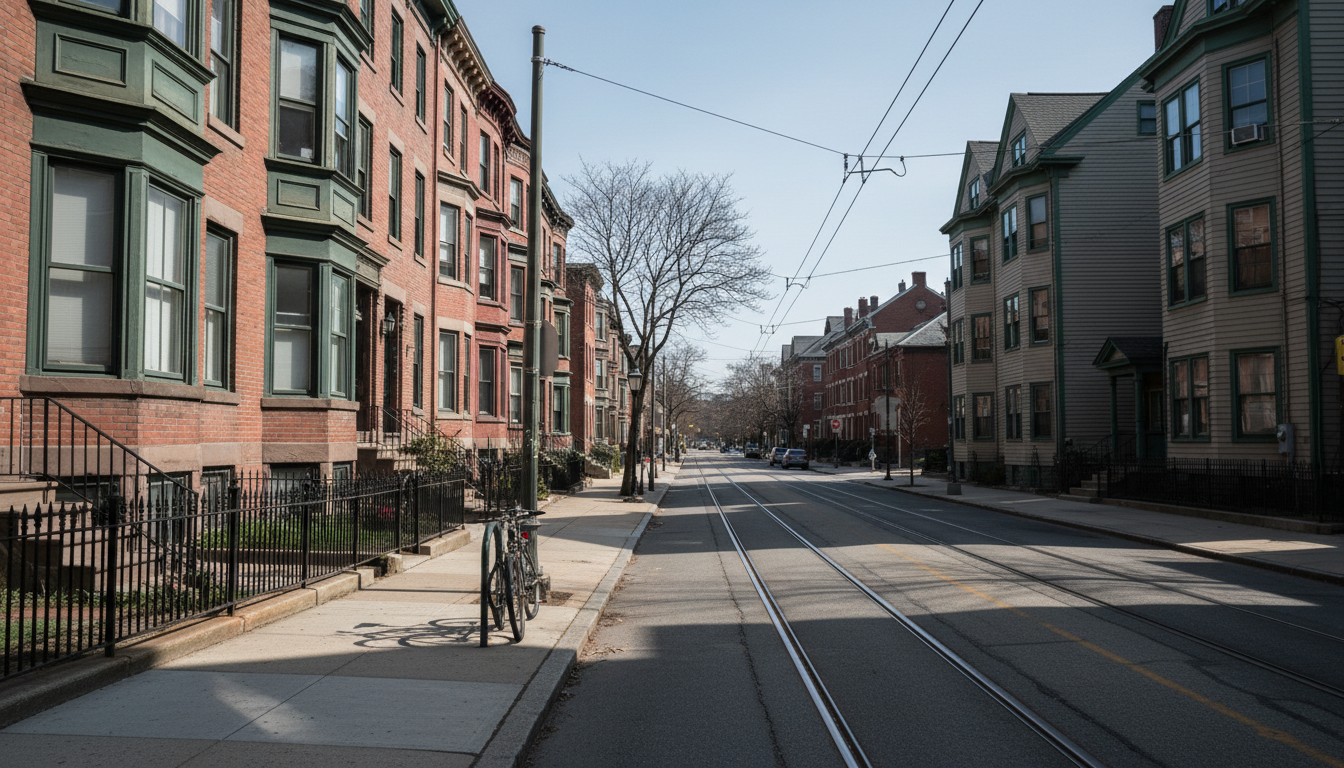
Most of Boston's biggest hospitals cluster in or near the Longwood Medical Area, so the neighborhoods around it are the most convenient — and, predictably, in demand:
- Brookline: directly adjacent to Longwood (it's where the Yawkey Family Inn sits), residential and well-served by the Green Line's C and D branches.
- Mission Hill: right up against the medical area, more affordable than many neighborhoods and walkable to Longwood.
- Fenway: bordering Longwood, dense and transit-rich, though it fills with students in the fall.
The Longwood Medical Area is served directly by the Green Line's E branch (stops like Longwood Medical Area and Brigham Circle), which makes staying a few stops away and taking the T a realistic option. If you need to go farther out to hit a budget, look for a place near a Green Line stop or a commuter-rail line — a longer commute you can count on is often a fair trade for a rent you can afford during a stressful stretch. Where a hospital offers a free shuttle (as Boston Children's does), staying near a shuttle stop can save both money and the stress of navigating a new city's transit.
FAQ
What's the cheapest place to stay near Boston Children's Hospital? The free and low-cost programs are the cheapest: Hospitality Homes (suggested ~$25/night host homes, open to all families), the Yawkey Family Inn ($30/night, for families more than 50 miles away), and Ronald McDonald House (low-cost, for pediatric patients, and never turns families away for inability to pay). Start with your hospital social worker, who can point you to the right one.
Who do I contact first about housing during a hospital stay? Your hospital's social worker, case manager, or patient family services team. They know current availability, can flag you for waitlists, and can issue referrals that some housing programs require.
What if all the free housing programs are full? Apply to every program you qualify for at once, get on waitlists, ask your social worker to flag you for cancellations, and apply as early as possible (Boston Children's housing takes applications up to four months ahead). If you still need something, paid options (furnished rentals, corporate housing, extended-stay hotels) are the backstop.
Do I have to have a child patient to get this housing? Not for all of it. Ronald McDonald House and The Boston House are for pediatric patients, but Hospitality Homes is open to all families regardless of age, income, illness, or hospital — which makes it a key option for adult patients and their families.
How far from home do I need to live to qualify? It varies by program — Boston Children's Patient Family Housing is for families more than 50 miles away, and The Boston House for those more than 40 miles away, while Hospitality Homes has no such restriction. Confirm the current rule for any program with the program itself or your social worker.
How do I get to the Longwood Medical Area if I stay farther out? The Green Line's E branch runs directly into Longwood, and several nearby neighborhoods (Brookline, Mission Hill, Fenway) are walkable or a short ride away. Some hospitals, including Boston Children's, run free shuttles, so staying near a shuttle stop or a Green Line/commuter-rail station can make a farther-out, cheaper place workable.
This article is a general resource guide and isn't medical, legal, or financial advice; confirm current eligibility, costs, and availability with each program directly or through your hospital's social work team.