

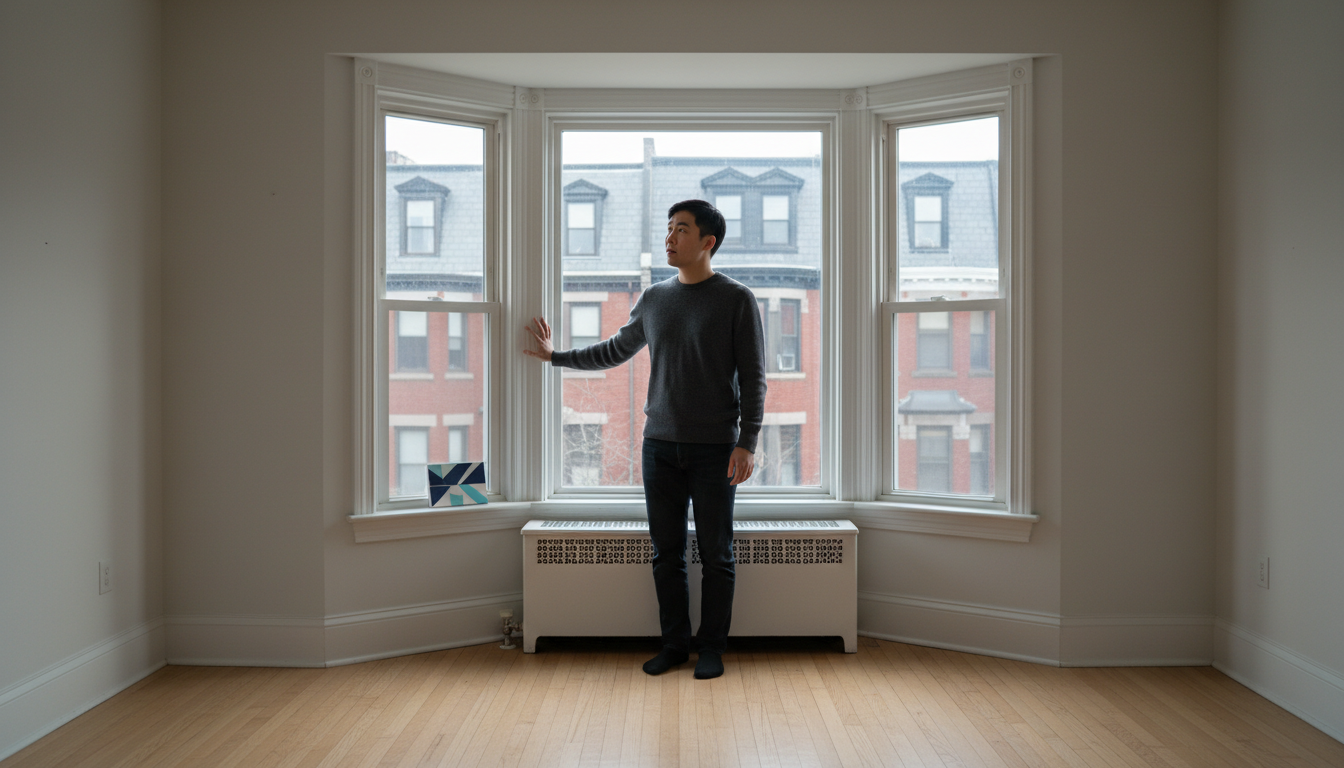
Whether a Boston apartment is actually quiet comes down to how the building was built and where the unit sits inside it, and both are things you can check before you sign. Most renters chase quiet by looking for a top-floor unit, and that solves exactly one problem: footfall from above. The band practicing through a shared wall, the bar downstairs, the radiators, the street, the stairwell — none of that cares which floor you're on.
Why "top floor" isn't the answer
Filtering for a top floor doesn't reliably get you a quiet Boston apartment. A renter on r/bostonhousing described filtering hard for quiet top-floor units near North Station and getting nowhere, and the most useful reply in the thread pushed back directly, calling the top-floor filter "honestly probably hindering you the most." Here is why that reply was right.
What a top floor does and doesn't solve
A top floor removes one noise source: people walking, dropping things and moving furniture above your ceiling. In a wood-frame Boston triple-decker, that is genuinely the loudest thing you'll deal with, so the instinct isn't wrong.
But it does nothing about noise through shared walls, which in most Boston buildings is the neighbor you'll actually hear talking. It does nothing about street noise, and top-floor units are often more exposed to it because there's less between them and the road. It does nothing about the stairwell, the trash chute, or the mechanical plant, which in a lot of buildings lives on the roof — directly above the top floor.
Meanwhile, filtering for it cuts your options in a market where you already have very few. On that same r/bostonhousing thread, one renter reported living at garden level in a large building and finding it so quiet it felt like nobody else lived there.
The floor number is one variable. It is not the important one.
What kind of building is it?
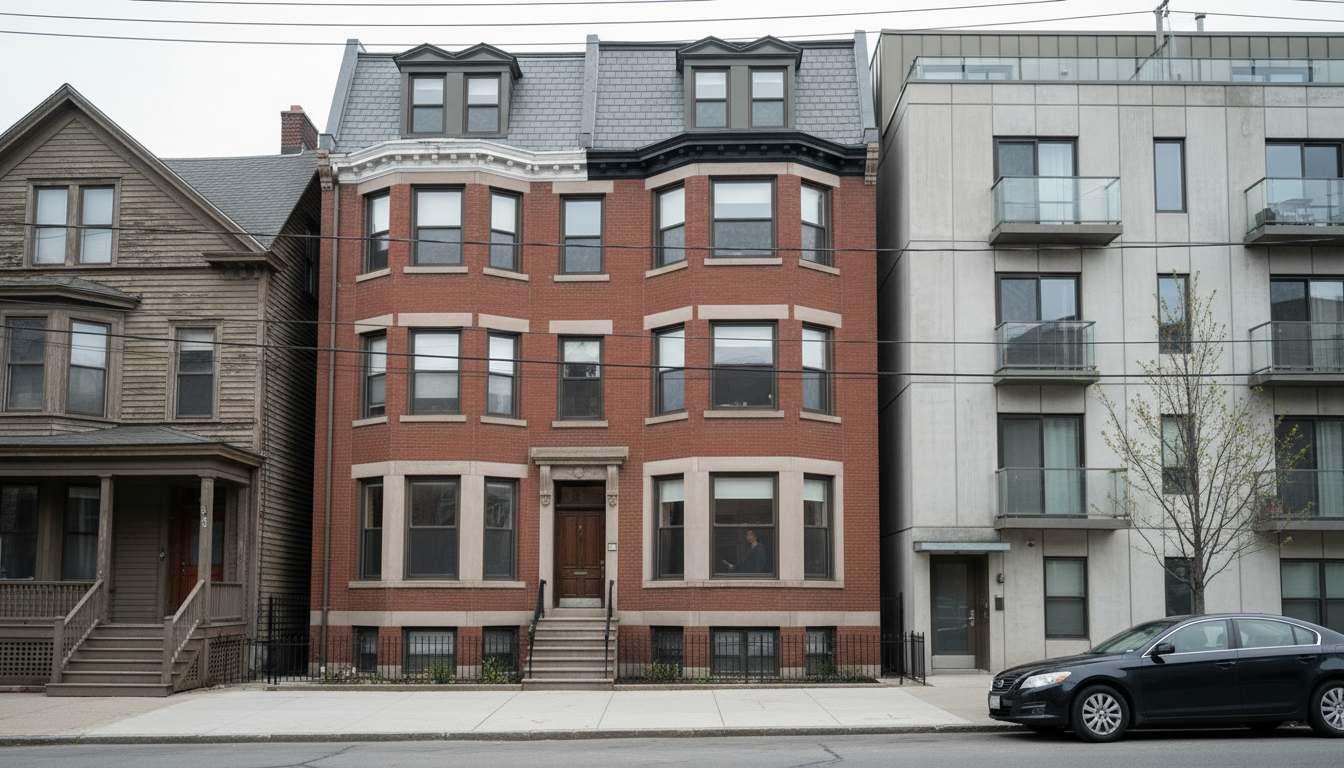
Building type is the variable that matters most, and in Boston it usually comes down to three types.
| Building type | Typical construction | How it usually fails on noise | Where it tends to do well |
|---|---|---|---|
| Triple-decker or wood-frame house | Wood frame, wood floors, often little insulation between units | Footfall and voices travel vertically. You tend to hear the whole household above you, and stairs are shared | Usually set back on residential streets, and often more space per dollar |
| Pre-war brick | Thick masonry walls, frequently plaster interiors | Windows and street noise are the weak point, and original single glazing is common | Separation between units is usually good — masonry blocks airborne noise well |
| Newer construction | Concrete and steel in mid- and high-rise; wood frame in many low-rise "luxury" builds | Thin interior partitions, long shared corridors, and mechanical systems. Low-rise new builds can be wood frame despite the finish level | Concrete floors handle impact noise better than anything else on this list |
Two cautions on reading that table.
These are tendencies, not guarantees. Construction varies enormously building to building, and two triple-deckers on the same street can behave completely differently depending on what a previous owner did. Use this to know what to ask, not to rule a building in or out from the listing.
"Newer" and "concrete" are not the same thing. A four-story new build with a luxury finish is frequently wood frame. If quiet is your priority and you're paying a premium for new construction, ask directly what the structure is.
Where the unit sits in the building
Position within the building is a bigger lever than the floor number, and almost nobody checks it.
Facing the street versus the back. In a dense Boston neighborhood this is often the single largest difference between two units in the same building at the same price. A back-facing bedroom over a courtyard and a front-facing one over Mass Ave are not the same apartment.
Corner units. Fewer shared walls means fewer neighbors you can hear. A corner unit with one shared wall is structurally quieter than an interior unit with two, before anything else is considered.
What's above, below and beside you. Ask specifically. Is there a unit above, or is it the roof? Is the mechanical plant up there? Is the apartment below a ground-floor commercial space, and if so, what is it and what hours does it keep? Is your bedroom wall shared with a neighbor's bedroom, or with their living room? A bedroom-to-bedroom wall is a much better arrangement than a bedroom-to-living-room one.
Flooring above you. If there's a unit above, ask what's on the floor. Hardwood and tile transmit impact noise far more readily than carpet. In an older Boston building where the upstairs unit was renovated to bare hardwood, that is a change you will hear every day.
What to check at the viewing
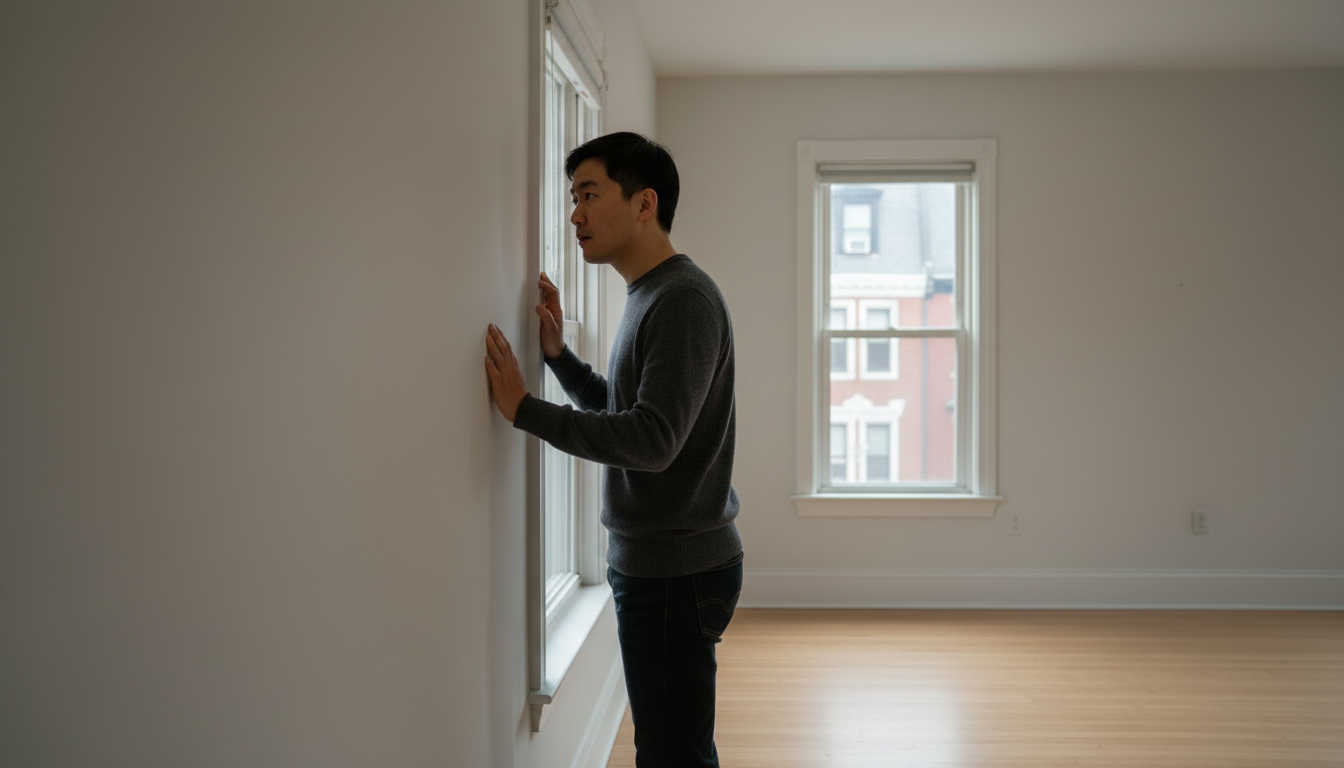
You usually get ten minutes. Use them deliberately.
1. Stand still and say nothing for a full minute. Agents talk. Ask for a moment and just listen. Most of what you need to know arrives in that minute.
2. Listen at the shared wall and under the ceiling. Stand close to each. You are listening for voices and footfall, not for silence.
3. Ask what is directly above and below. Another unit, the roof, mechanical equipment, a shop, a restaurant. Get a specific answer, not "I think it's residential."
4. Ask what the flooring is in the unit above.
5. Open a window. The apartment sounds very different with it open, and you will have it open from May to September.
6. Check the windows themselves. Single-pane originals in a pre-war building are the most common reason a quiet-looking street-facing unit isn't.
7. Ask what the street does at night. Bus route, bar turnout, delivery hours, street cleaning.
Go back at a different hour
The single most useful thing you can do costs nothing. Viewings happen on weekday afternoons, which is the quietest window of the week almost everywhere. If you're seriously considering a unit, go back and stand outside it on a weekday evening or a weekend night. You won't get inside, but the street, the building entrance and the windows will tell you a great deal.
In Boston this matters more in September than at any other time. If you're touring during the turnover rush, you may be seeing a half-empty building that will be full two weeks later.
What you can fix after you move in, and what you can't
Worth knowing before you compromise, because some of this is genuinely solvable and some isn't.
Reasonably fixable. Rugs and rug pads reduce noise you transmit downward, and thick curtains help with street noise. A white-noise machine is more effective than most people expect for sleeping through voices and footfall.
Sometimes fixable. Window inserts and heavy draft-proofing can make a real difference on street noise, but they cost money you may not want to put into a rental and often need the landlord's agreement.
Not fixable. Structure. If impact noise is coming through a wood-frame floor above you, nothing you do inside your unit changes that in a meaningful way. Neither does a shared wall with a neighbor who keeps different hours. If those are the problem, the answer is a different apartment, which is exactly why the checks above are worth doing before you sign.
When noise is your landlord's problem
Some noise is a matter for the city, and some is a matter for your landlord.
The city's rules. Under the Boston Municipal Code, unreasonable noise is anything louder than 50 decibels between 11 p.m. and 7 a.m., or anything louder than 70 decibels at any time, other than permitted construction. The Boston Public Health Commission administers the ordinance, and per the City of Boston's noise guidance, where you report depends on the source: 311 or Inspectional Services for construction and after-hours work, 911 for disturbing the peace, Entertainment Licensing for restaurants and bars, and Massport for aircraft. General questions go to the BPHC.
Your landlord. Massachusetts recognizes a tenant's right to quiet enjoyment of their home. Where a landlord knows about a persistent problem in their building and does nothing about it, that can become their responsibility rather than just bad luck — but whether that applies to your situation depends on facts this article can't see, including your lease and what's actually causing the noise. If you're at that point, talk to a tenant attorney or a legal aid service rather than relying on a general guide.
If the noise is construction rather than neighbors, the checks are different and start before you sign. We've covered those separately in how to check a Boston building for noise and nearby construction.
If you're still shortlisting, it's worth knowing what a listing won't tell you — construction type and what sits above a unit almost never appear in the description. Every Spot Easy listing is verified by a human before it goes up, so at least the details you're checking against are real.
Frequently asked questions
Are top-floor apartments quieter?
Only for footfall from above. They do nothing about shared walls, street noise or stairwells, and in buildings with rooftop mechanical plant they can be worse. It's one variable, not the deciding one.
Are older Boston buildings quieter than new ones?
It depends on what "older" means. Pre-war brick usually separates neighbors well and fails at the windows. Wood-frame triple-deckers transmit footfall readily. New construction is only reliably better if it's concrete, and plenty of new low-rise buildings are wood frame.
Is a garden-level or basement apartment quiet?
It can be genuinely quiet, because there's no unit below and often fewer shared walls. The trade-offs are light, damp and street-level noise at the windows.
What's the single best question to ask at a viewing?
"What's directly above this unit?" It's specific, the agent either knows or doesn't, and the answer tells you more than the floor number does.
Can I do anything about noise once I've moved in?
Rugs, curtains and white noise help. Structural noise through a floor or a shared wall largely doesn't respond to anything you can do inside your own unit.
What are Boston's quiet hours?
The stricter 50-decibel threshold applies from 11 p.m. to 7 a.m. Above 70 decibels is unreasonable at any hour, apart from permitted construction.
Who do I call about a noisy neighbor?
For an immediate disturbance, 911. For construction or after-hours work, 311 or Inspectional Services. For a bar or restaurant, Entertainment Licensing.
Sources, and when this was current
Written August 2026. The decibel limits, the hours they apply, and the reporting routes come from the City of Boston's noise guidance.
The building-type comparisons describe how these construction types generally behave, not how any specific building will. Construction varies, renovations change things, and the only reliable test is standing in the actual unit. Treat this as a guide to what to check rather than a promise about what you'll find.
This article is informational and isn't legal advice.