

If you find mold in your Boston apartment, fixing it usually starts with the owner. The state sanitary code says every owner must keep a residence "free from excess moisture or the appearance of mold," and that covers the cause as well as the stain. But who pays can still come down to what's causing it, which is why finding the source is the first job.
Here's what the code requires, how to work out where the moisture is coming from, and what to do if your landlord paints over it and walks away.
What the law requires
The rules are in the state sanitary code, 105 CMR 410, which was overhauled in 2023 and deals with mold directly.
| Rule | What it says | Section |
|---|---|---|
| The owner's duty | Buildings must be watertight and "free from excess moisture or the appearance of mold" | 410.500(A) |
| Leaks and flooding | The owner must have all surfaces dried within 48 hours of being notified or of the end of the event, whichever is sooner | 410.500(B) |
| Rooms with a moisture problem | No room may be used for living in if it's subject to excess moisture | 410.420(A) |
| Ventilation | Living spaces and bathrooms need windows that open to at least 4% of the room's floor area, or mechanical ventilation to the outdoors | 410.220(A) |
| Your part | Occupants must exercise reasonable care in using the building | 410.510 |
The code defines excess moisture as unwanted moisture or water on permeable surfaces that occurs "on a periodic, chronic or acute basis and presents a risk of mold growth." A wall that gets damp every winter can count, as can a one-time flood.
Where is the moisture coming from?

Mold is a symptom. Cleaning it without finding the moisture means it will come back, and the cause often decides whose job it is. The code tells inspectors to look at the same things you should:
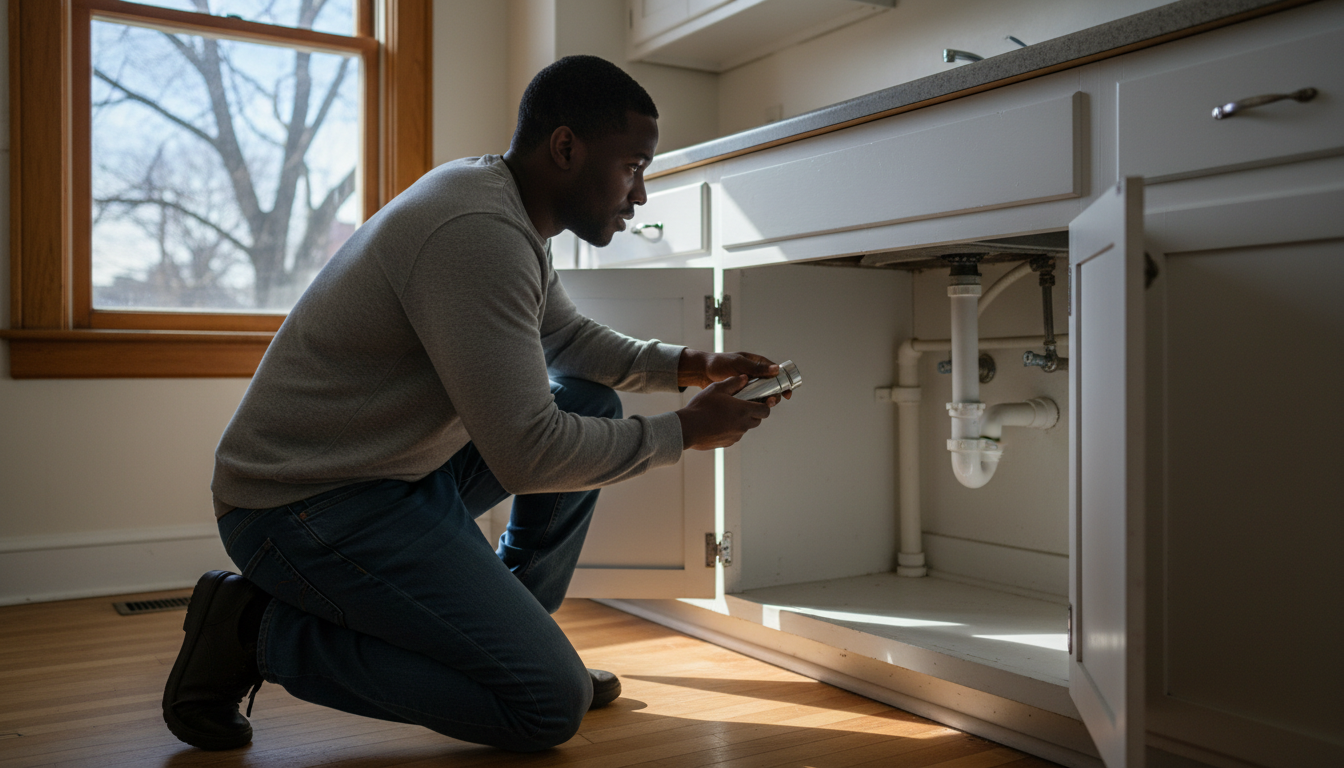
- Plumbing leaks. Look under sinks, around the tub and behind the toilet. Mold on a ceiling can mean a leak from the unit above.
- Structural problems that let water in. Look at window frames, exterior walls and basements. Mold in the same place after every rain points here.
- Ventilation that isn't working. A bathroom fan that doesn't vent outside, or a window painted shut, can leave the moisture nowhere to go.
- Heating or cooling ductwork that isn't properly maintained.
Plumbing leaks, structural water entry, failed ventilation and neglected ductwork generally point to the building. What points to you is narrower: a fan you never turn on, a window you keep sealed, or a humidifier running in a closed room. Boston's older apartments can make this harder to judge, because cold exterior walls can collect condensation even when nobody is doing anything wrong. If you honestly can't tell, an inspector can.
What should you do about mold, step by step?
1. Photograph it before you touch it. Take wide shots and close-ups, with the date. Take more every week or so if it's spreading.
2. Tell your landlord in writing. Say where it is, when you first saw it, and any leak or moisture you've noticed. Email is fine, and better than a phone call because it's dated.
3. Allow access. You're expected to give reasonable access for repairs. Non-emergency entry requires at least 48 hours' notice under the code. Our guide to landlord entry notice has the details.
4. Report any active leak right away. The 48-hour drying rule runs from when the owner is notified, so the notice date matters.
5. Ask for an inspection if nothing happens. In Boston, call Inspectional Services at 617-635-5300 or 311. Outside Boston, call your city or town's board of health. Our guide to who to call about a landlord problem covers the other offices.
What will an inspector do about mold?
You don't need a lab test, and you don't need to pay for one. The code is clear that environmental testing isn't required to establish excess moisture or the appearance of mold. If testing is done, it can't be the only thing that decides the question. An inspector who finds mold has to investigate the likely sources.
The timeline depends on how serious the inspector finds the problem to be:
- The inspection happens within five business days of your request, or within one business day if the problem involves a listed emergency, such as a loss of water for 24 hours or more, or a structural defect that creates a fire, shock or accident danger. Mold on its own is not on that list.
- The order comes within seven calendar days of the inspection, and gives the owner up to 30 calendar days to correct violations outside that emergency list.
- The inspector can decide that a violation endangers health or safety, and note that on the order.
Ask for a written copy of the report. A dated inspection report is strong evidence, including if you decide to move out. Reporting is also protected: a landlord who retaliates can owe damages under M.G.L. c. 186, § 18.
What if your landlord just paints over the mold?
Painting over mold doesn't deal with excess moisture, which is what the code requires the owner to keep the building free from. If it comes back, photograph it, tell your landlord again in writing, and request an inspection. Your dated photos will show the repeat.
How can you check for mold before you rent?
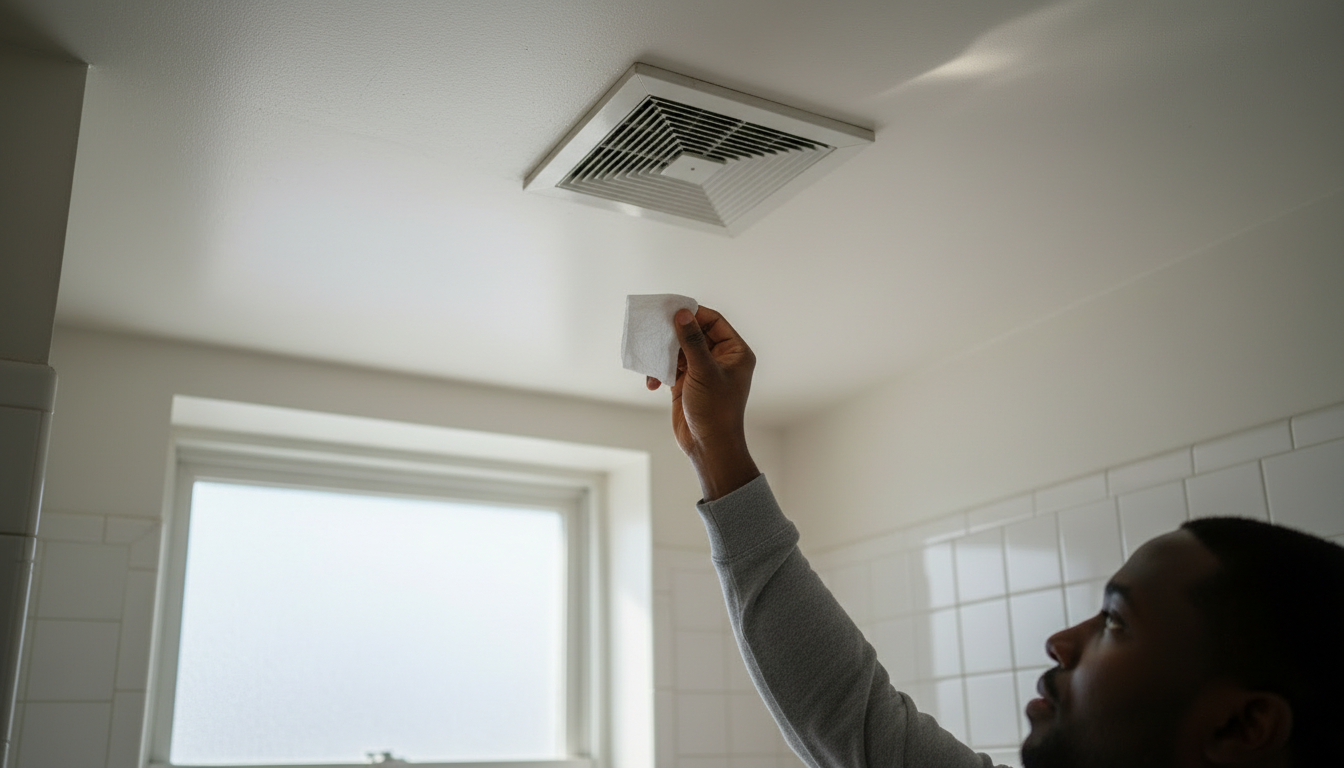
Mold is easier to avoid than to fix after you've signed. At a showing, look at the ceiling in the bathroom and under the sink, along the bottom of exterior walls, and behind furniture if you can. Run the bathroom fan and hold a tissue to it. Musty smells and fresh paint on a single wall are both worth asking about. Our checklist for older Boston apartments covers the rest.
When you're ready to tour, you can browse Spot Easy's Boston listings.
What this article can't settle
Some questions depend on your facts, and it would be wrong to answer them here. Get advice before acting on any of these:
- Your health. If you or someone you live with has symptoms, talk to a doctor. This article doesn't cover what mold does to your health.
- Who pays if your landlord says you caused it. That can come down to the evidence and your lease.
- Repairs, rent deductions or ending a lease. M.G.L. c. 111, § 127L lets tenants take certain steps, including ending a lease, once violations are certified and the owner has missed set deadlines. Those steps are strict. Don't stop paying rent on the strength of an article.
- Damaged belongings or moving costs. Whether you can recover them is a legal question, and renters insurance may or may not help, depending on your policy.
Massachusetts Legal Help is the best free starting point. In Boston, the Office of Housing Stability at 617-635-4200 can refer you to an attorney.
FAQ
Is a landlord responsible for mold in Massachusetts? The sanitary code requires owners to keep buildings free from excess moisture and the appearance of mold. If the mold comes from a leak, a structural problem or ventilation the owner hasn't maintained, that's generally on the owner. Occupants have to use the building with reasonable care.
How long does a landlord have to fix mold in Massachusetts? After an inspection, an order for a violation outside the emergency list can give the owner up to 30 calendar days. Surfaces affected by leaks or flooding must be dried within 48 hours.
Do I need a mold test? No. The code says environmental testing isn't required to establish excess moisture or the appearance of mold.
Who do I call about mold in my Boston apartment? Your landlord first, in writing. If nothing happens, call Boston Inspectional Services at 617-635-5300 or 311.
Can I break my lease because of mold? Possibly, in some circumstances, but the legal steps are specific. Talk to Massachusetts Legal Help or a tenant-rights attorney first.
This article is informational and isn't legal advice. Confirm how these rules apply to your situation with Massachusetts Legal Help, your local board of health or a tenant-rights attorney.